
Building inspections seem like the sort of thing you schedule when problems become obvious — water stains spreading across ceilings or cladding panels looking decidedly wonky.
This reactive approach is understandable but fundamentally flawed. By the time building defects become visible from ground level or inside occupied spaces, the underlying deterioration has typically progressed far beyond early-stage.
Buildings receiving regular professional inspections maintain their value, avoid emergency repairs, and cost dramatically less to maintain over their lifecycle than buildings inspected only when problems force attention.
The question isn’t whether your building needs inspection — it does. The relevant questions are how frequently, what inspection methodology provides the most comprehensive data, and how to translate inspection findings into cost-effective maintenance strategies.
Understanding why roof and façade inspections matter helps property owners move from reactive crisis management to proactive building stewardship.
What Exactly Are You Looking For During Building Inspections?
Professional building surveying examines dozens of potential failure modes across roof and façade systems. This isn’t a casual visual check from ground level — it’s a systematic assessment of every building element that protects the structure from weather and environmental deterioration.
Roof Inspection Priorities
Roofs represent your building’s primary weather defence, yet they’re also the building element least frequently inspected simply because access requires deliberate effort.
We examine roof coverings for splits, cracks, or delamination in felt systems, missing or damaged tiles or slates on pitched roofs, and deterioration of metal roof coverings through corrosion or failed seams.
Waterproofing failures start small. A minor crack in a roof membrane might allow minimal water penetration initially — perhaps just damp patches on the ceiling below. Over months and years, water tracks through the building structure, saturating insulation, corroding reinforcement in concrete, rotting timber structures, and creating perfect conditions for mould growth.
Roof drainage systems receive particular attention during our building surveying. Gutters accumulate debris, downpipes become blocked, and drainage outlets fail. The resulting water pooling accelerates roof deterioration and can cause catastrophic leaks.
Roof edges, parapets, and upstands represent vulnerable transition zones where different building elements meet. Flashing failures, gaps in weatherproofing, or deteriorated sealants at these junctions cause persistent leaks that can be surprisingly difficult to trace from inside the building.
Systematic external inspection identifies these failures.
Need an inspection?Book your roof and façade inspection now!
Façade Assessment Fundamentals
Building façades endure constant environmental assault — rain, wind, thermal cycling, pollution, and biological growth all contribute to progressive deterioration. Our building surveying examines render and coating systems for cracks, delamination, or biological colonisation that compromises both appearance and weather protection.
Brickwork and masonry require assessment of mortar joint condition, individual brick or stone deterioration, and structural movement cracks. Failed pointing allows water penetration that saturates wall structures, causing frost damage in winter, promoting efflorescence, and enabling moisture to reach internal spaces.
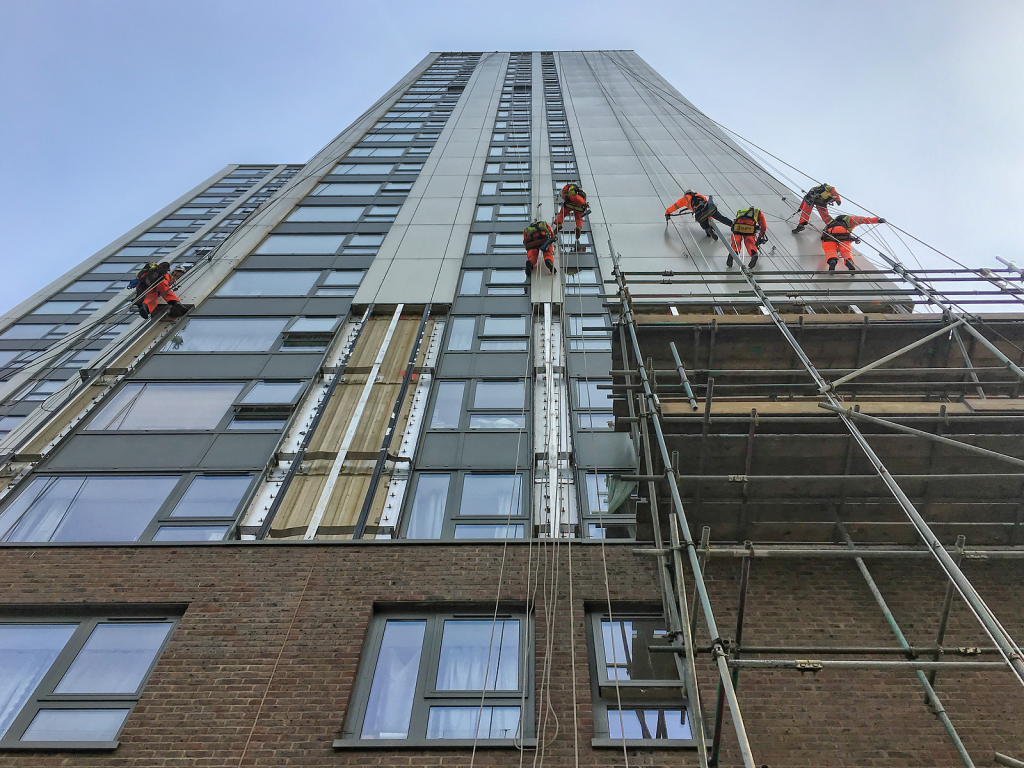
Cladding systems — whether modern panels or traditional tile-hanging — need systematic inspection of fixings, panel condition, and weatherproofing integrity. We examine every panel for damage, assess fixing corrosion or loosening, and identify any movement or deflection suggesting structural concerns.
Recent building safety legislation has made cladding inspections particularly critical, with building owners bearing legal responsibilities for maintaining safe cladding systems.
Glazing and window systems are inspected for sealed unit failures (visible as condensation between panes), frame deterioration, failed weatherseals, and any structural concerns with the glazing installation.
Window failures cause heat loss, condensation problems, and water ingress, whilst also increasing energy costs substantially.
The Concealed Structure Beneath
Surface inspections only reveal part of the building condition story. During our building surveying, we look for indicators of concealed problems — patterns of cracking suggesting structural movement, water staining indicating hidden leaks, or deflection in elements suggesting overloading or deterioration.
Some defects hide completely until catastrophic failure occurs. Corrosion of structural steel within cladding systems, deterioration of concealed timber structures, or progressive failure of concrete reinforcement all develop invisibly.
Systematic inspection identifies the warning signs before failures become emergencies.
Does Regular Inspection Actually Save Money?
The financial case for regular building surveying appears counterintuitive — spending money on inspections when nothing seems wrong feels unnecessary. The mathematics of building maintenance tells a different story.
The Exponential Cost Escalation of Neglect
Building deterioration follows predictable patterns. Small defects cause minimal damage initially but create conditions for accelerated degradation.
A tiny crack in render might cost £50 to repair if caught early. Left unaddressed, water penetrates through that crack, saturating the substrate, causing the crack to expand through freeze-thaw cycles, and eventually leading to large-scale render delamination requiring £5,000+ remediation.
This cost escalation isn’t linear — it’s exponential.
We provide building surveying that identifies defects whilst they remain minor, creating maintenance schedules that address problems at the lowest-cost intervention point. This approach requires regular inspection intervals.
Insurance and Liability Considerations
Building inspections create documented evidence of responsible building stewardship. This documentation proves valuable in multiple scenarios.
Insurance claims for weather damage or building failures are strengthened when you can demonstrate regular professional inspections and appropriate maintenance responses to identified defects.
Some insurance policies specifically require periodic professional building inspections as a condition of coverage, particularly for commercial properties or buildings with known risk factors.
Failing to conduct required inspections can void coverage entirely, leaving building owners exposed to catastrophic financial consequences.
Planning Major Works Intelligently
Comprehensive building surveying provides the data foundation for intelligent capital planning. Rather than waiting for emergency repairs to dictate spending, you can schedule major works strategically, obtaining competitive quotes during contractors’ quieter periods and bundling related works for efficiency.
Building maintenance often benefits from economies of scale. If waterproofing repairs are needed on one façade, inspecting all façades might reveal early-stage defects worth addressing during the same project whilst access systems are already established.
We conduct building surveying that maps all defects across the entire building envelope, allowing property owners to develop phased maintenance programmes that optimise cost-efficiency.
Keep your building safe.Learn more about our inspection services!
When Should Different Building Types Be Inspected?
Inspection frequency should reflect building age, construction type, exposure conditions, and regulatory requirements. We provide building surveying across this full spectrum, tailoring inspection protocols to specific building characteristics.
Modern Commercial Buildings
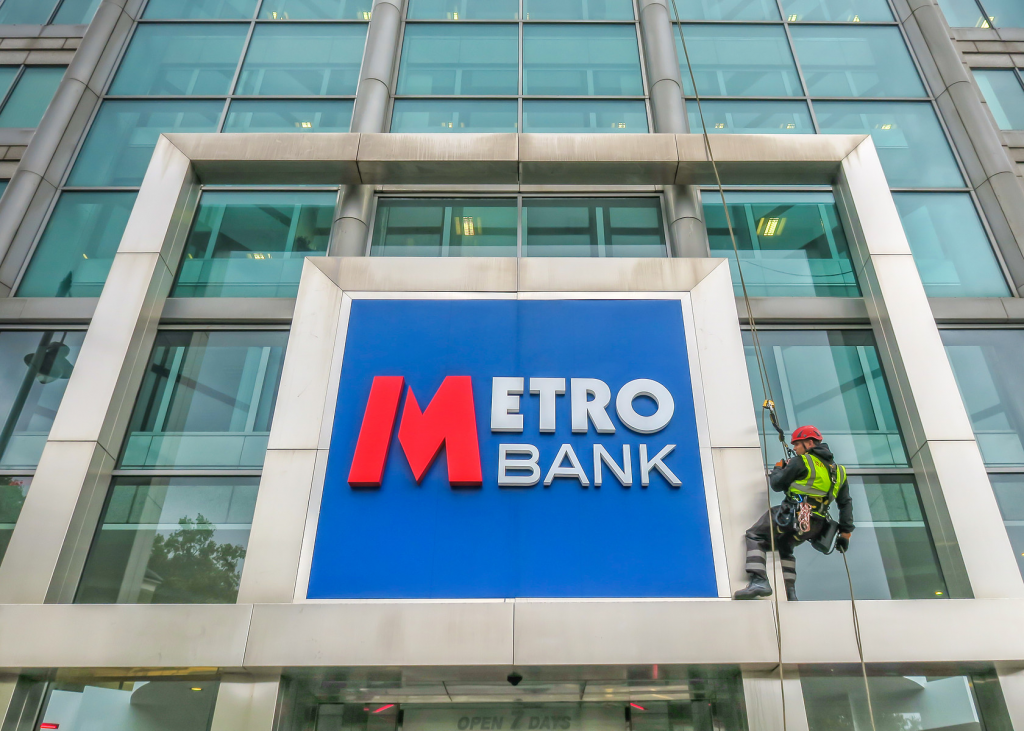
Commercial properties typically benefit from annual roof and façade inspections. These buildings often feature complex cladding systems, extensive glazing, and sophisticated weatherproofing details that require regular professional assessment.
We examine cladding fixings, assess glazing systems, inspect roof membranes, and evaluate drainage functionality.
Modern buildings aren’t necessarily lower maintenance than historic structures — they’re differently complicated. Cladding systems with multiple component interactions, sealed glazing units with finite lifespans, and membrane waterproofing requiring periodic replacement all demand systematic inspection to identify issues before failures occur.
Residential Tower Blocks
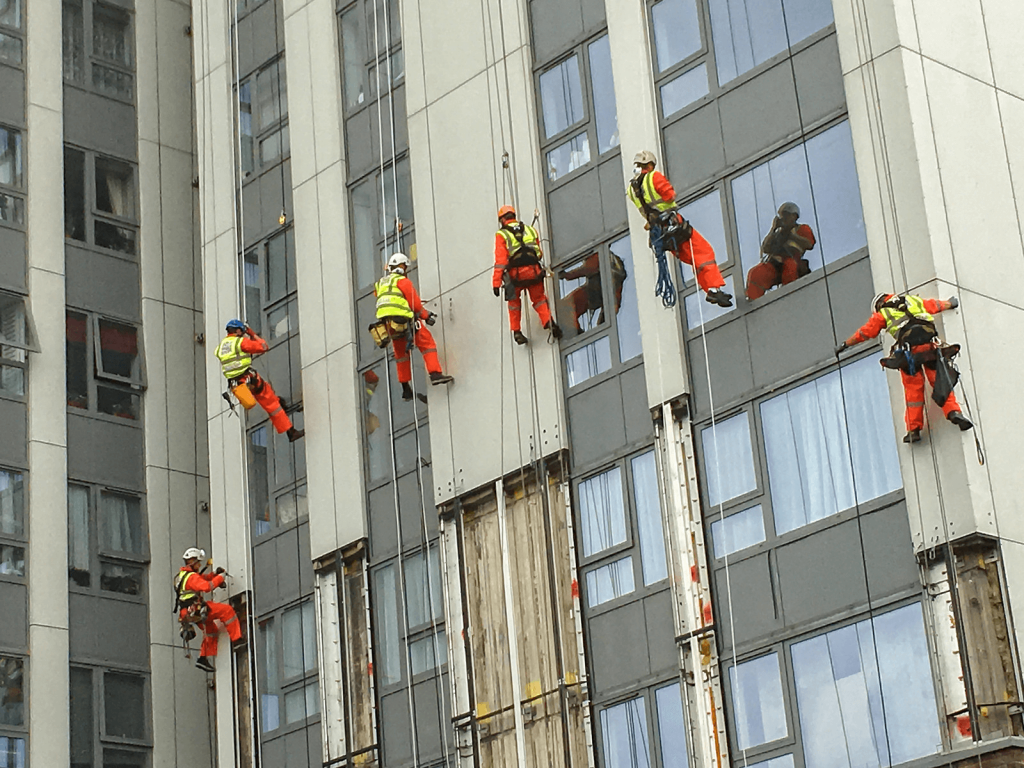
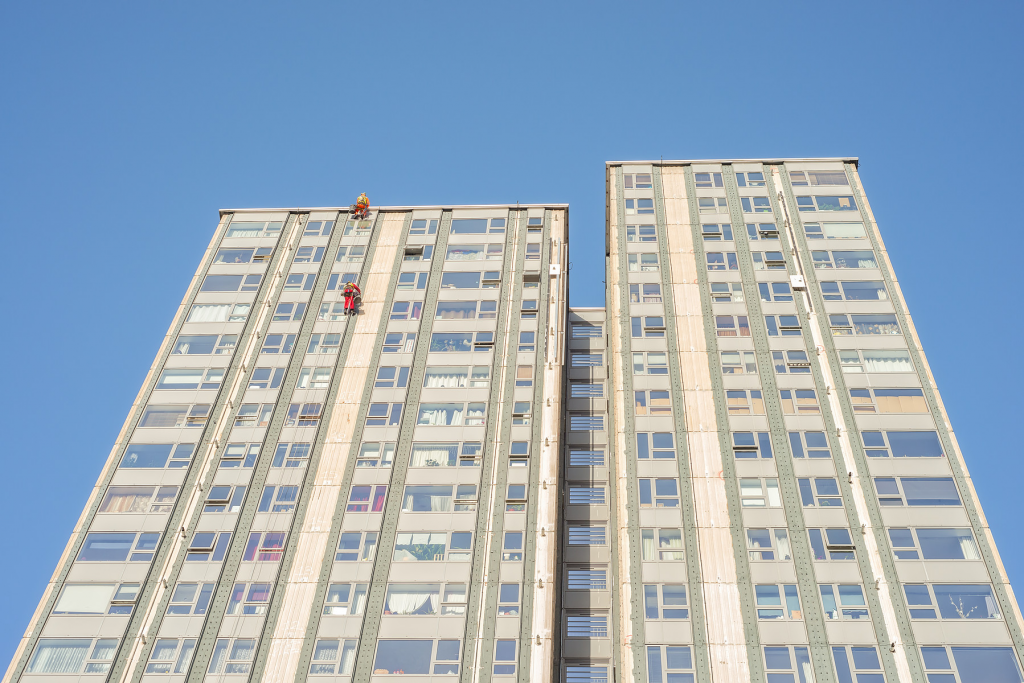
High-rise residential buildings face particularly rigorous inspection requirements following recent building safety legislation. The Building Safety Act mandates specific inspection regimes for buildings exceeding certain heights, with building owners bearing legal responsibilities for maintaining comprehensive safety documentation.
Beyond regulatory compliance, tower blocks experience specific deterioration patterns. Wind exposure increases dramatically with height, causing accelerated weathering of façade elements. Thermal movement in tall structures creates stresses that don’t affect low-rise buildings.
We conduct building surveying on residential towers that addresses both regulatory requirements and the specific technical challenges these buildings present.
Historic and Listed Buildings
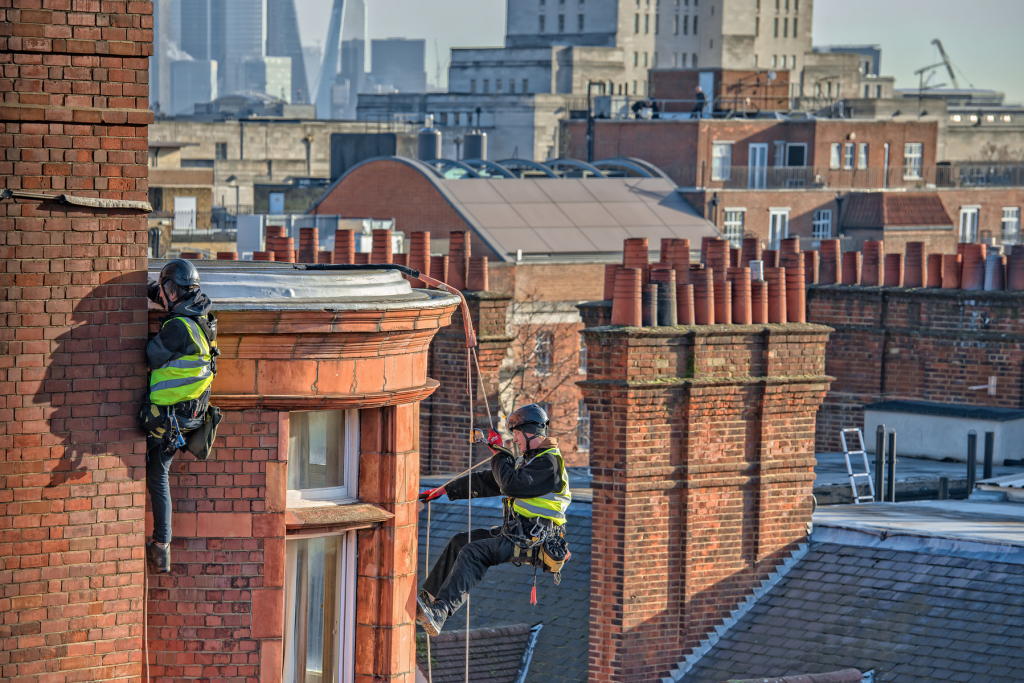
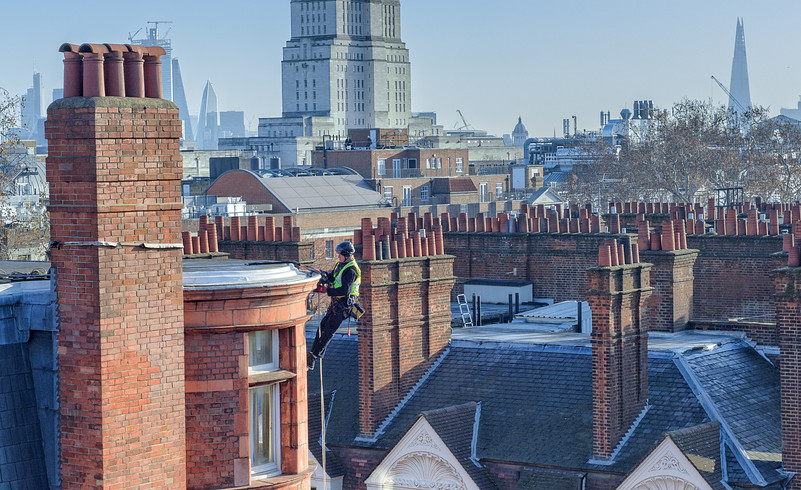
Heritage buildings require specialist inspection approaches that recognise historic construction methods and appropriate conservation principles. We work on listed buildings throughout London, conducting building surveying that identifies deterioration whilst respecting conservation requirements.
Historic buildings often deteriorate differently than modern structures. Traditional lime mortars, porous brickwork, and timber-framed construction all require assessment by inspectors who understand these materials and their characteristic failure modes. Inappropriate modern repairs can cause more damage than the original defects.
Inspection intervals for historic buildings depend on condition and exposure, but annual assessment is typically appropriate for buildings showing active deterioration or located in high-exposure environments.
Industrial and Specialist Structures
Our industrial rope access experience informs our approach to inspecting industrial buildings, warehouses, and specialist structures. These buildings often feature large-span roofs, extensive cladding systems, and exposure to industrial processes that accelerate deterioration.
Industrial building inspection priorities include structural steel corrosion assessment, roof covering condition across large areas, cladding integrity where buildings contain valuable equipment or inventory, and identification of any defects creating safety hazards in working environments.
What Makes Rope Access the Superior Inspection Method?
Building surveying requires accessing every building surface to document conditions accurately. The inspection methodology directly impacts both the quality of data collected and the cost-effectiveness of the inspection process.
Comprehensive Access Without Compromise
Traditional ground-level inspections using binoculars or telephoto cameras provide limited information. Surface defects might be visible, but detailed assessment of defect severity, substrate condition, or concealed problems requires close inspection impossible from ground level.
Scaffolding provides access but at costs often exceeding the value of routine inspections. Mobile elevated work platforms (cherry pickers or scissor lifts) work well for some buildings but require ground-level access space, can’t reach all façade areas, and become prohibitively expensive for tall buildings.
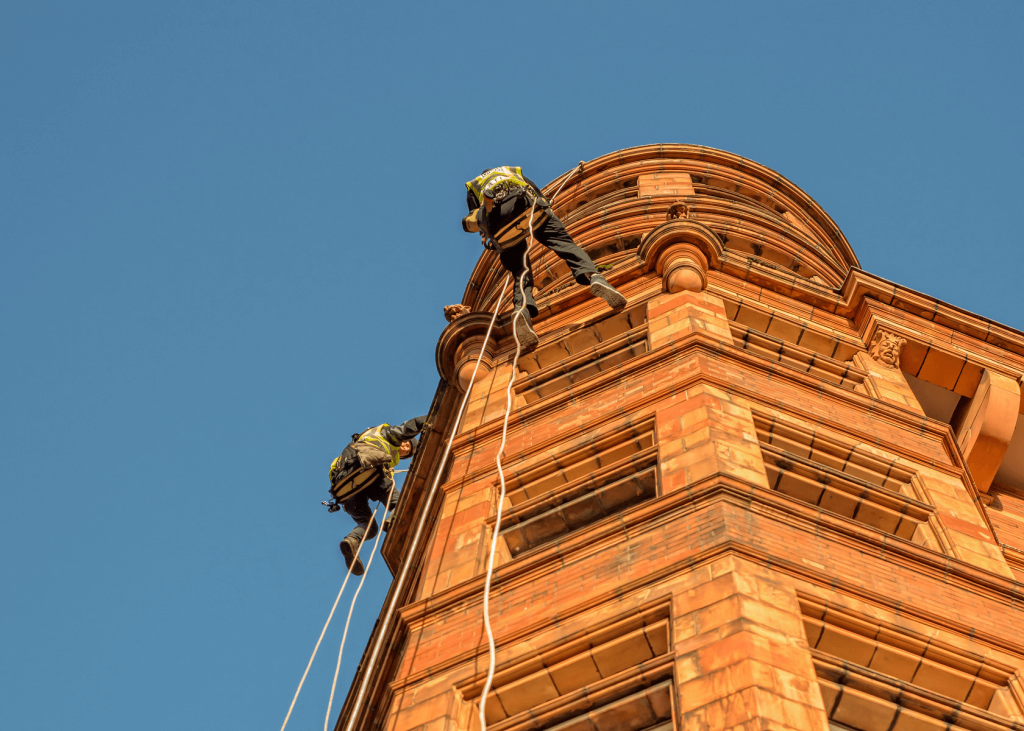
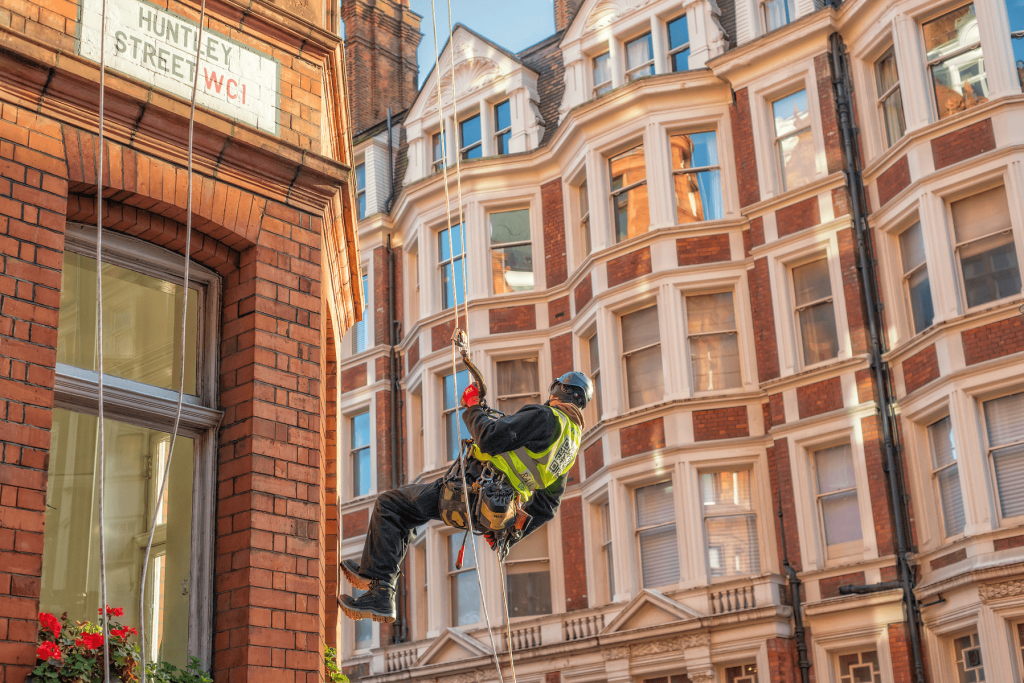
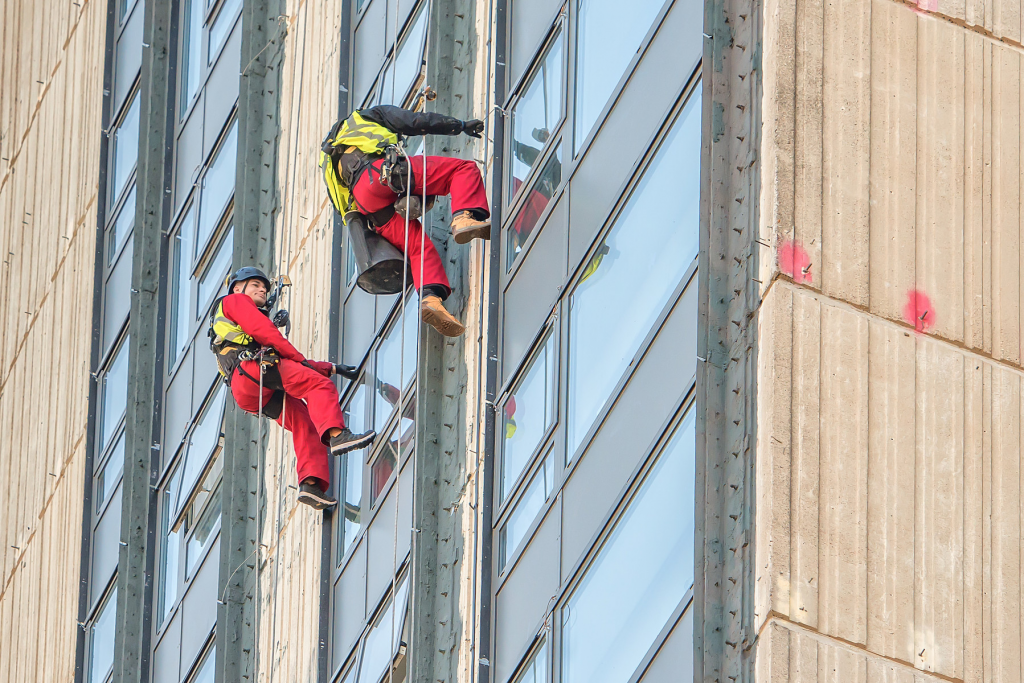
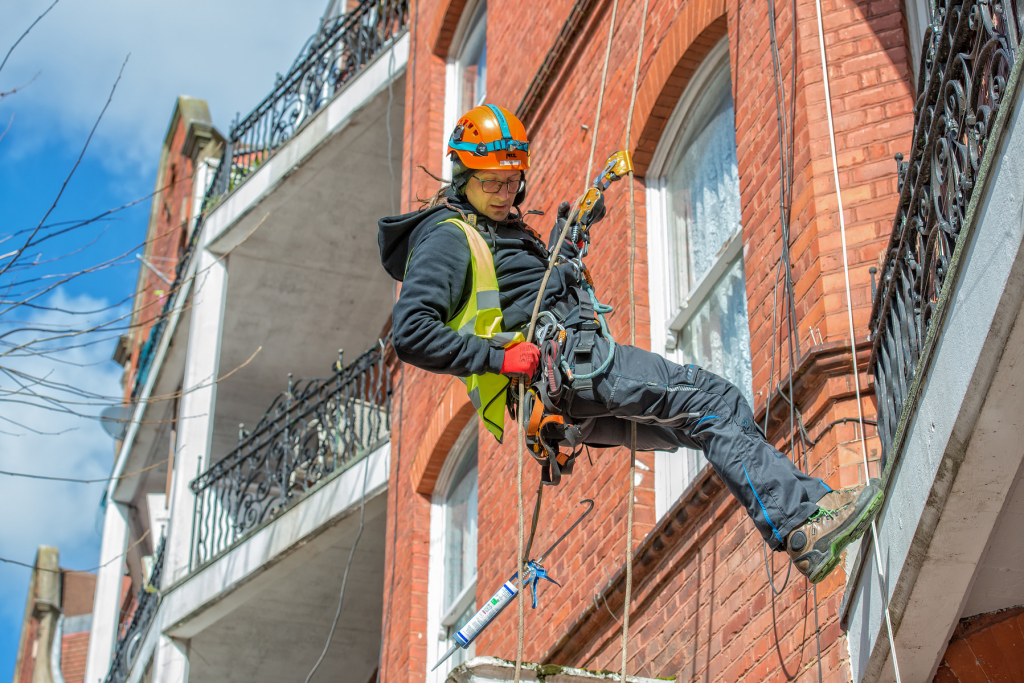
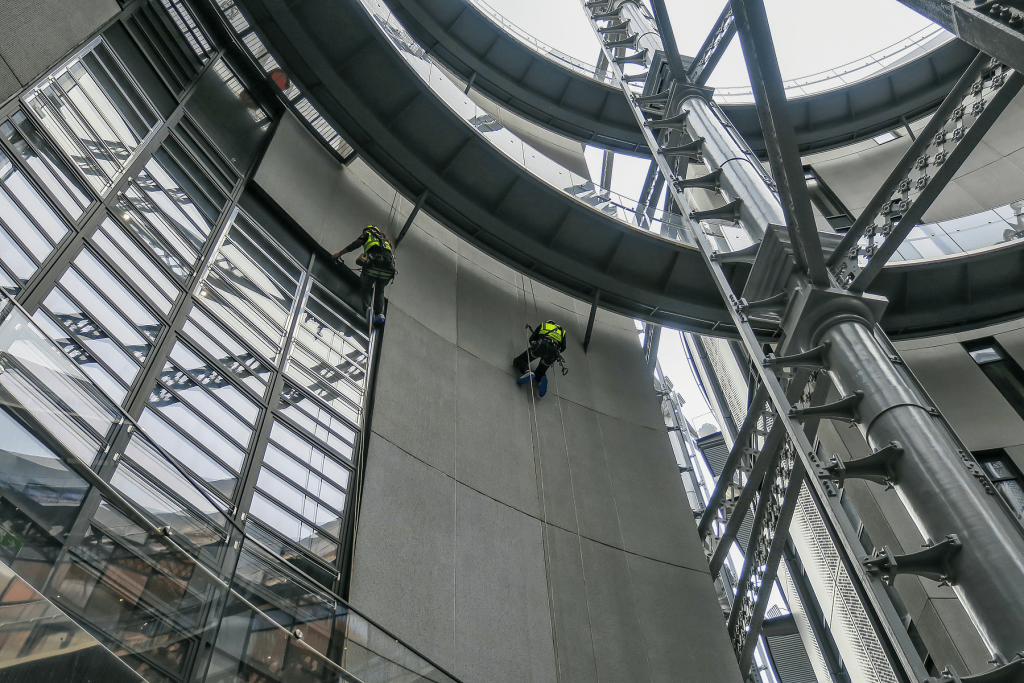
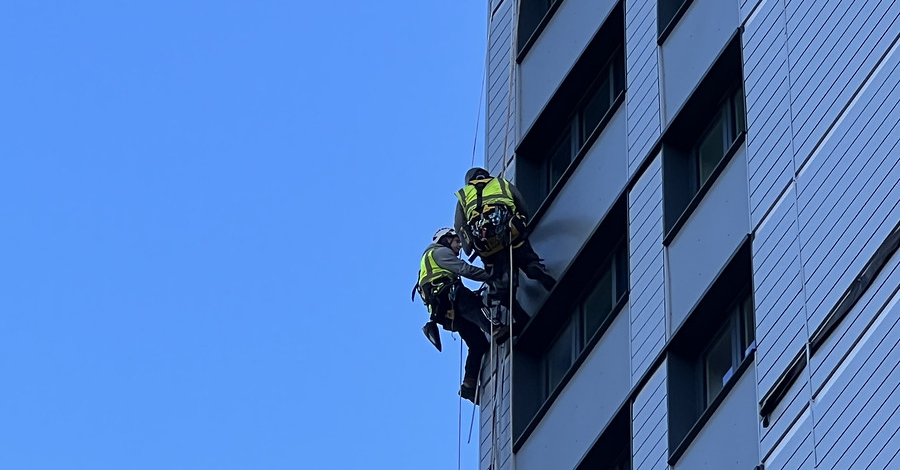
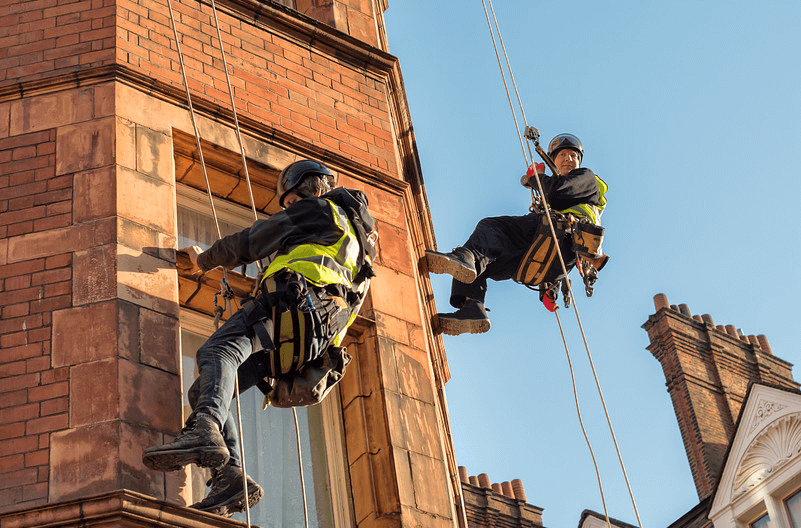
Rope access allows our building surveyors to position themselves directly at any building surface, examining details closely, photographing defects, and assessing conditions that remain invisible to ground-based observation. We inspect every building element systematically rather than sampling accessible areas and extrapolating.
Documentation Quality and Detail
Modern building surveying produces detailed photographic records with each defect precisely located and described. We use high-resolution photography during inspections, creating visual documentation that allows building owners, engineers, and contractors to understand defect severity and plan appropriate responses.
Our building surveying reports include comprehensive photographic appendices showing every identified defect with location data and severity assessment.
Efficiency and Cost-Effectiveness
Rope access building surveying delivers comprehensive building assessments at costs typically 40-60% lower than scaffolding-based inspections. This cost advantage makes regular inspection programmes financially viable rather than prohibitively expensive.
We mobilise quickly, conduct systematic inspections efficiently, and provide detailed reports that support informed maintenance decision-making.
The combination of speed, comprehensive access, and detailed documentation makes rope access the optimal methodology for professional building surveying.
Conclusion
Roof and façade inspections represent essential building stewardship rather than optional extras. The buildings we inspect regularly demonstrate consistently lower maintenance costs, avoid emergency repairs, maintain their value better, and provide safer, more comfortable environments for occupants.
Whether your property is a modern commercial tower, residential building, historic structure, or industrial facility, professional building inspection should be scheduled regularly rather than reactively.
We offer building surveying alongside our comprehensive range of services, creating opportunities to address identified defects using the same access methodology that made inspection possible.
The question isn’t whether inspections are worth the cost — it’s whether you can afford the consequences of not knowing your building’s true condition until failures force expensive emergency responses.
Get a professional inspection for your building.Contact us for a quote!
Frequently Asked Questions
How long does a typical building inspection take?
Inspection duration varies with building size and complexity. A modest residential building might require half a day for comprehensive roof and façade surveying, whilst a large commercial property or tower block could take several days. We provide time estimates during initial consultations based on building characteristics.
Can inspections be conducted in winter or bad weather?
Yes, with appropriate precautions. Rope access inspections proceed in weather conditions that would halt scaffolding work, though extreme conditions (heavy rain, high winds, ice on surfaces) require postponement for safety.
Winter inspections actually offer advantages — defects causing water ingress are often most apparent during wet weather, and thermal imaging for heat loss assessment works best in cold conditions.
Are there legal requirements for building inspections?
Requirements vary by building type and use. The Building Safety Act introduced specific inspection obligations for higher-risk residential buildings. Commercial properties may have lease obligations specifying inspection frequencies. Some insurance policies mandate periodic professional inspections.
Beyond formal legal requirements, building owners owe general duties of care to maintain buildings safely. Regular professional inspections demonstrate responsible compliance with these duties.