

The tragic death of two-year-old Awaab Ishak in 2020 sent shockwaves through the UK’s housing sector, exposing systemic failures in how we maintain our buildings and protect residents from environmental hazards.
The resulting legislation, known as Awaab’s Law, is a fundamental shift in accountability that’s forcing property managers, landlords, and building owners to take a long, hard look at their maintenance practices.
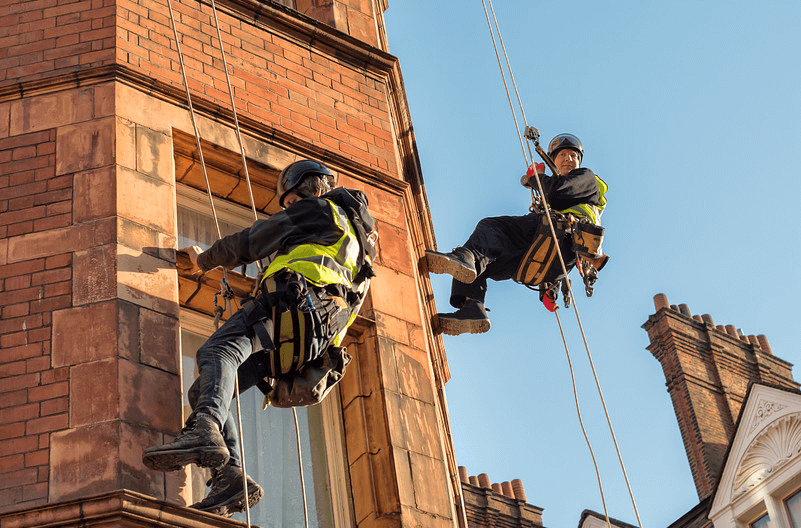
When compliance deadlines are tight and the consequences of failure are severe, traditional inspection methods simply don’t cut it anymore. Rope access techniques offer a faster, more cost-effective, and comprehensive solution that’s perfectly suited to the new regulatory landscape.
What Exactly Is Awaab’s Law?
Awaab’s Law, which came into force in England in 2023 as part of the Social Housing (Regulation) Act 2023, establishes strict timeframes for social landlords to investigate and remedy hazards such as damp and mould. Landlords now have 14 days to investigate reported health hazards and a further 7 days to begin remedial work.
But here’s what most people miss: whilst the law specifically targets social housing, it’s creating a ripple effect across the entire property sector.
The Broader Implications Nobody’s Talking About
The legislation isn’t operating in a vacuum. It’s part of a wider trend towards increased building safety regulation following the Grenfell Tower tragedy and the introduction of the Building Safety Act 2022.
Private landlords, commercial property owners, and residential management companies are all taking note because the direction of travel is clear: regulatory authorities are no longer willing to accept “we didn’t know there was a problem” as an excuse.
We’ve seen this first-hand in our work. Property managers who previously conducted visual inspections from the ground are now requesting comprehensive building surveying services that examine every external surface, penetration point, and potential ingress route for water.
Why? Because damp and mould don’t just appear from nowhere — they’re symptoms of underlying building defects that often originate on the exterior.
The Hidden External Causes of Internal Problems
Here’s something that surprised many of our clients: the majority of damp and mould issues that plague building interiors actually start on the outside. Failed cladding seals, compromised waterproofing membranes, blocked gutters, damaged render, deteriorating masonry — these external defects create pathways for water ingress that eventually manifest as those telltale dark patches on internal walls.
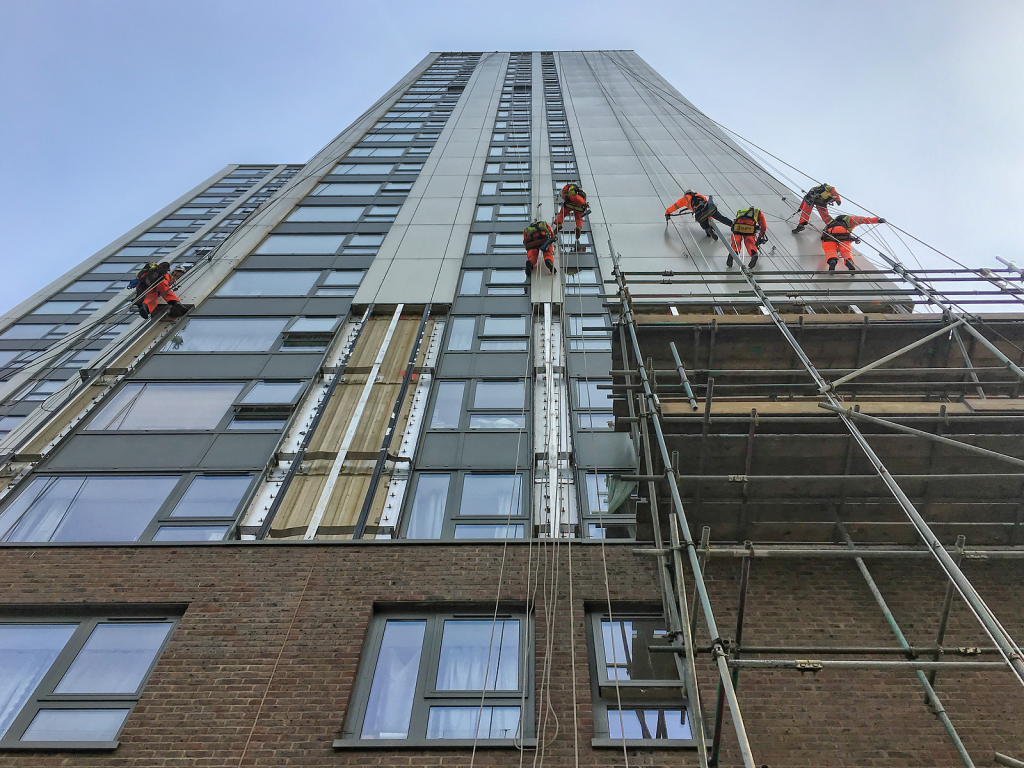
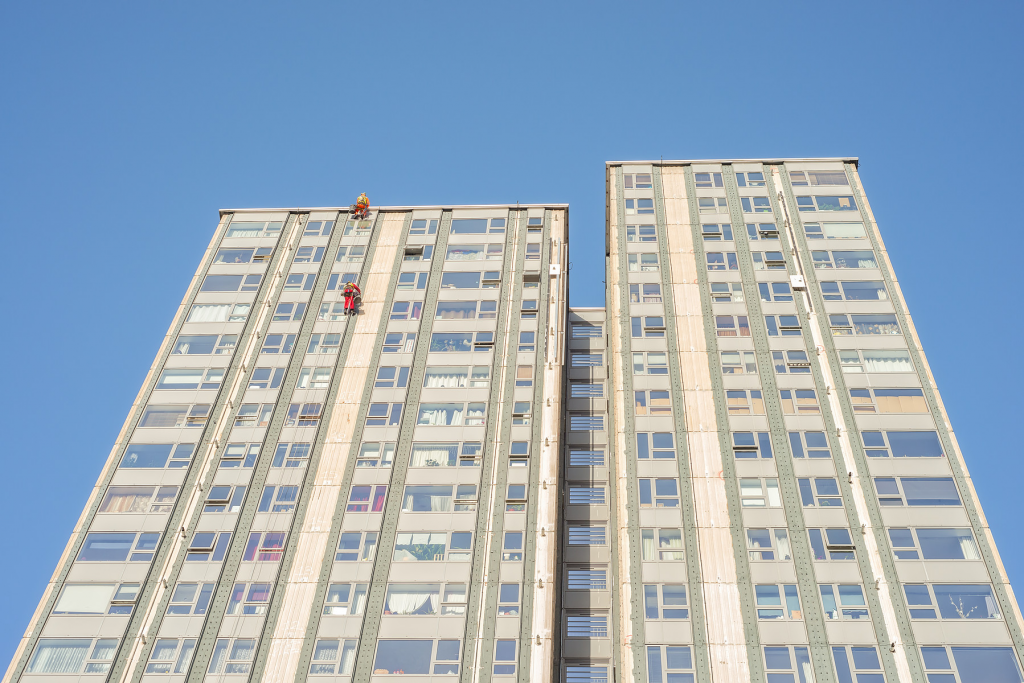
Traditional ground-level inspections miss these problems entirely. You simply can’t see a hairline crack in eighth-floor cladding from the pavement, and you certainly can’t assess the condition of roofline waterproofing without getting up close.
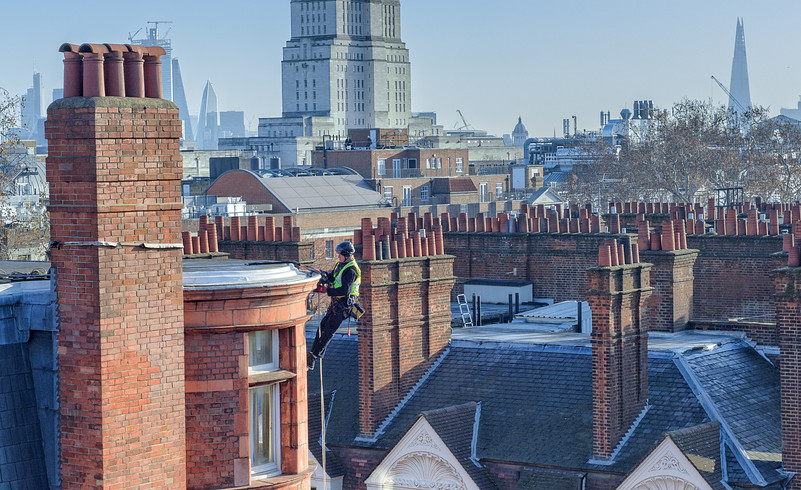
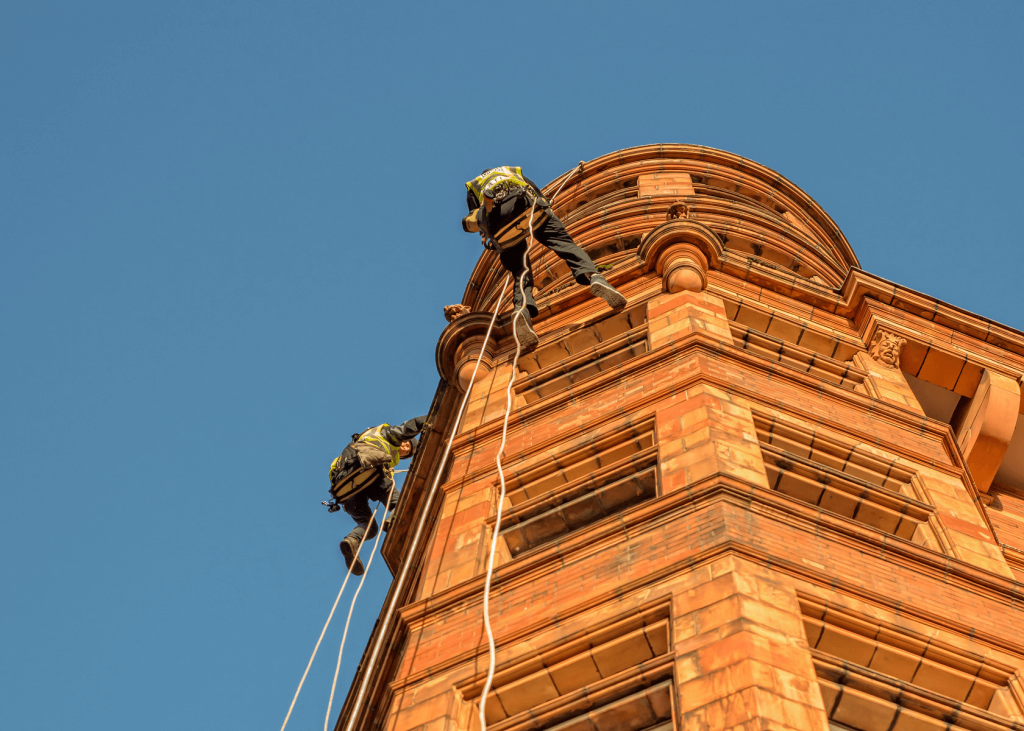
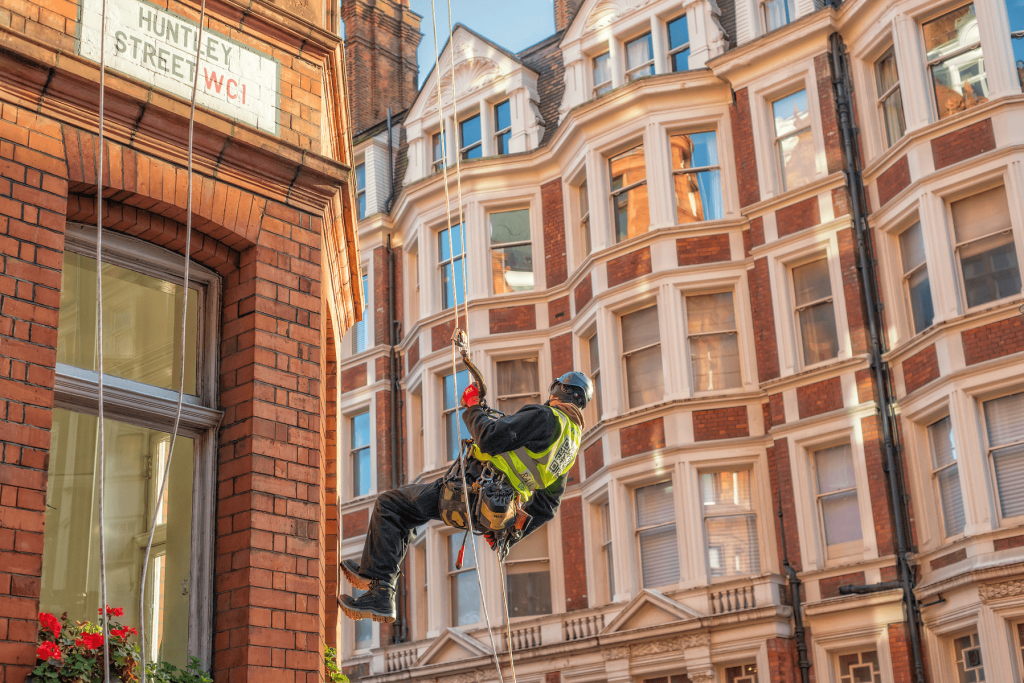
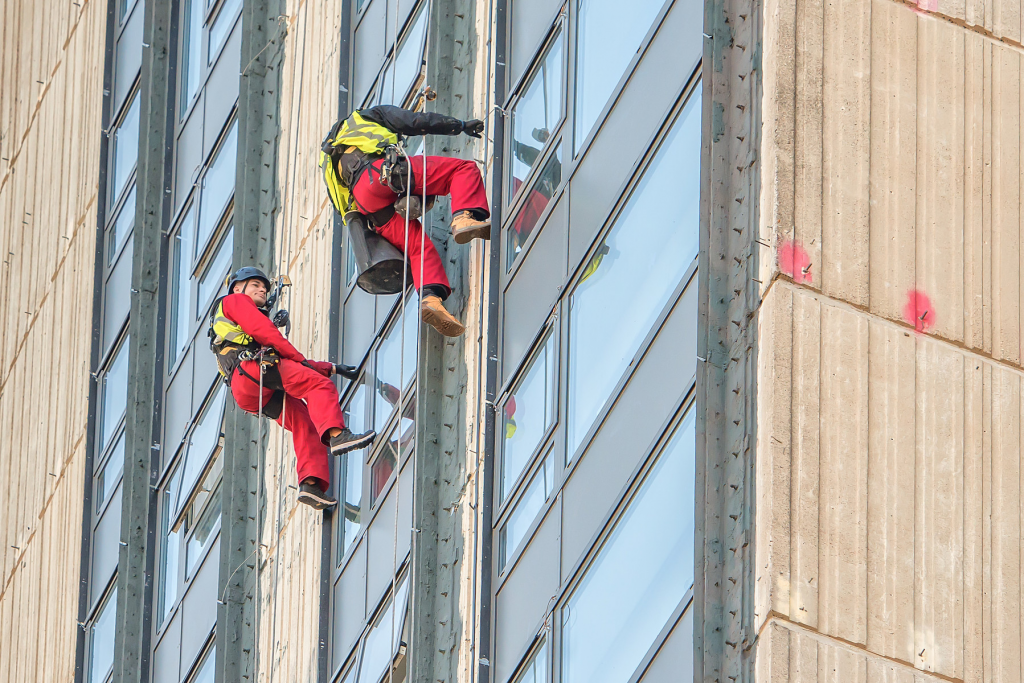
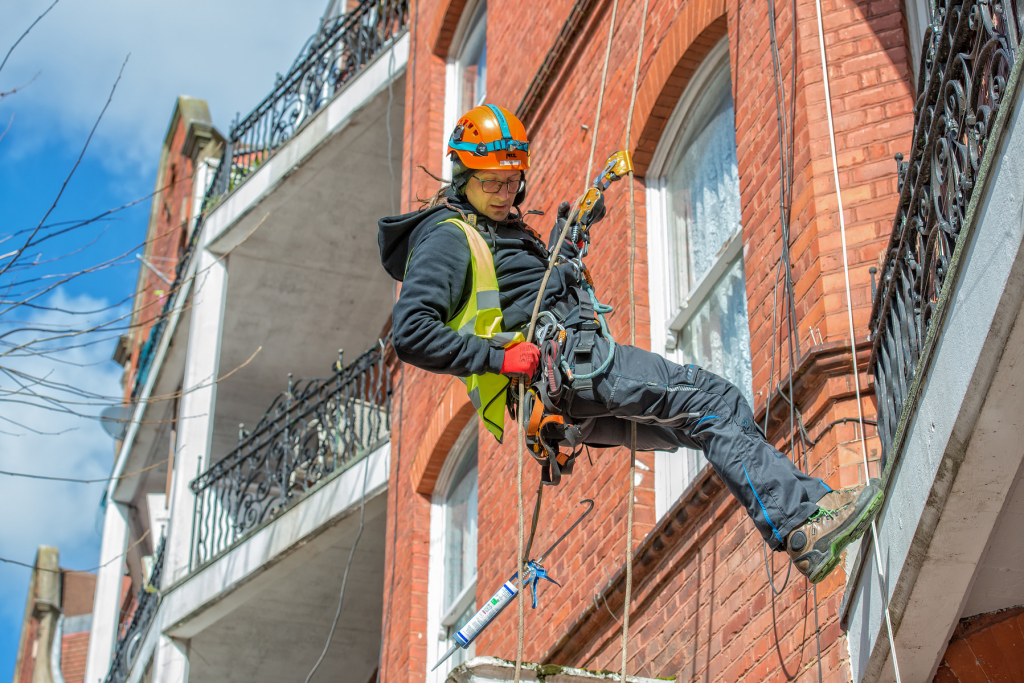
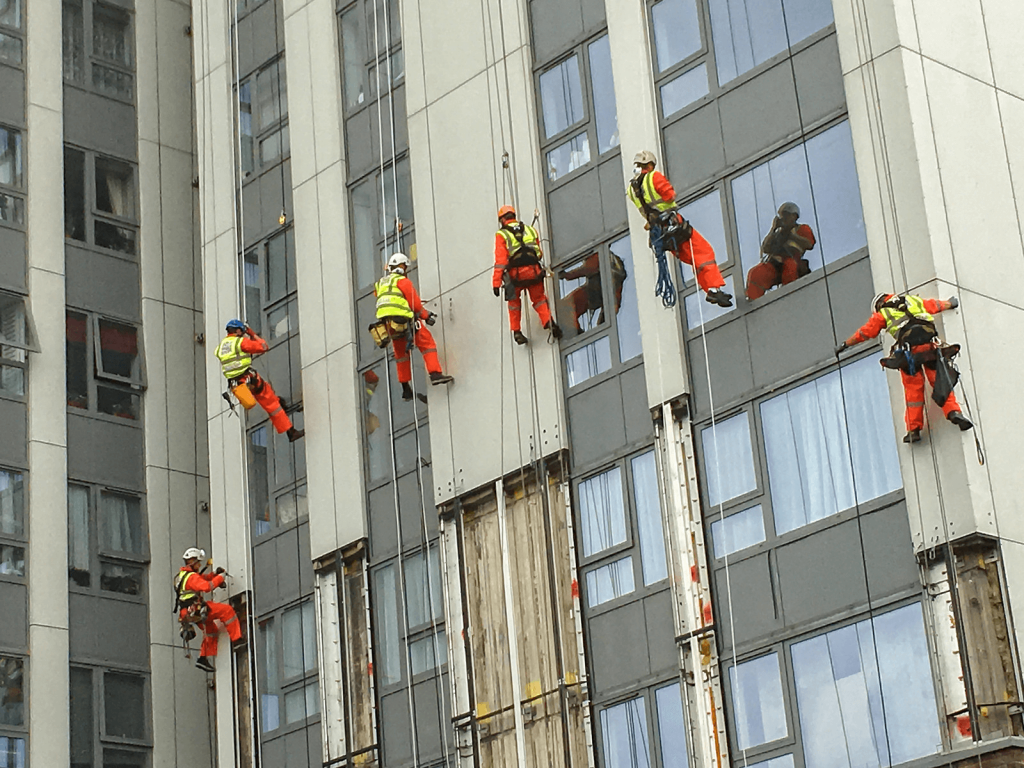
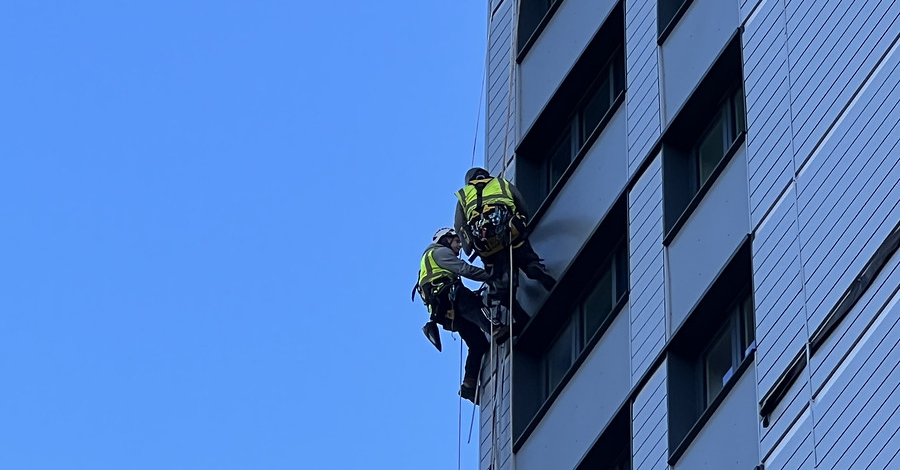
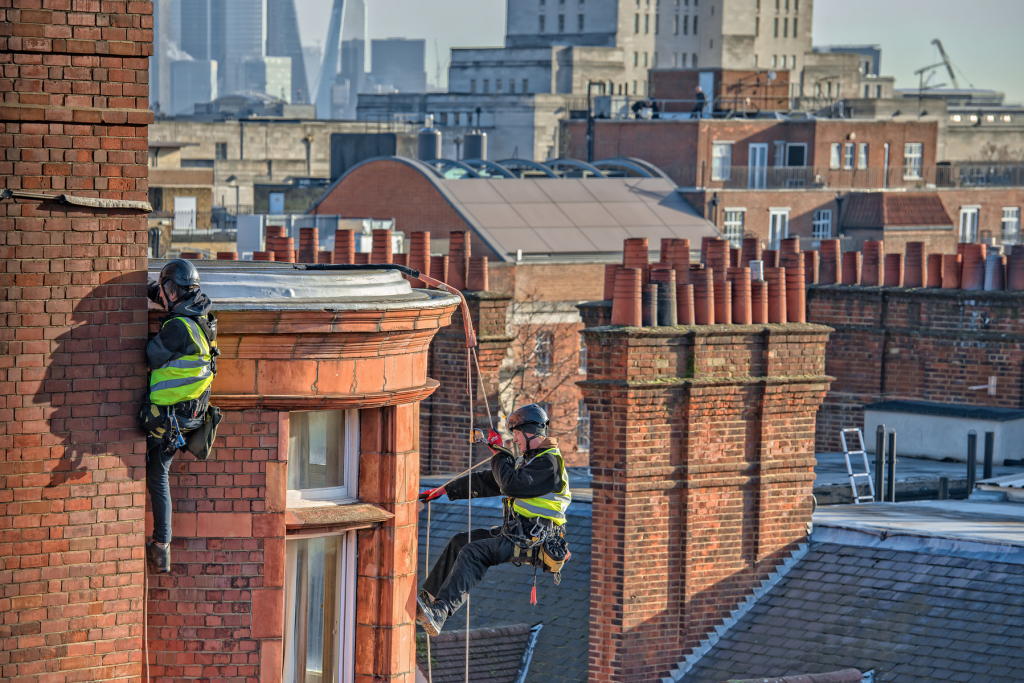
This is precisely why we’ve developed our specialist external painting, waterproofing, and cladding inspection services using rope access techniques — to catch these problems before they become compliance nightmares.
Concerned about Awaab’s Law compliance?Get a free, no-obligation building survey quote from our IRATA-certified team today!
Why Is Rope Access the Most Sensible Solution for Post-Awaab’s Law Building Inspections?
Traditional access methods — scaffolding, mobile elevated work platforms (MEWPs), cherry pickers — all have their place.
But when you’re facing tight compliance deadlines, budget constraints, and the need for minimal disruption, rope access offers advantages that are hard to ignore.
Speed and Flexibility That Traditional Methods Can’t Match
Here’s a fact that surprises many first-time clients: our rope access technicians can often set up and begin work in the time it takes to just schedule a scaffolding erection. There’s no waiting for materials to arrive, no multi-day installation process, no road closures or parking suspensions.
We assess the building, establish our rope systems, and start the inspection work — often on the same day.
This approach is genuinely transformative for building managers juggling Awaab’s Law compliance alongside their other responsibilities.
The Economics Make Compelling Sense
Rope access isn’t just faster — it’s usually significantly cheaper than traditional access methods for building inspections and maintenance.
- Scaffolding costs can easily run into tens of thousands of pounds for tall or complex buildings, with charges accumulating for every week it remains in place.
- MEWPs require traffic management, trained operators, and have weather limitations that can extend project timelines (and costs) unpredictably.
Our rope access services typically cost 40-60% less than scaffold-based alternatives for equivalent work scope.
There’s no materials to transport and store, no lengthy installation and dismantling processes billing at hourly rates, and our smaller footprint means fewer ancillary costs like parking suspensions or business disruption.
Safety and Minimal Disruption
There’s a common misconception that rope access is somehow “riskier” than other access methods. The reality is quite different. Industrial rope access technicians undergo rigorous IRATA (Industrial Rope Access Trade Association) certification and must demonstrate technical proficiency, rescue skills, and safety knowledge across three progressive levels. Our technicians are among the most highly trained access specialists in the construction industry.
Moreover, rope access creates minimal disruption to building occupants and surrounding areas. There’s no scaffold covering windows and blocking light for weeks. No bulky equipment monopolising parking areas or creating pedestrian obstacles. No noise pollution from scaffold erection at 7 AM.
For occupied residential and commercial buildings, this reduced disruption factor is genuinely valuable.
Explore our full range of rope access services and streamline your building maintenance!Frequently Asked Questions
Does Awaab’s Law apply to buildings outside of social housing?
Whilst Awaab’s Law specifically applies to registered social housing providers in England, its principles are influencing enforcement approaches across all housing tenures. The Housing Health and Safety Rating System (HHSRS) already applies to private landlords, and enforcement authorities are increasingly taking a stricter view of damp and mould issues following the Awaab’s Law precedent.
Can rope access techniques be used in all weather conditions?
Rope access work is weather-dependent, but perhaps less than you might expect. Light rain doesn’t necessarily prevent operations, though heavy rain, strong winds (typically above 25mph), ice, or lightning do create unsafe working conditions that require suspension of work.
The key advantage is flexibility: if conditions become unsuitable partway through a day, we can demobilise quickly and return when weather improves, without the sunk costs of hired equipment sitting idle.
How do I determine if my building needs a rope access inspection versus a ground-level survey?
If your building is over three storeys, has architectural features that obscure upper-level external walls from ground view, has a history of water ingress or damp issues, or hasn’t had a comprehensive close-quarters external inspection in the past five years, a rope access survey is almost certainly worthwhile.
Ground-level surveys using binoculars or zoom photography can identify obvious defects, but they fundamentally cannot assess material condition, joint integrity, or subtle defects that require tactile inspection.