

Damp and mould in social housing properties are rarely caused by tenant behaviour alone. Awaab’s Law guidance makes clear that landlords must investigate structural and maintenance issues that contribute to these hazards.
External building defects are often the hidden culprits, allowing water ingress that creates the perfect conditions for mould growth.
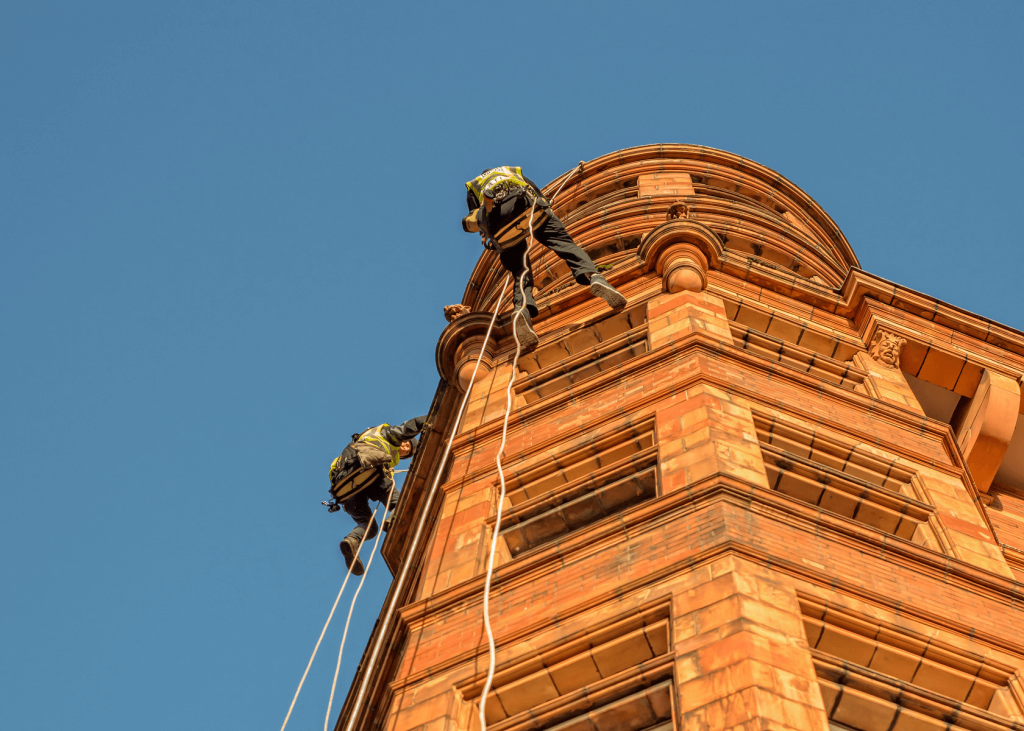
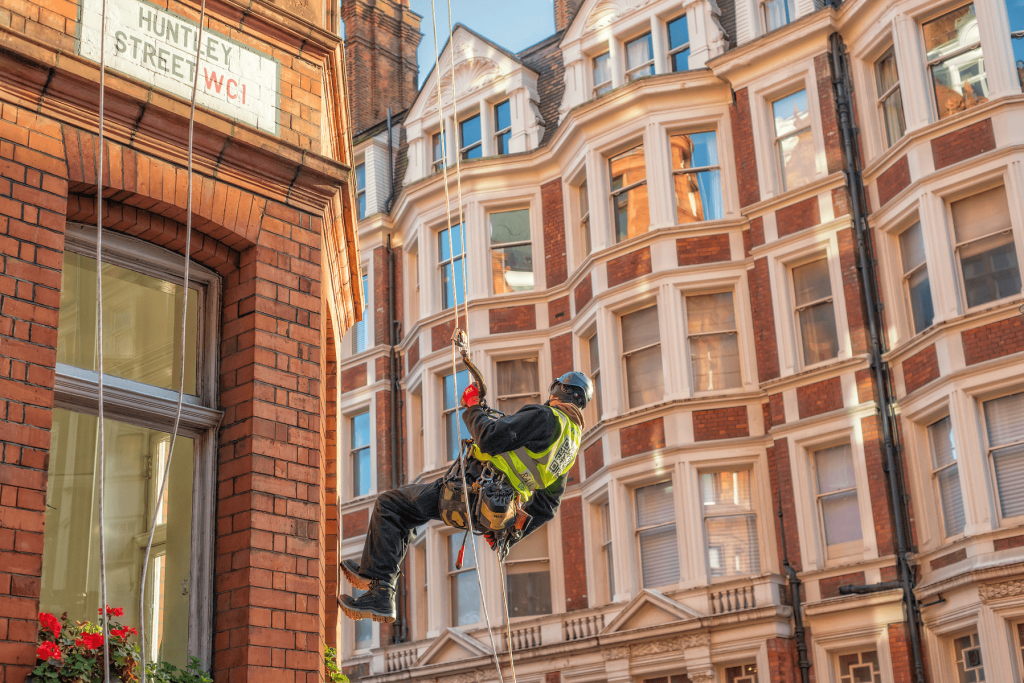
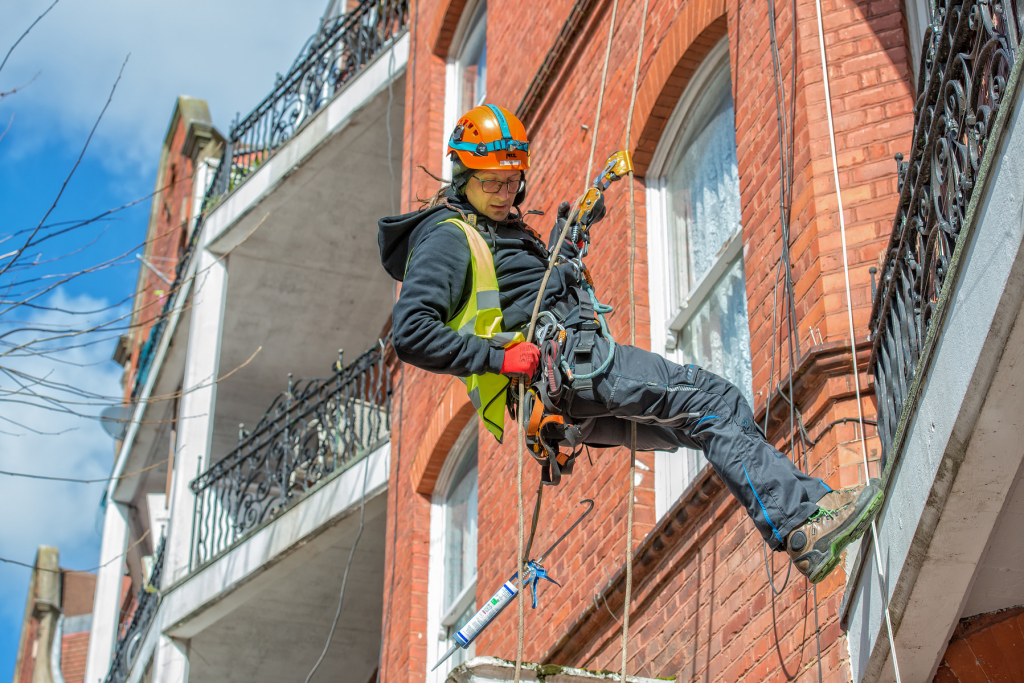
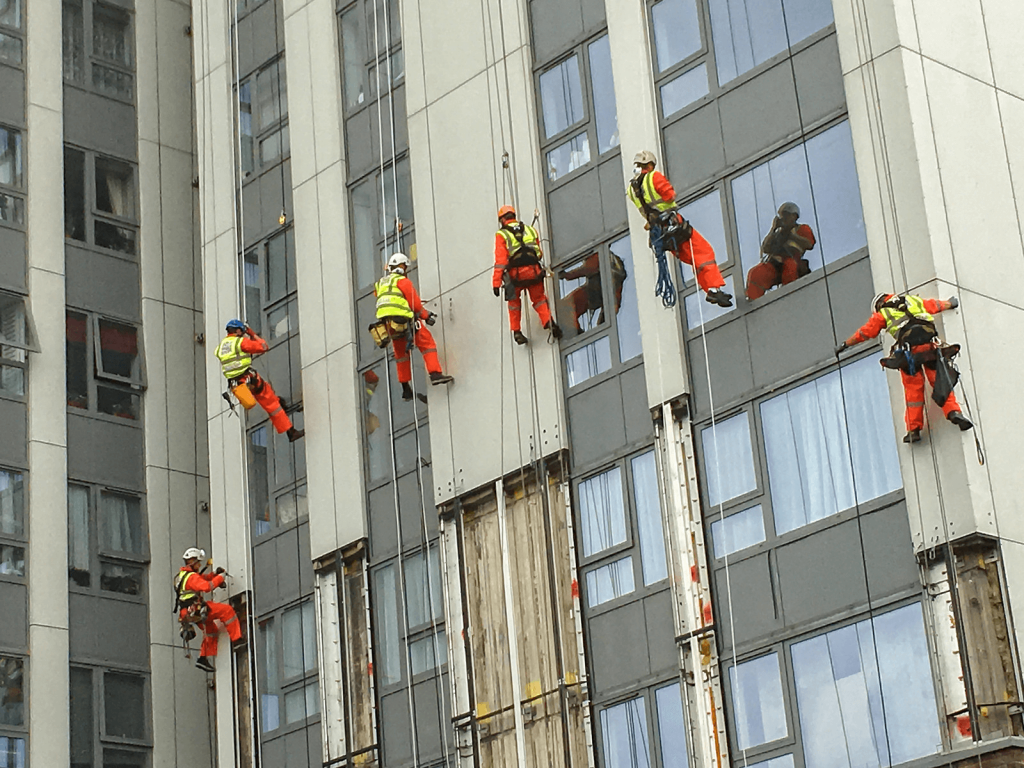
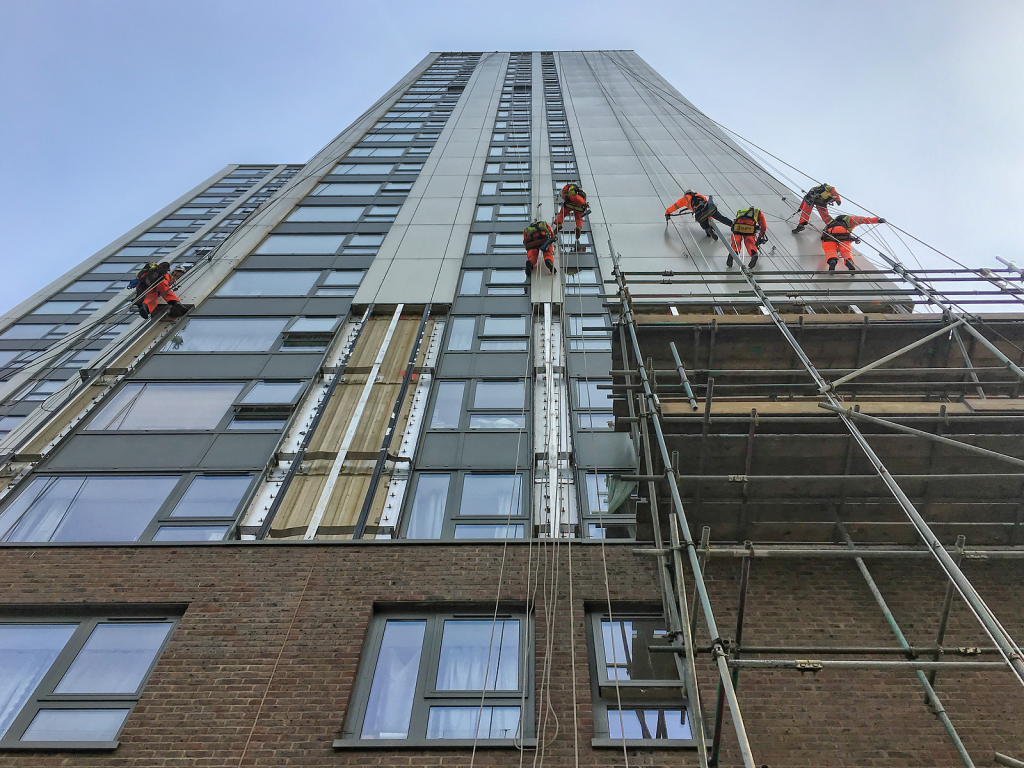
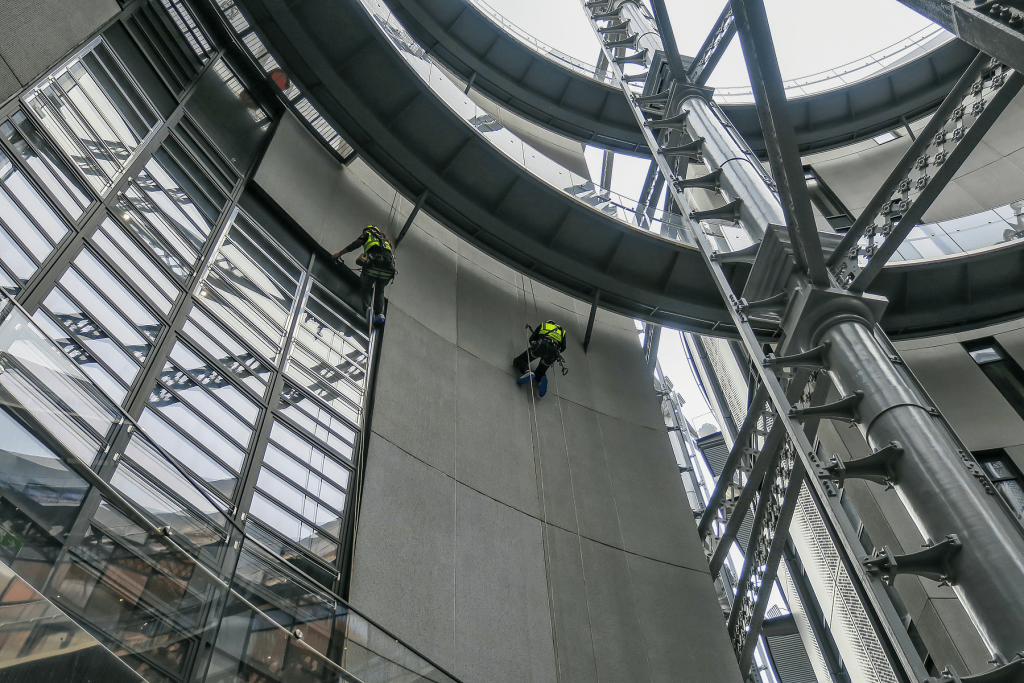
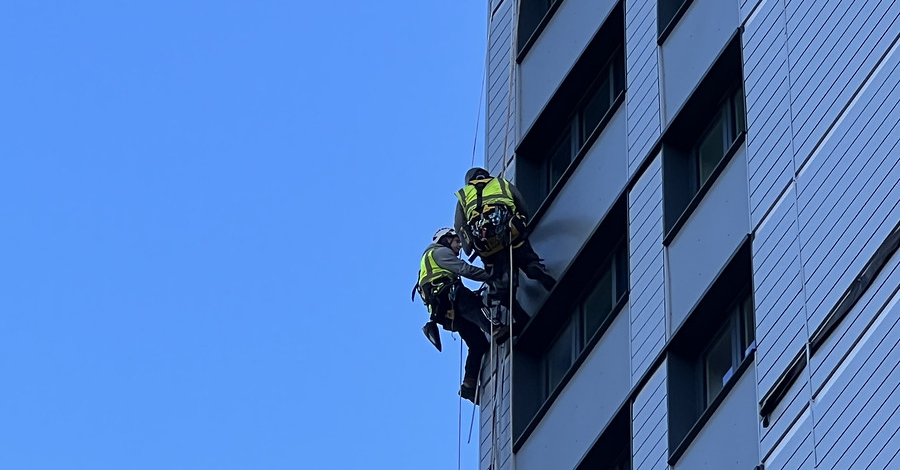
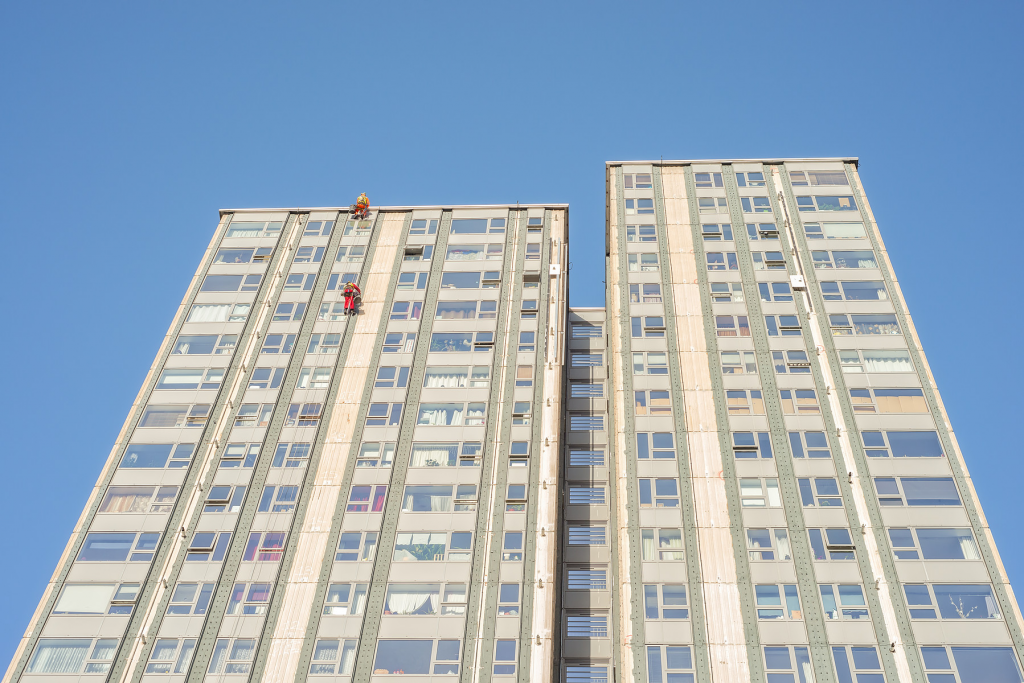
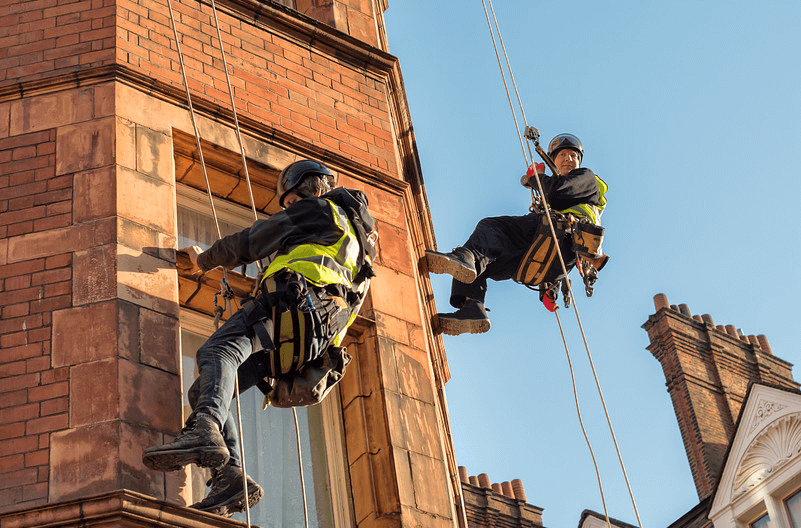
Rope access inspections enable rapid detection of these defects, ensuring landlords can address problems before they escalate into significant hazards.
Here are the most common external building defects identified during rope access inspections — and how they contribute to damp and mould issues inside tenants’ homes.
Roof Damage and Deterioration
Roofs are constantly exposed to harsh weather conditions, and over time, tiles crack, slip, or go missing entirely. Even a few damaged tiles can allow substantial water ingress, causing ceiling stains, damp patches, and mould growth in top-floor flats.
Lead flashing around chimneys, skylights, and roof junctions deteriorates with age, creating gaps where rainwater penetrates.
Rope access allows our technicians to conduct comprehensive roof inspections without scaffolding delays. We abseil across entire roof surfaces, identifying damaged tiles, failed flashing, deteriorating felt, and other defects.
Many of these issues can be repaired immediately during the same visit, preventing water ingress and protecting tenants from damp-related health risks.
Discover our Roof Maintenance servicesBlocked and Damaged Gutters
Blocked gutters are one of the most common — and most preventable — causes of damp problems.
When gutters fill with leaves, moss, and debris, water overflows and runs down external walls, saturating brickwork and causing penetrating damp inside the property. Cracked or sagging gutters leak water directly onto walls, whilst poorly jointed sections allow water to escape.
Regular rope access gutter clearance prevents these issues. Our technicians can clear, inspect, and repair guttering across entire buildings in a fraction of the time required by traditional methods.
For landlords managing large housing estates, scheduled rope access gutter maintenance is a cost-effective way to prevent damp problems before they develop.
Chimney Stack Defects
Many older social housing properties have disused chimney stacks that receive little maintenance.
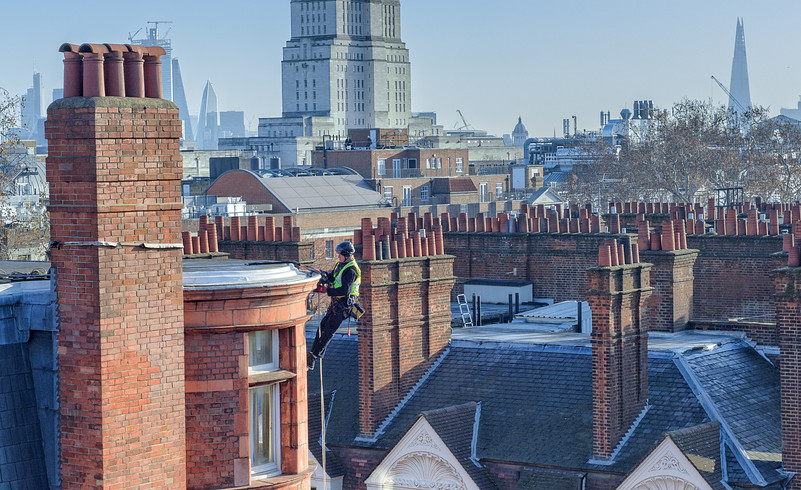
Over time, brickwork deteriorates, chimney pots crack, and flaunching (the cement around chimney pot bases) fails. These defects allow rainwater to travel down the chimney breast, causing damp patches and mould growth in bedrooms and living rooms.
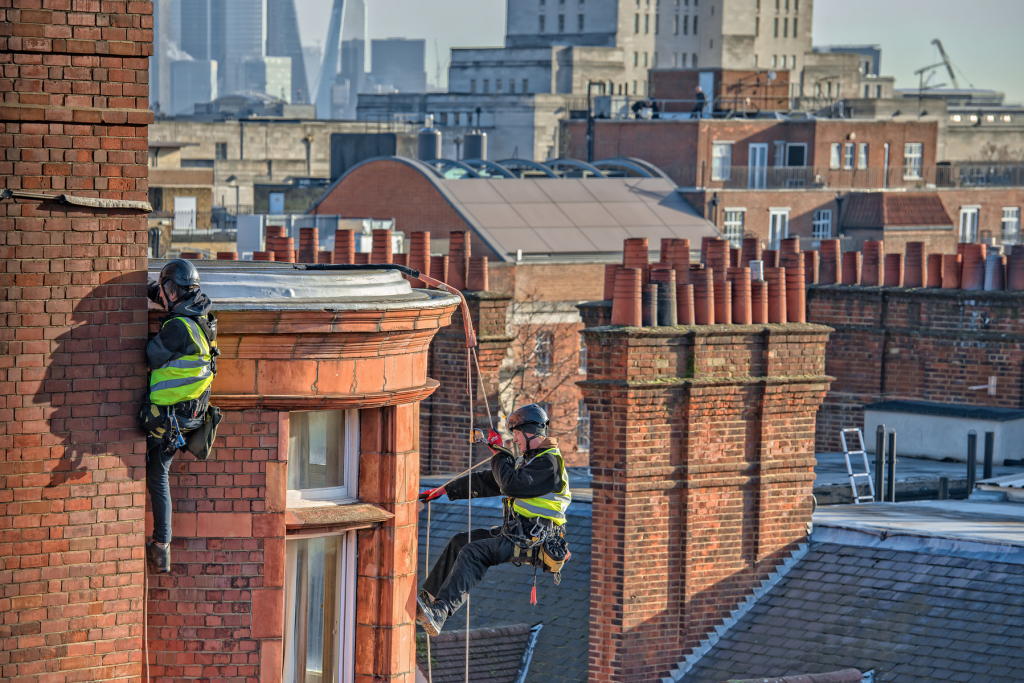
Rope access makes chimney maintenance straightforward. Our technicians inspect stacks, repoint brickwork, replace flaunching, and fit protective chimney caps to prevent water ingress.
This work can be completed quickly and affordably, even on high-rise buildings where chimney access would otherwise require extensive scaffolding.
Facade Cracks and Render Defects
Cracks in external walls provide direct pathways for water to enter the building fabric. These cracks develop due to thermal movement, settlement, or weathering, and can appear in brickwork, render, or around window and door openings.
Deteriorating render can trap moisture behind it, exacerbating damp problems rather than solving them.
Rope access inspections identify facade defects across all elevations, including areas that are difficult to see from ground level.
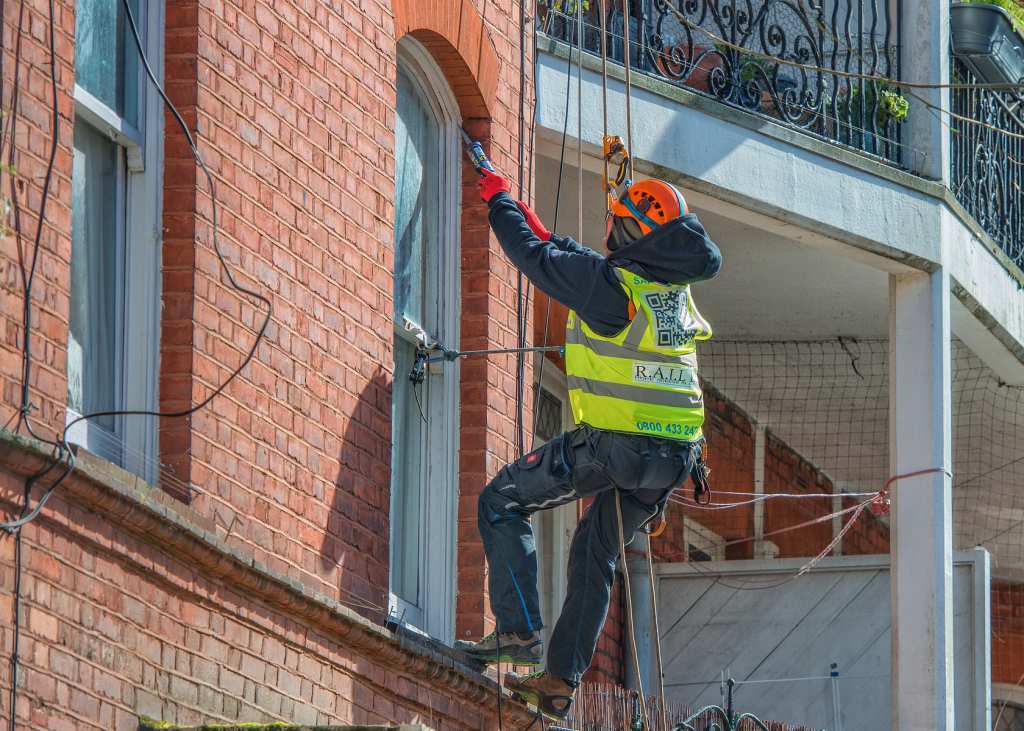
Our technicians document cracks, failed render, spalled brickwork, and deteriorating mortar joints, providing landlords with clear evidence of the issues contributing to internal damp.
Window and Door Seal Failures
Perished seals around windows and doors, failed mastic joints, and gaps in weather stripping allow rainwater penetration and cold bridging. This causes localised damp around frames and contributes to condensation and mould growth due to cold surfaces meeting warm, moist indoor air.
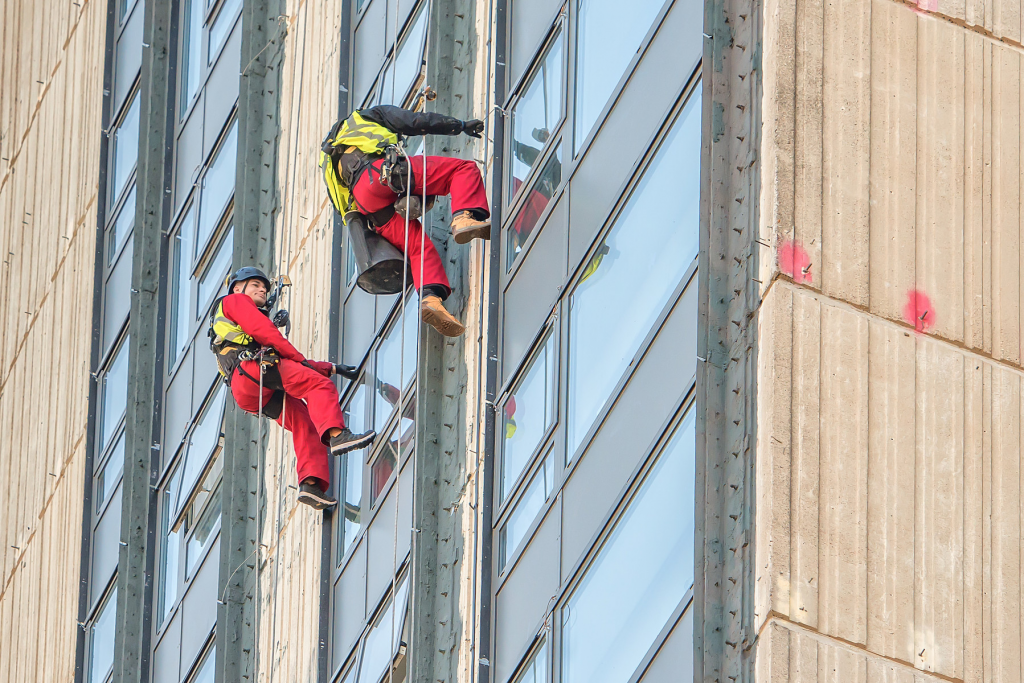
Rope access technicians can inspect and replace seals on external windows and doors across entire blocks of flats efficiently.
This preventative maintenance is particularly important for tower blocks and high-rise buildings, where internal access to external window seals may be impossible without rope access.
Parapet Walls and Coping Defects
Parapet walls and copings (protective caps on top of walls) are exposed to the elements and deteriorate over time. Cracked or missing copings allow water to seep into wall structures, causing damp issues in top-floor flats.
These defects are often overlooked during routine inspections because they’re difficult to access and see.
Rope access makes parapet and coping inspection routine. Our technicians can survey and repair these vulnerable areas quickly, preventing water ingress and prolonging the lifespan of the building fabric.
Arrange a comprehensive rope access building survey.Contact RAIL today!
Early Detection Prevents Hazards
The key to Awaab’s Law compliance is identifying and addressing building defects before they cause significant damp and mould hazards.
Rope access inspections enable early detection, rapid remediation, and cost-effective prevention — protecting tenants’ health and helping landlords meet their legal obligations.