

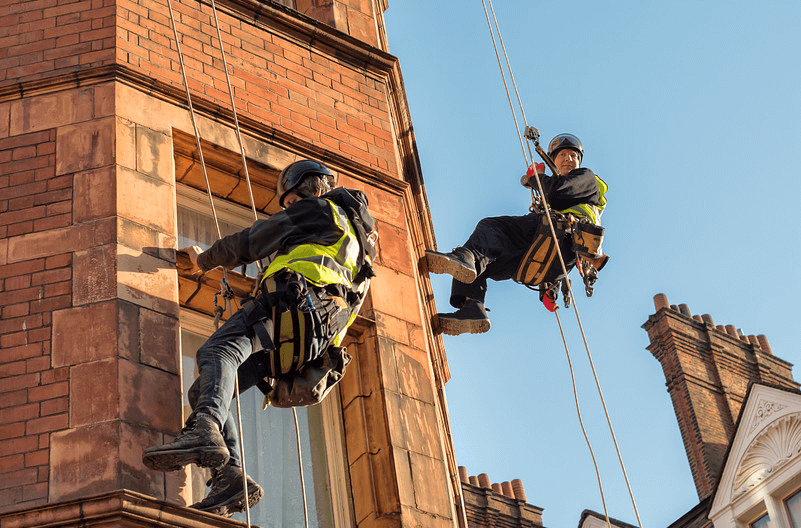
The Grenfell Tower tragedy changed how Britain views cladding safety. Since 2017, thousands of buildings across London have been identified as requiring urgent cladding removal and replacement, leaving building owners, residents, and managing agents grappling with complex remediation projects.
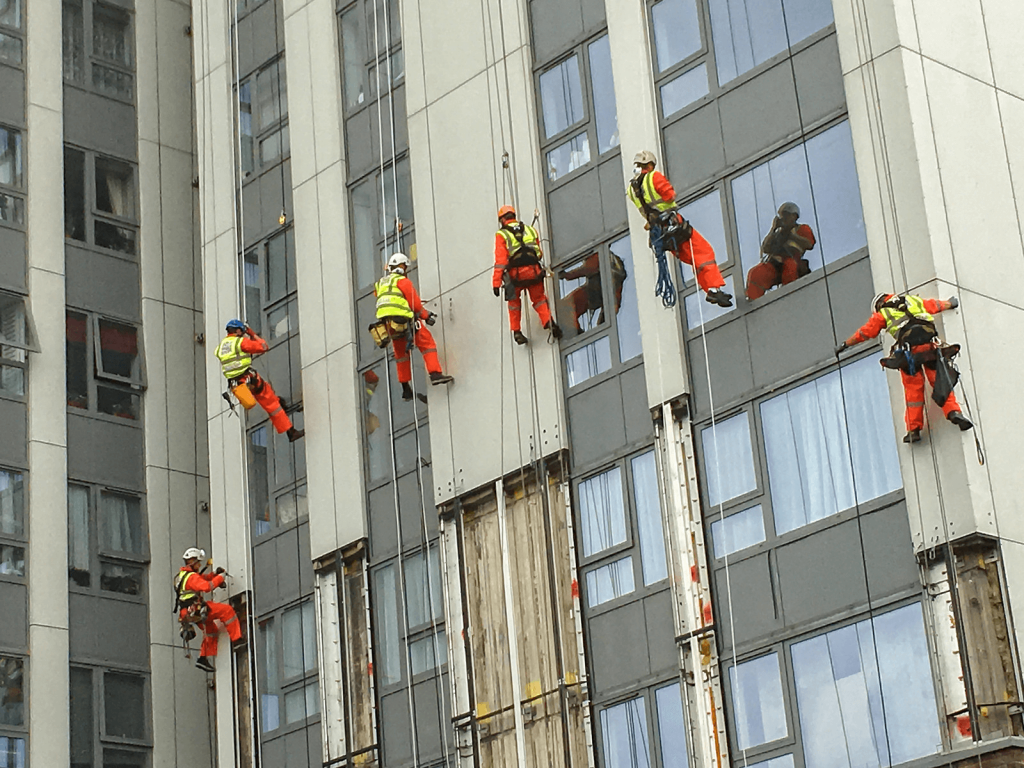
At Rope Access in London (RAIL), we’ve been at the forefront of this crucial work, removing dangerous cladding systems from residential and commercial buildings using techniques that traditional methods simply cannot match for speed, safety, and cost-effectiveness.
Rope access offers transformative advantages over scaffolding-based removal, particularly when buildings remain occupied throughout the works.
Why Is Speed So Critical in Cladding Removal Projects?
Time pressures in cladding remediation are unlike standard building maintenance schedules. Regulatory enforcement notices, insurance complications, mortgage lending restrictions, and the psychological burden on residents create an urgency that conventional construction timelines struggle to accommodate.
The Regulatory Countdown
Since the Building Safety Act received Royal Assent, enforcement timelines have tightened considerably. Buildings identified with dangerous cladding face strict deadlines for remediation, with substantial penalties for non-compliance.
Scaffolding erection on a 15-storey residential building typically requires 3-4 weeks. Then the actual cladding removal work begins. Finally, dismantling takes another 2-3 weeks.
That’s potentially two months consumed purely by access infrastructure before considering the removal work itself, subsequent building surveying to assess the substrate, and installation of replacement cladding.
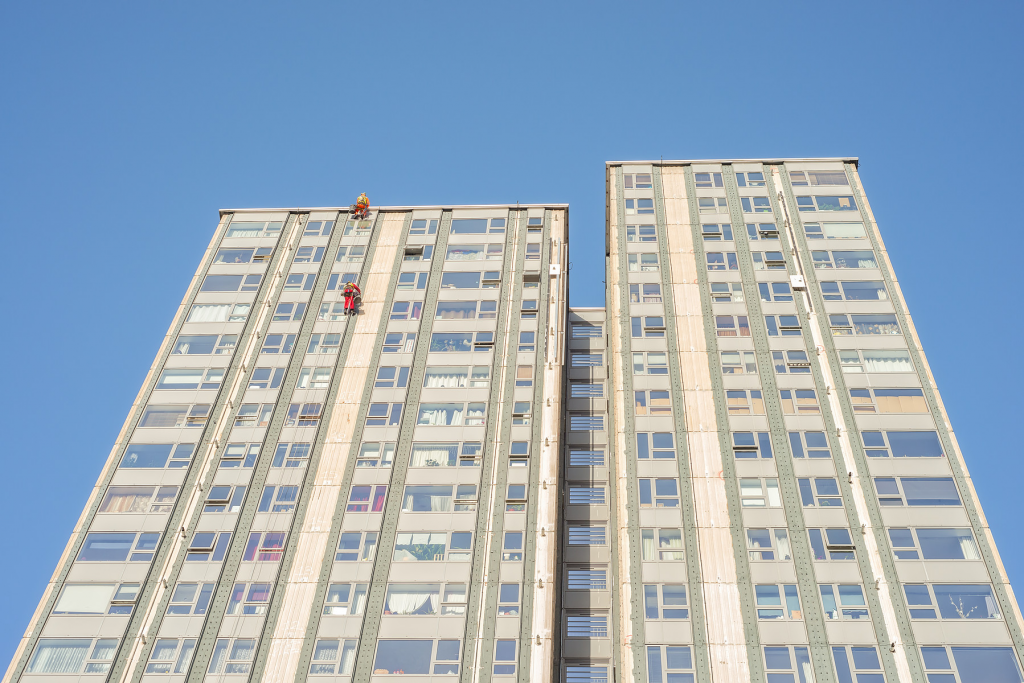
With rope access, we can mobilise cladding removal teams within days of contract award. Our technicians establish anchor systems on the roof, conduct comprehensive safety briefings, and begin systematic panel removal on the same day.
Occupied Buildings Demand Different Solutions
Most cladding removal projects occur whilst buildings remain occupied. Residents can’t simply move out for months whilst work progresses, nor should they have to.
Scaffolding transforms buildings into construction sites. External scaffold platforms block natural light, obscure views, create noise, and — frankly — feel oppressive when you’re living behind them for months.
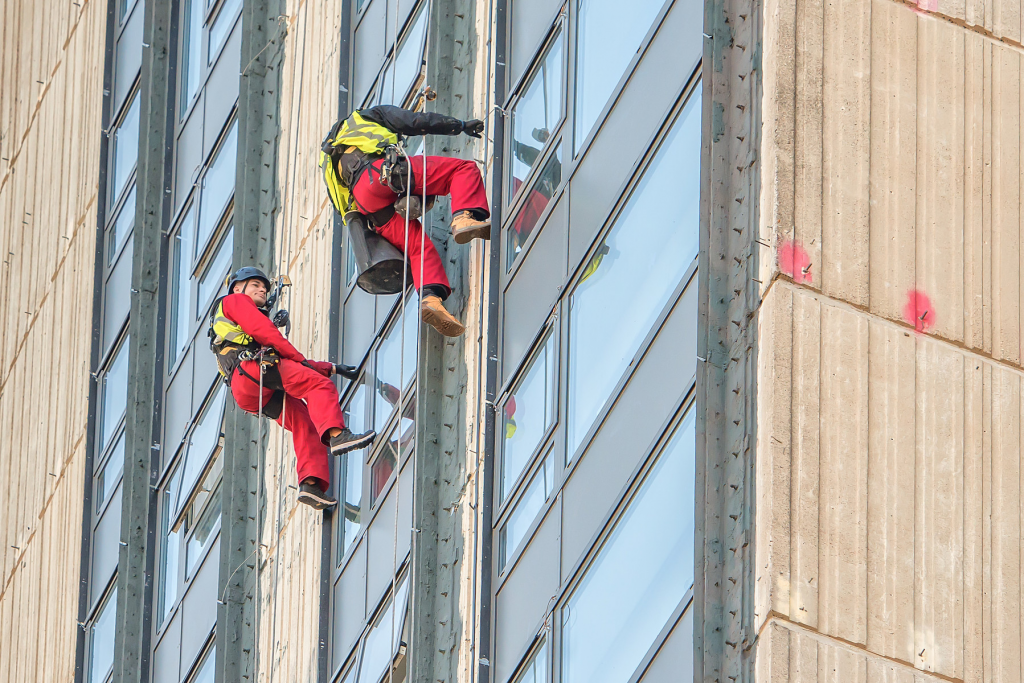
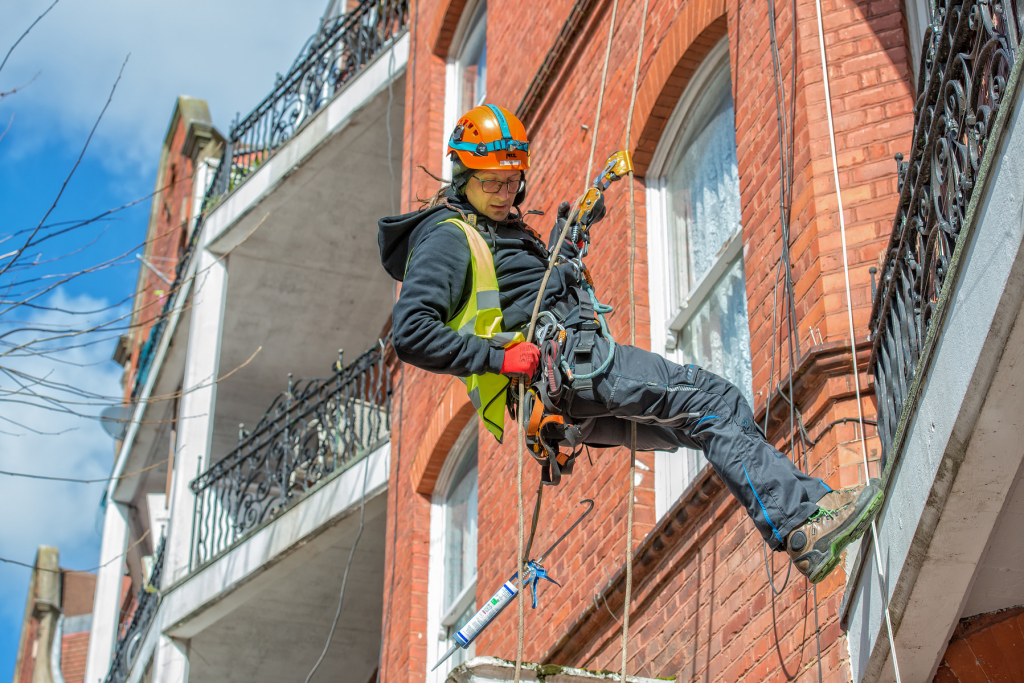
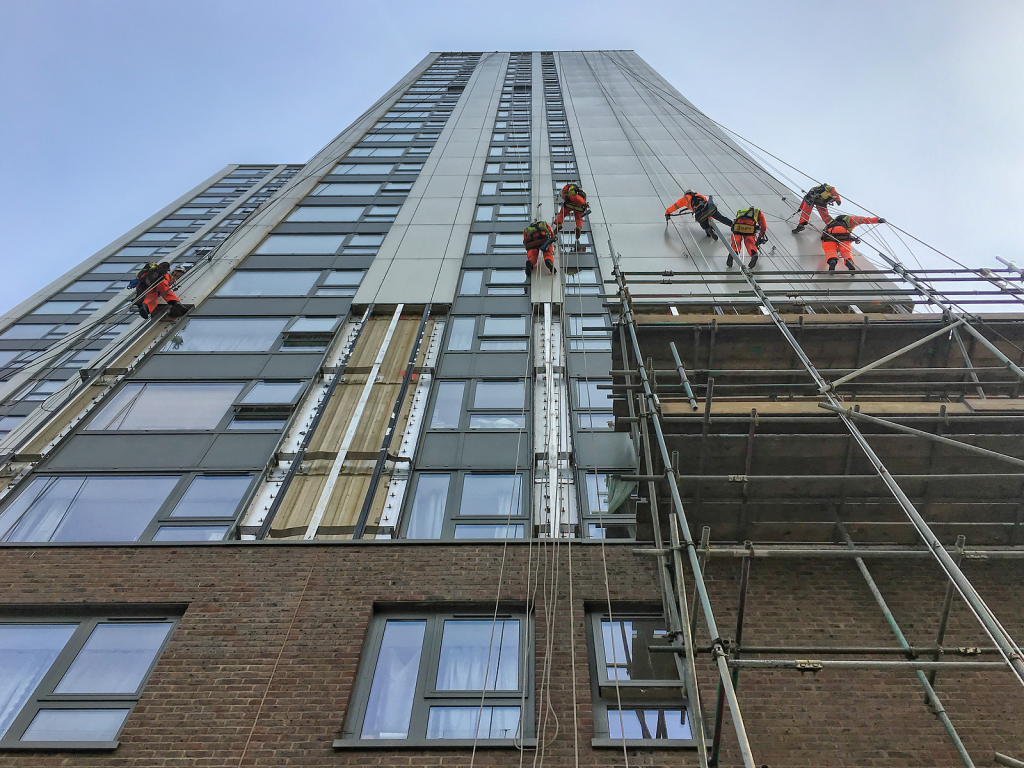
Our rope access approach works section by section, top to bottom. At any given time, only the specific area being worked on experiences disruption. Residents two floors below might barely notice we’re there.
Weather Windows and Project Momentum
British weather doesn’t pause for construction schedules. Scaffolding-based cladding removal faces frequent weather delays — high winds, heavy rain, and ice all halt work for safety reasons. Each delay pushes completion dates further out, extends hire costs, and frustrates everyone involved.
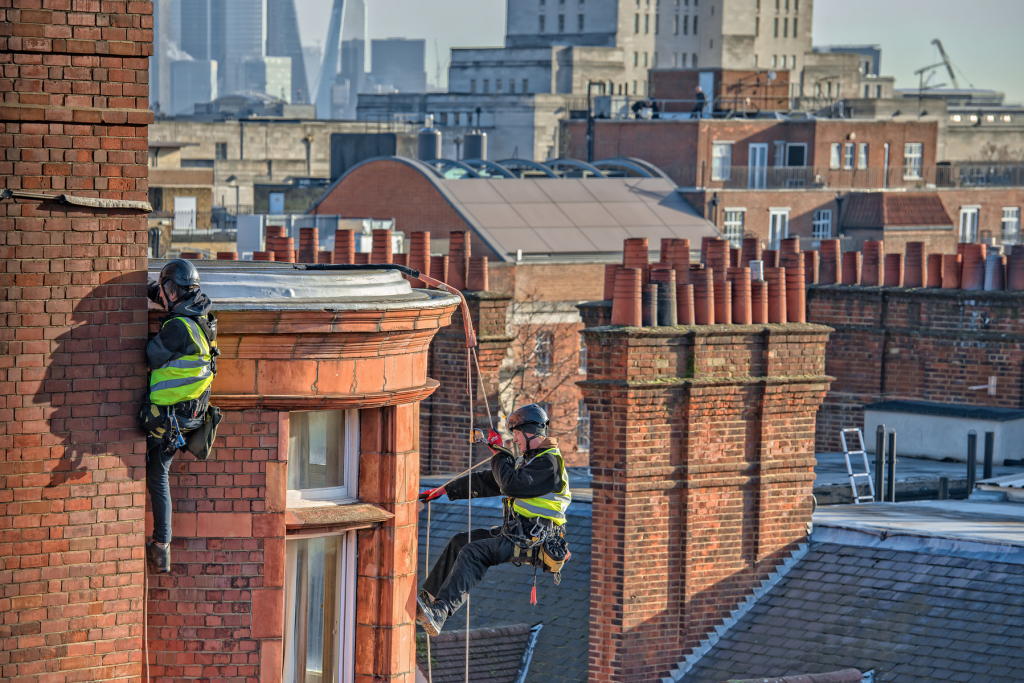
Rope access offers superior weather resilience. Our technicians work close to the building surface, protected from wind to a significant degree. We’ve worked in conditions that would completely stop scaffolding operations.
During winter months particularly, this resilience translates into maintaining project momentum when traditional methods face repeated weather-related shutdowns.
What Makes Cladding Removal Technically Challenging?
Removing cladding isn’t simply a matter of unscrewing panels and lowering them to ground level. The technical complexities multiply when dealing with buildings potentially compromised by poor original installation, hidden defects, and unknown substrate conditions.
Understanding What Lies Beneath
Every cladding system conceals the building structure beneath. Original installation quality varies enormously — we’ve encountered everything from exemplary workmanship to frankly dangerous installations that violated building regulations at the time of construction.
Before removing cladding, we conduct thorough building surveying using rope access techniques. Our technicians can position themselves at any angle to inspect fixings, assess panel conditions, photograph details for engineers, and identify potential complications.
This pre-removal survey proves invaluable for planning the actual removal work.
The Debris and Waste Challenge
Cladding removal generates substantial waste — aluminium panels, fixings, insulation materials, timber supports, and assorted components that all require safe removal from height and proper disposal.
Scaffolding-based operations typically accumulate debris on platforms, which is then manually transferred to waste chutes or crane-lifted skips. This creates bottlenecks and safety hazards from accumulated materials.
Our rope access approach integrates controlled lowering systems specifically for waste management. Materials descend directly to designated ground-level collection points, maintaining clean working areas at height and ensuring continuous work flow.
How Does Rope Access Maintain Safety on Occupied Buildings?
Safety in cladding removal encompasses both worker safety and protection of building occupants, surrounding public, and adjacent properties. The occupied nature of most cladding removal projects demands exceptional safety protocols.
Exclusion Zones and Public Protection
When cladding panels are being removed from height, the ground below becomes a potential hazard zone. We establish comprehensive exclusion zones using barriers, signage, and — where necessary — dedicated safety personnel to ensure no unauthorised access.
Rope access allows far more precise exclusion zones than scaffolding. Scaffolding wraps entire building façades, requiring extensive pavement closure and sometimes road traffic management.
Our work zones are vertical and relatively narrow — we’re working on specific building faces at specific times, allowing more of the surrounding area to remain accessible.
Emergency Procedures and Fire Safety
The cruel irony of cladding removal is that it temporarily increases fire risk by exposing insulation, creating gaps in fire barriers, and sometimes requiring temporary removal of fire-stopping. We do everything we can to maintain building safety throughout removal.
We ensure our work never leaves the building in a more dangerous state overnight than it was before we started. Each evening, we ensure all work areas are made safe, panels are secured, and no new fire hazards have been introduced.
Our experience with building surveying gives us an understanding of building fire safety systems that general contractors may lack. We can identify where our work intersects with fire safety measures and ensure appropriate protections remain in place.
Learn more about our rope access cladding solutions!What Happens After Cladding Removal?
Cladding removal is only half the story. The exposed building requires assessment, remedial work, and eventually new cladding installation — areas where our comprehensive service offering provides continuity.
Substrate Assessment and Remediation
Once cladding is removed, the building structure becomes visible, often for the first time since original construction. We conduct detailed building surveying to document substrate condition, identify defects, and provide visual evidence for engineers and remediation specialists.
Common findings include water damage to substrate materials, corroded fixings, missing or damaged vapour barriers, and structural issues masked by the original cladding. Our photographic documentation, annotated with precise location information, provides engineers with the evidence they need for remediation design.
We then undertake remedial works using the same rope access techniques. This might include waterproofing repairs, installation of proper fire barriers, treatment of corroded steelwork, or repair of damaged concrete or masonry.
Having the same team conduct both assessment and remediation ensures continuity and eliminates the “lost in translation” problems that occur when findings must be communicated to separate contractors.
Preparing for New Cladding Systems
Modern replacement cladding systems have dramatically different requirements than the combustible materials being removed. They’re often heavier, require enhanced fixing systems, and demand substrates meeting specific flatness and load-bearing criteria.
Our cleaning services prove valuable here — removing all traces of old adhesives, preparing surfaces for new fixings, and ensuring substrates meet manufacturer specifications for new cladding installation. This preparation work, often overlooked in project planning, critically impacts the quality and longevity of replacement cladding.
Conclusion
Cladding removal represents one of Britain’s most urgent building safety challenges, with thousands of buildings requiring remediation in coming years. The method chosen for this work fundamentally shapes project outcomes, costs, and resident experiences.
At Rope Access in London, we’ve made cladding removal a core specialisation, developing methodologies that deliver faster completion, lower costs, reduced disruption, and superior safety.
Whether your building faces regulatory enforcement, insurance complications, or you’re simply committed to providing safe homes, we’re here to help navigate this challenging process with expertise, efficiency, and empathy for everyone affected.
Frequently Asked Questions
Can cladding removal be done floor by floor to minimise disruption?
Absolutely, and we often recommend this approach for occupied buildings. Phased removal working floor by floor or section by section allows better management of disruption, maintains building weatherproofing by not exposing the entire façade simultaneously, and provides natural break points for coordination with other trades.
What if structural problems are discovered during cladding removal?
Discovery of unexpected structural issues isn’t uncommon, and it requires immediate response. We stop work in the affected area, make the area safe, and document findings for structural engineers. Our building surveying expertise allows us to distinguish cosmetic defects from potentially serious structural concerns.
The project timeline will likely need adjustment to accommodate structural repairs, but discovering and addressing these issues is vastly preferable to concealing them behind new cladding.
Is rope access suitable for buildings of any height?
Yes, with proper planning. Taller buildings require more sophisticated anchor systems, potentially including engineered roof-edge protection or structural anchors, but height itself isn’t a limitation. The assessment during our initial site survey determines the optimal anchor strategy for your specific building.