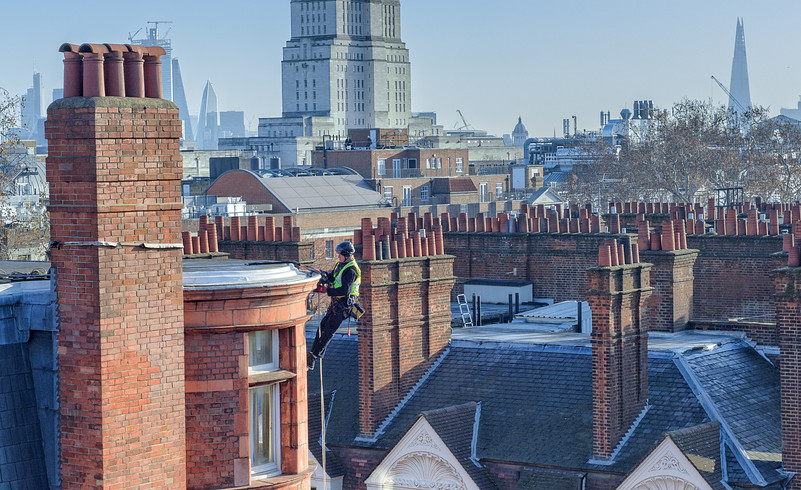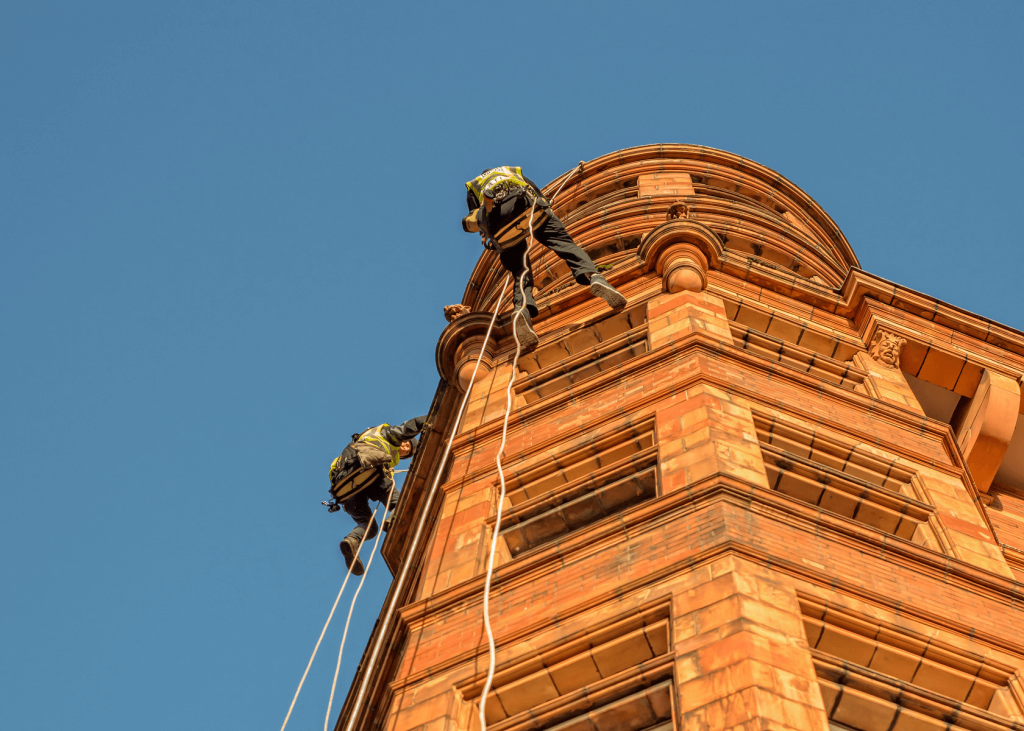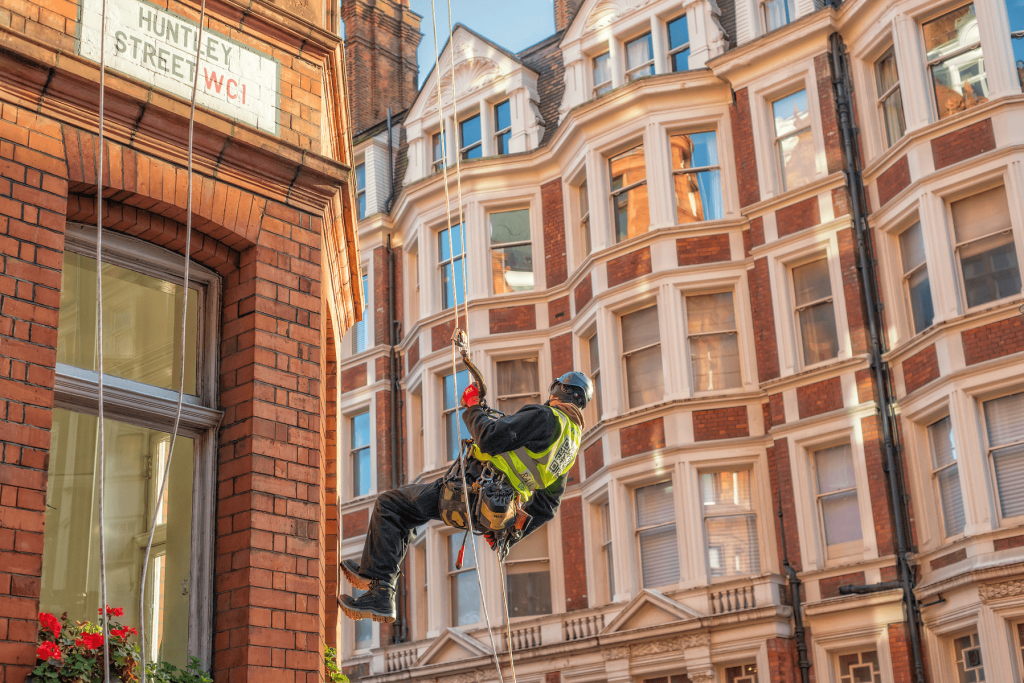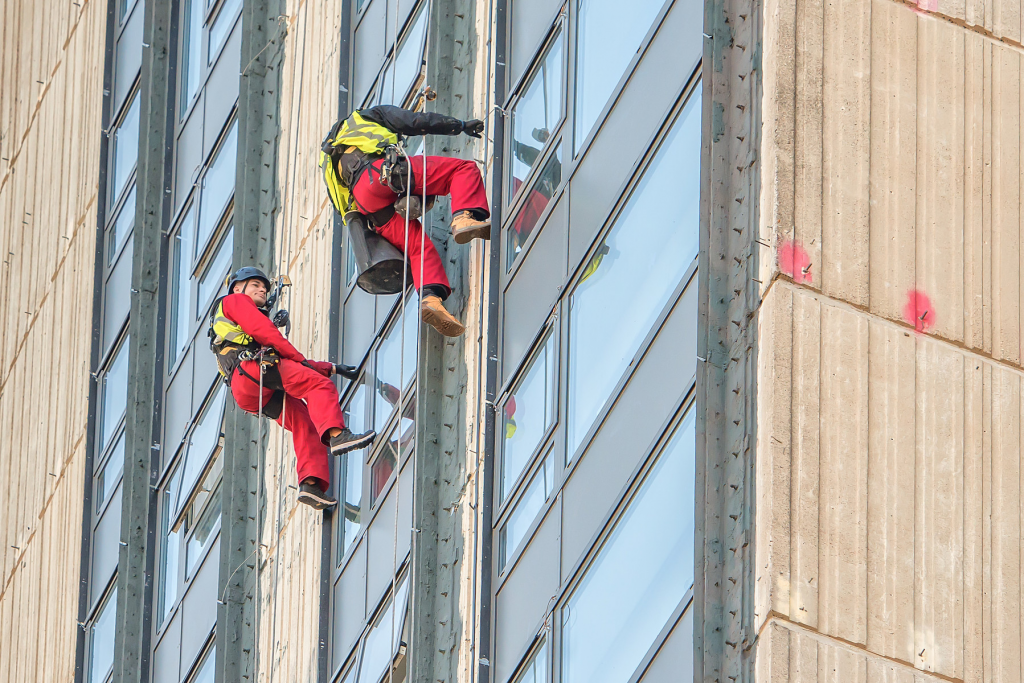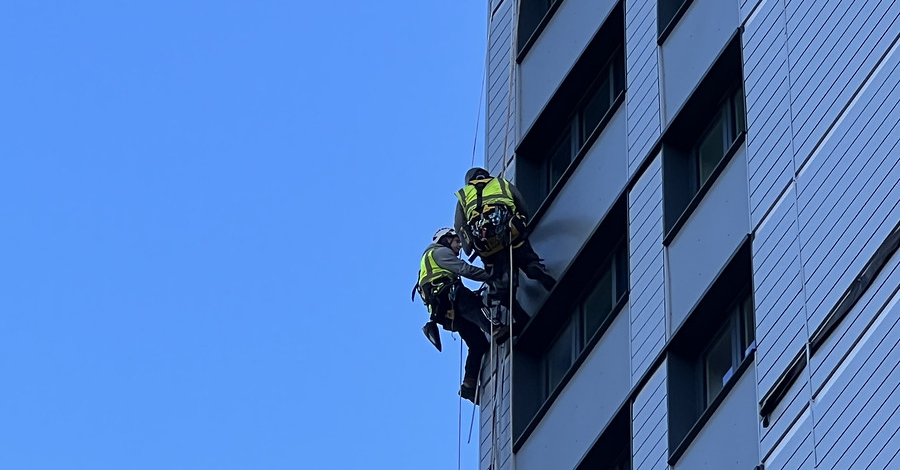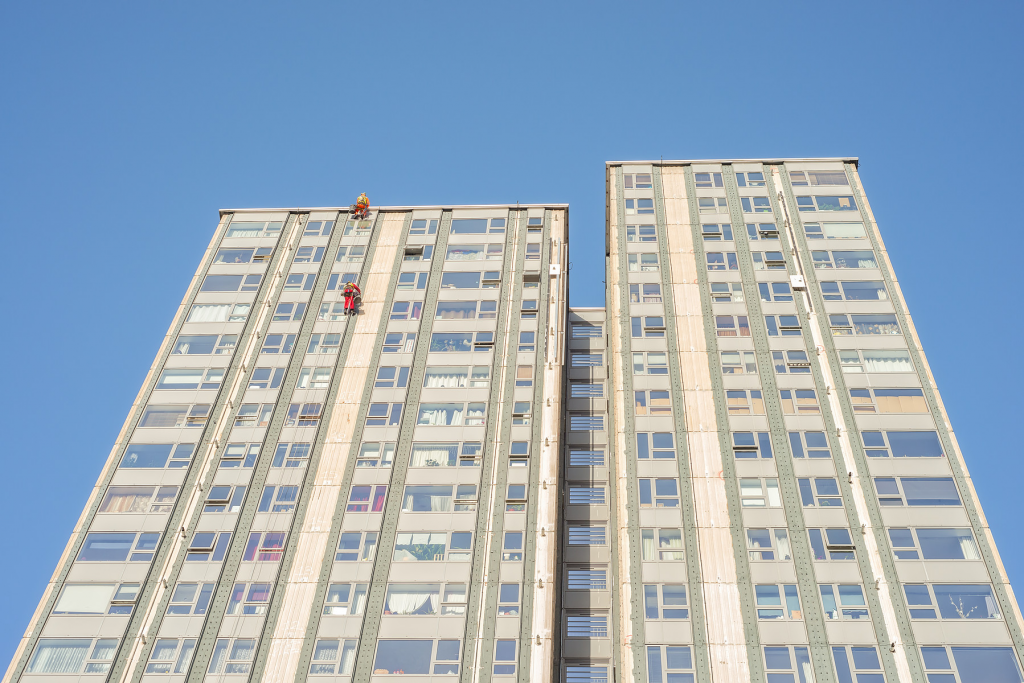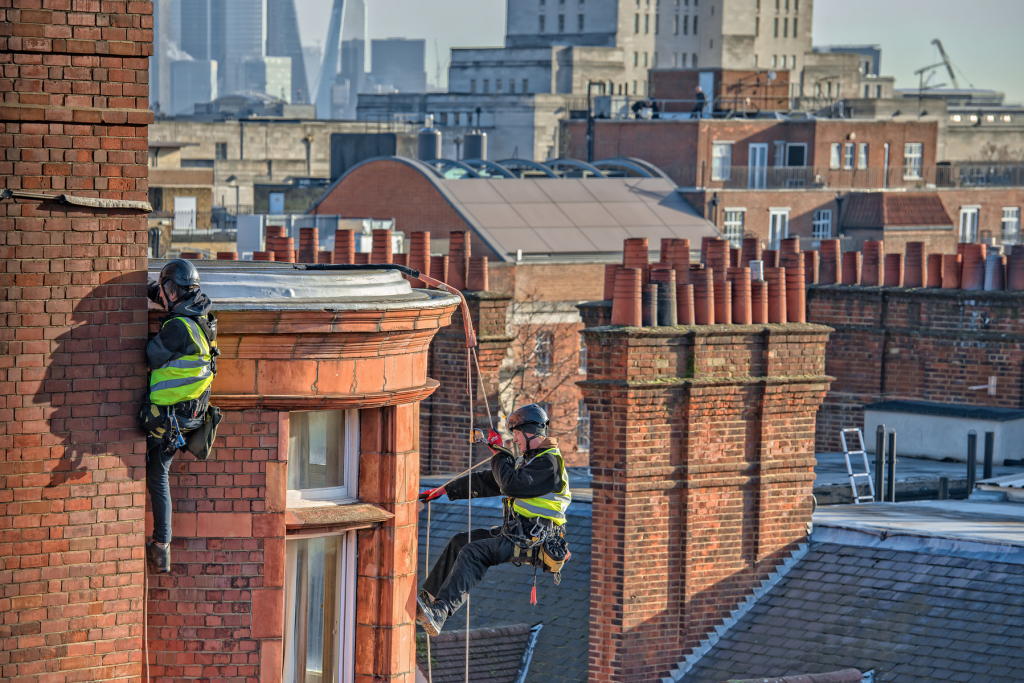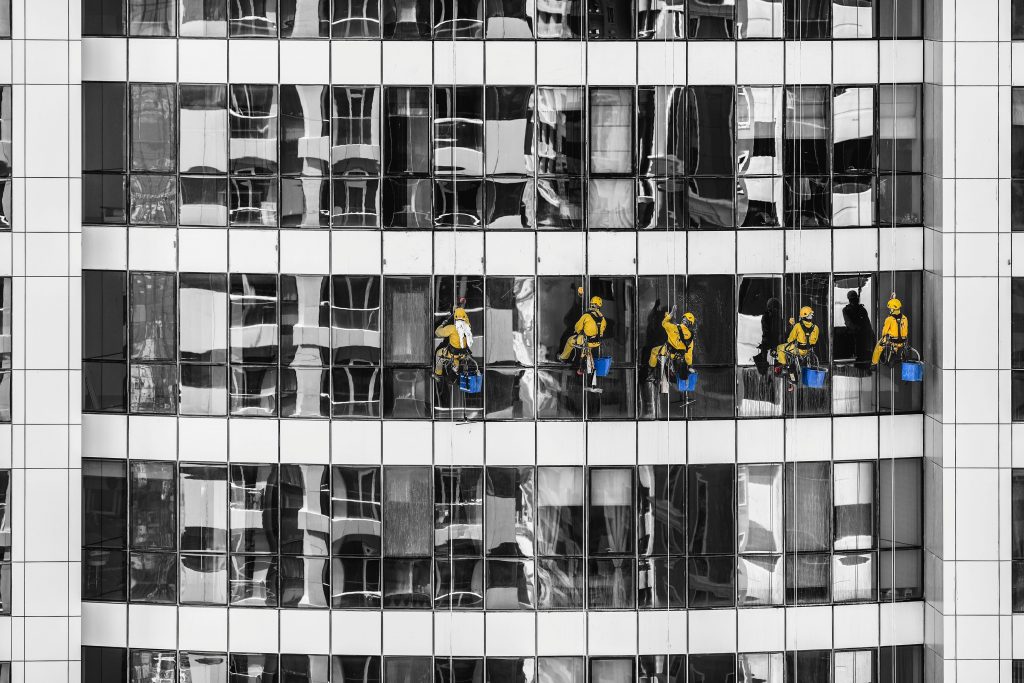


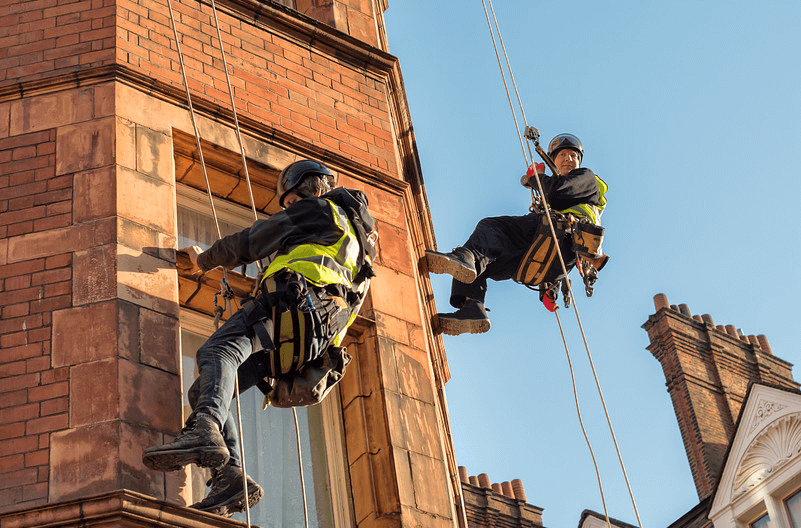
When most people think of rope access, their minds immediately conjure images of window cleaners dangling from skyscrapers, squeegee in hand. Whilst window cleaning is certainly part of what we do at Rope Access in London (RAIL), it barely scratches the surface of this versatile access method.
Truth be told, limiting rope access to window cleaning is rather like buying a Swiss Army knife and only using the toothpick — you’re missing out on the majority of its capabilities.
The reality is that rope access is one of the most efficient, cost-effective, and safe methods for accessing difficult-to-reach areas across a staggering variety of applications.
So, what exactly can rope access achieve beyond making your windows sparkle? Let’s take a closer look.
Why Do Commercial Buildings Need More Than Window Cleaners?
Let’s be frank: modern commercial and residential buildings are quite complex. They’re not simply glass boxes requiring the occasional wipe-down.
These structures demand comprehensive maintenance programmes that address everything from structural integrity to aesthetic appeal, and rope access provides the perfect solution for accessing every nook and cranny.
Building Maintenance
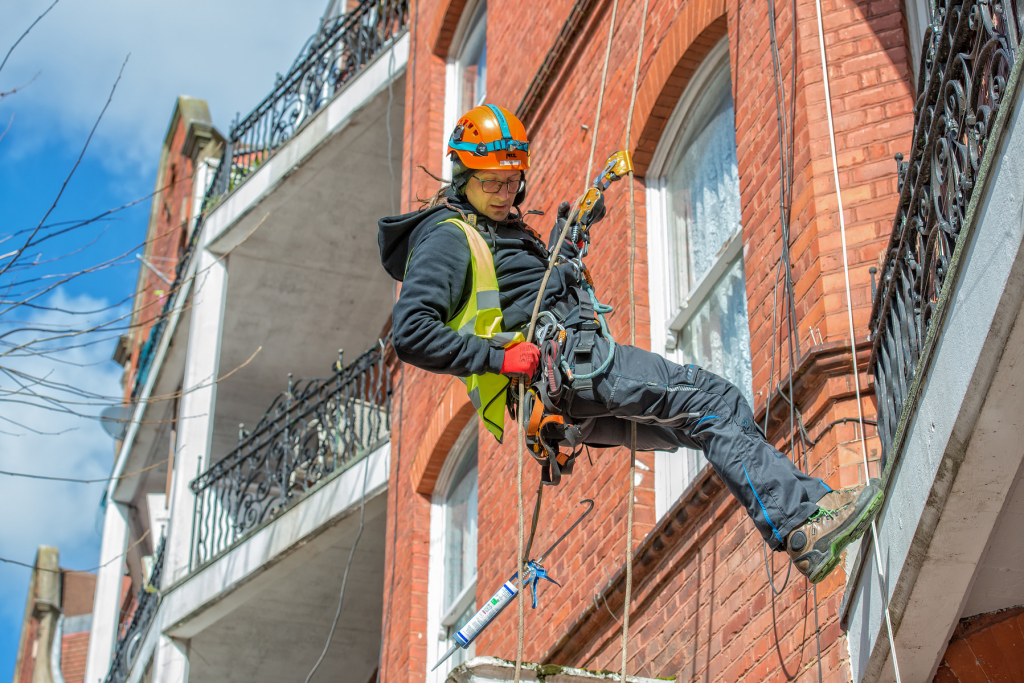
At RAIL, our building maintenance services extend far beyond the superficial. We’re capable of identifying and addressing structural issues before they become catastrophic problems.
The beauty of rope access for building maintenance lies in its flexibility. Traditional methods like scaffolding or cherry pickers often prove prohibitively expensive, disruptive, or simply impossible in tight urban environments.
We can deploy quickly, work efficiently, and complete jobs that would otherwise require closing streets, evacuating areas, or waiting weeks for planning permissions.
Need access to the inaccessible?Contact us!
External Painting and Waterproofing
British weather isn’t exactly known for being gentle on buildings. The constant cycle of rain, wind, and the occasional glimpse of sunshine takes its toll on external structures.
Our external painting services make buildings look presentable and provide crucial protection against the elements. Paired with our waterproofing services, we create comprehensive protection systems that extend the lifespan of structures.
Specialist Building Services
Then there’s the specialist work. Our glazing services handle everything from replacing broken windows in high-rise buildings to installing complex curtain walling systems.
We also offer bird protection solutions. Installing bird deterrents at height requires precision, and rope access allows us to work without disturbing the birds unnecessarily.
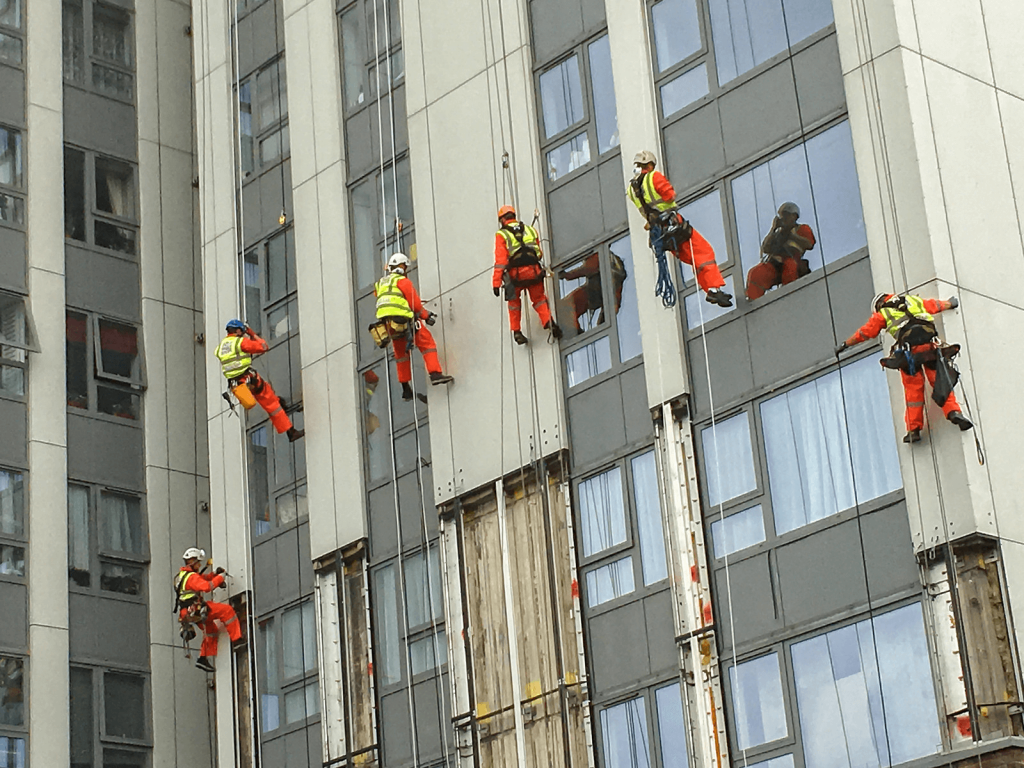
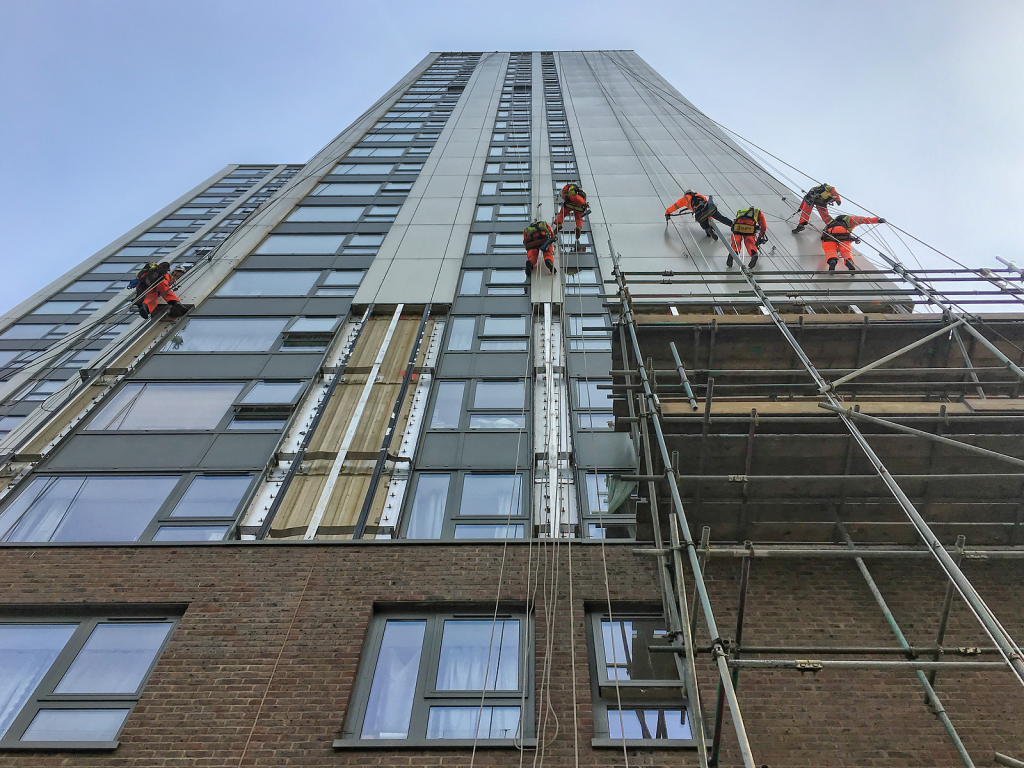
We’re particularly proud of our cladding work and large format banner installation services. Whether you’re replacing fire-risk cladding or promoting your brand with a massive building-wrap advertisement, we’ve got the expertise and access methods to deliver.
Can Rope Access Handle Heavy Industrial Work?
Here’s where we shatter preconceptions. If you think rope access is solely for delicate work on buildings, you’re in for a surprise.
Some of the most demanding, heavy-duty industrial applications rely heavily on rope access techniques — and we mean that quite literally.
Oil, Gas, and Offshore
The oil and gas industry has embraced rope access with open arms, and for good reason. Working on oil rigs and gas platforms presents unique challenges: harsh environments, strict safety requirements, and the need for minimal downtime. Traditional access methods often prove impractical on these structures.
Whether it’s conducting inspections, performing maintenance, or facilitating repairs, rope access allows teams to reach critical areas quickly and safely.
The offshore environment demands absolute precision and unwavering safety standards — qualities that rope access delivers consistently.
Don’t let difficult access delay critical work.Schedule a consultation!
Wind Turbine Maintenance
As the UK pushes towards renewable energy targets, wind turbines have sprouted across our landscape. These towering structures require regular maintenance, and rope access has become the go-to method for reaching their dizzying heights.
We’ve conducted numerous wind turbine projects, from routine inspections to blade repairs and equipment installations.
Traditional methods of accessing wind turbines — particularly offshore installations — are often weather-dependent and costly. Rope access offers a more flexible, efficient alternative that can adapt to challenging conditions.
Conclusion
Rope access has evolved from a specialised technique to a comprehensive access solution that spans countless industries and applications. At RAIL, we’ve embraced this evolution, continuously expanding our capabilities to meet the changing needs of our clients.
As buildings become taller, more complex, and more technically sophisticated, the demand for versatile, skilled rope access professionals will only grow.
Frequently Asked Questions
How long does it take to train as a rope access technician?
The initial IRATA Level 1 certification typically requires around 5 days of intensive training, but becoming truly proficient takes considerably longer. Most technicians spend years developing their skills, with Level 2 (requiring a minimum of 1,000 logged working hours at height) and Level 3 (requiring at least 1,000 additional hours) representing significant milestones.
Can rope access work be performed in bad weather?
Weather considerations are crucial for rope access work, but we’re not quite as limited as you might think. Light rain rarely stops work, though heavy rain, high winds, or lightning will necessitate postponement for safety reasons. Generally, wind speeds above 12-15 metres per second make rope access unsafe.
How much does rope access work typically cost compared to scaffolding?
Whilst costs vary depending on project complexity, location, and duration, rope access typically costs 40-60% less than traditional scaffolding for equivalent work. The savings come from multiple factors: faster mobilisation, reduced labour costs, no equipment hire for large scaffold structures, and elimination of associated costs like street closure permits or parking suspensions.
However, it’s worth noting that some projects may still require scaffolding due to the nature of the work or regulatory requirements. We’ll always provide honest advice about the most appropriate access method for your specific situation.
Can rope access be used for emergency repairs?
This is one of rope access’s greatest strengths. Emergency situations demand quick response times, and rope access delivers. There’s no waiting for scaffolding permits, no time lost to equipment installation, and no delays whilst trying to source a mobile elevated work platform.