

When faced with the demanding timeframes and requirements of Awaab’s Law, social landlords must choose access methods that enable swift, effective action without unnecessary costs or tenant disruption.
Whilst scaffolding has been the default access method for decades, rope access offers compelling advantages that make it the superior choice for Awaab’s Law compliance.
Here’s a detailed comparison of the two methods, highlighting why rope access gives landlords the edge they need to meet their legal obligations confidently.
Speed of Deployment
Scaffolding: Arranging scaffolding is a lengthy process. Landlords must obtain quotes, secure budget approvals, apply for permits, book scaffolding contractors, and wait for erection. Only after a formal safety inspection can work commence. This process can easily take 2-4 weeks from initial instruction to first access.
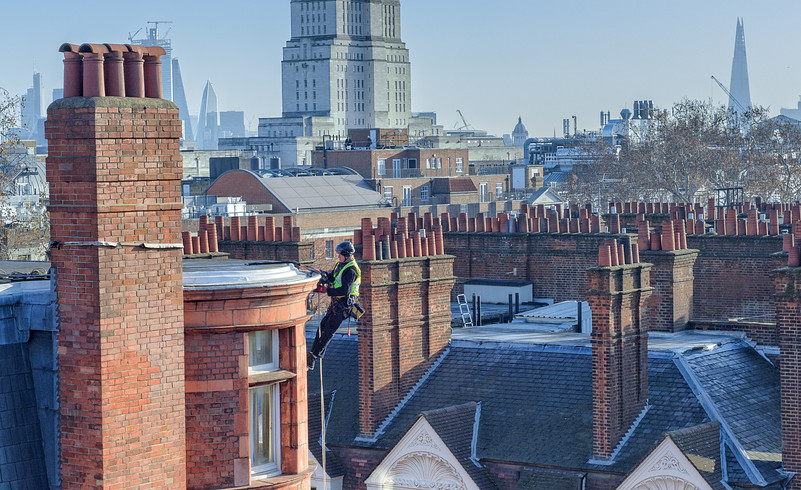
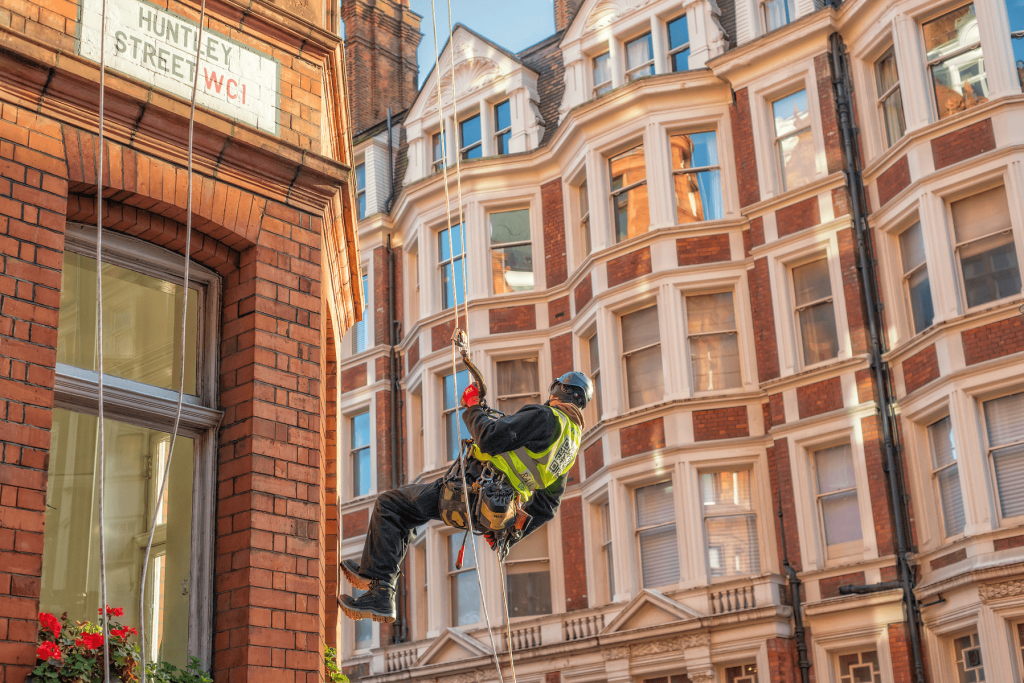
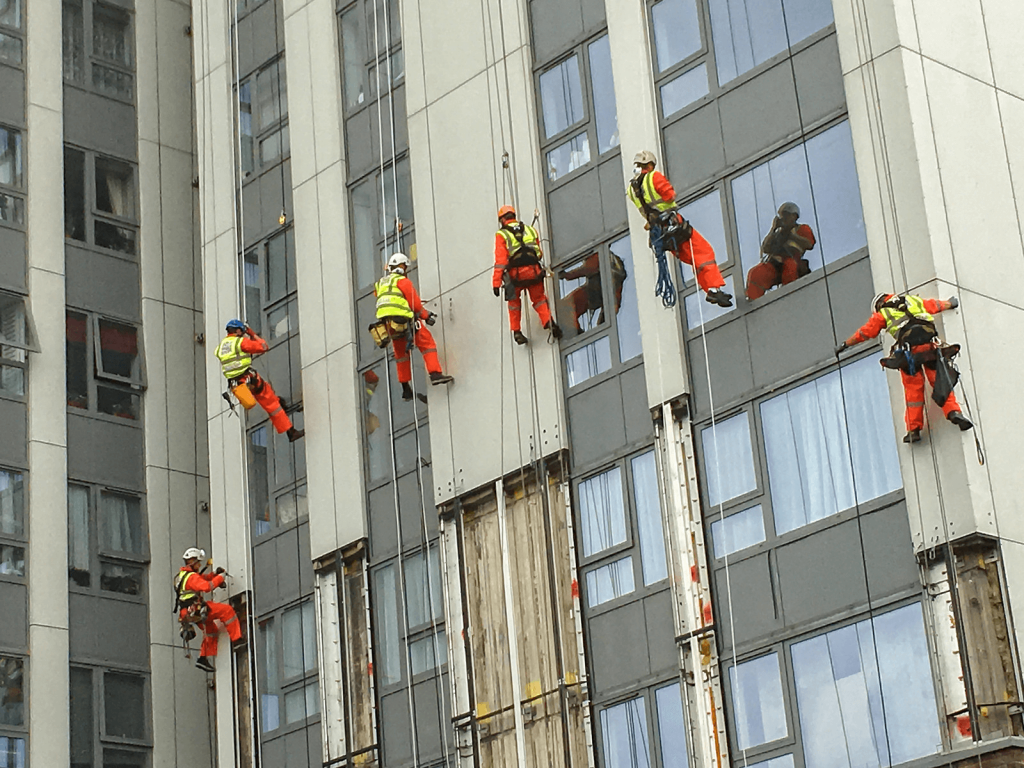
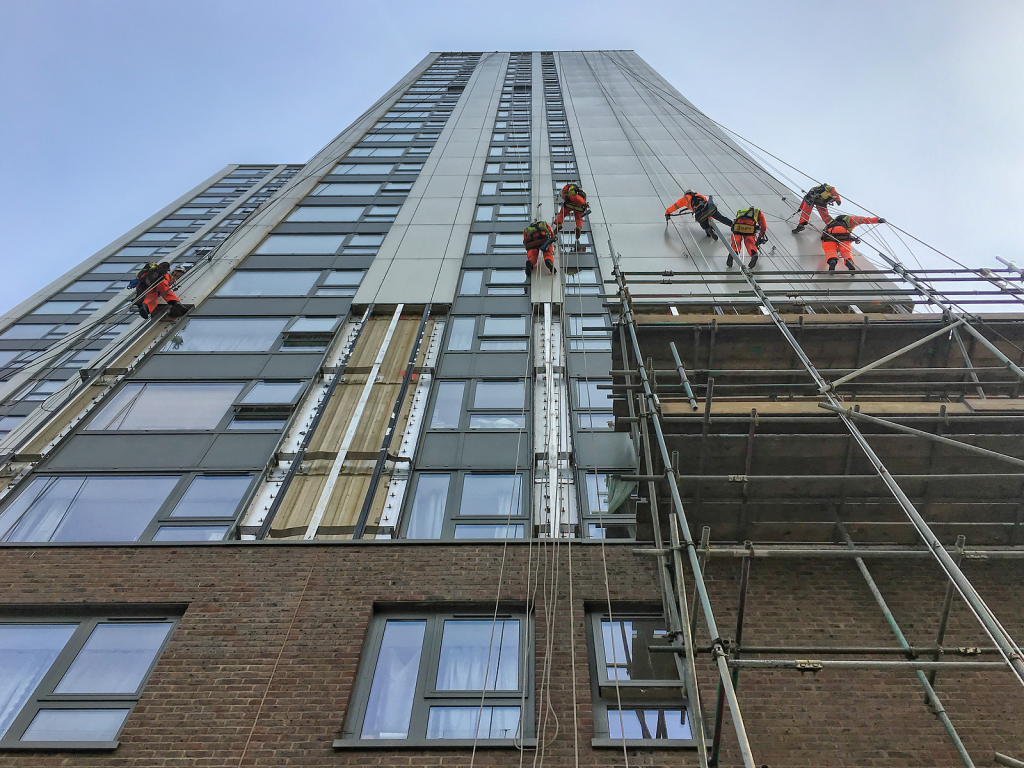
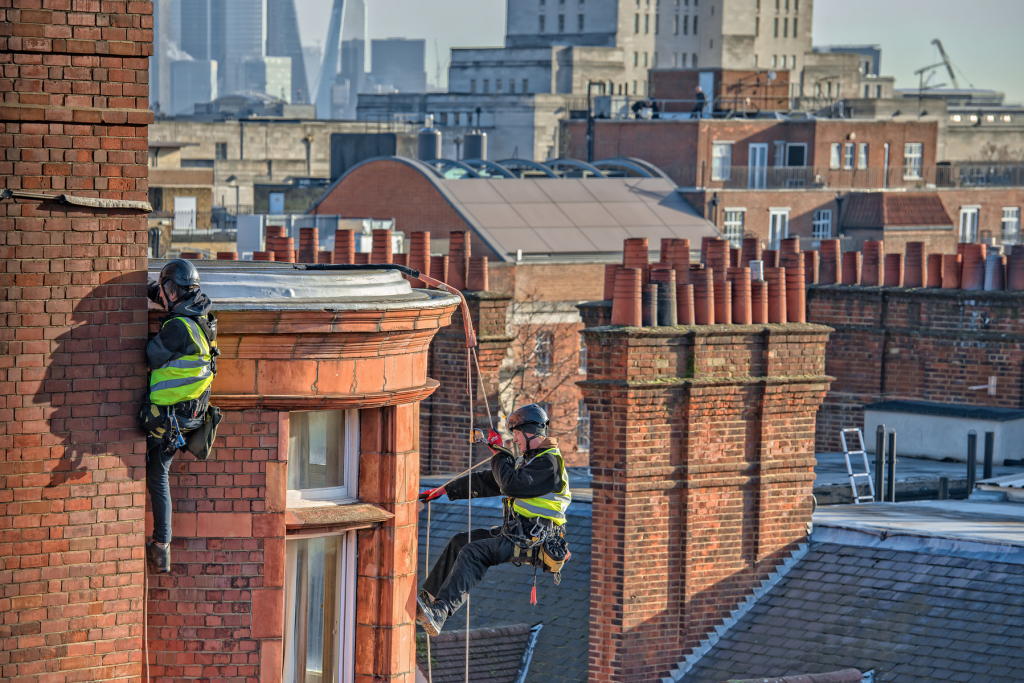
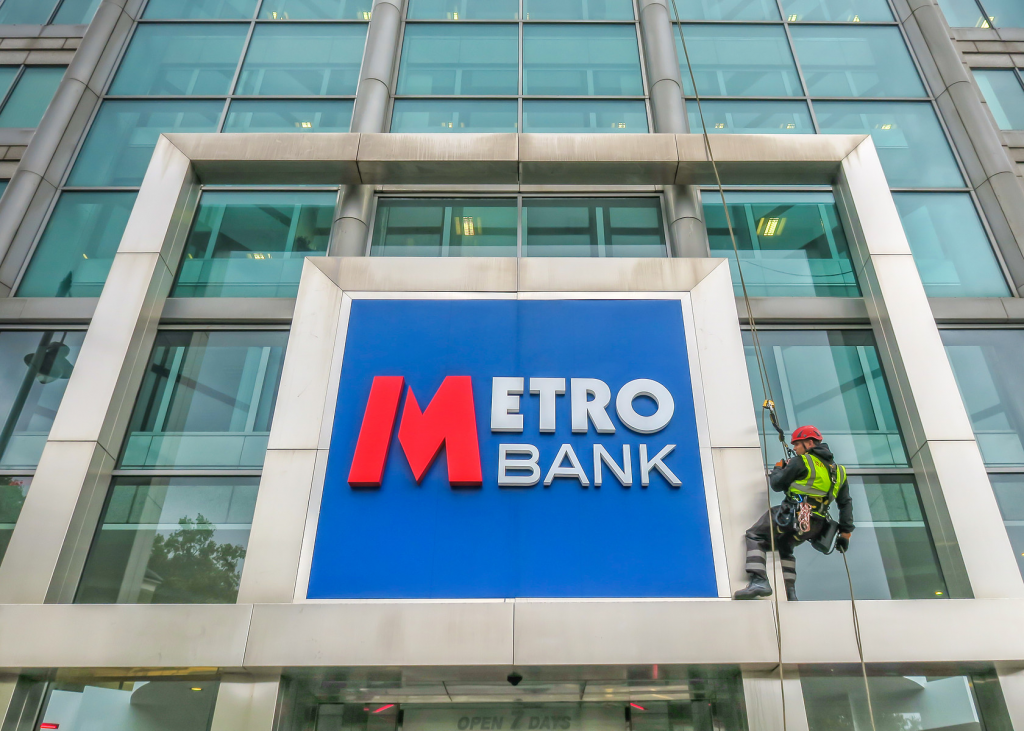
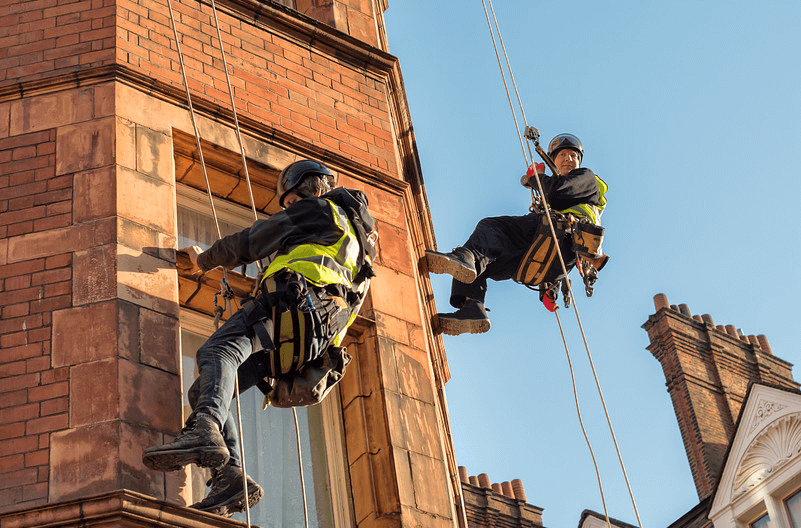
Rope Access: RAIL’s rope access team can deploy within hours of your call. No permits are required, no ground preparation is needed, and no multi-day erection process is necessary. Technicians arrive, set up their rope systems, and begin work immediately.
Advantage: Rope Access — Speed is critical for Awaab’s Law compliance, and rope access delivers unmatched rapid response capabilities.
Cost-Effectiveness
Scaffolding: Scaffolding is expensive. Hire costs accumulate daily, and extended hire periods can run into thousands of pounds. Additional costs include design fees, erection and dismantling charges, permits, traffic management, safety inspections, and insurance. For high-rise commercial buildings or complex structures, scaffolding costs can quickly become prohibitive.
Rope Access: Rope access typically costs 40-60% less than scaffolding. There are no daily hire fees, no permit costs, no traffic management charges, and minimal setup expenses. Because work is completed quickly, overall labour costs are lower.
Advantage: Rope Access — Significant cost savings enable better resource allocation across housing portfolios.
Learn more about our cost-effective maintenance solutionsTenant Disruption
Scaffolding: Scaffolding is highly disruptive to tenants. It blocks natural light, requires tenants to keep windows closed for security, creates noise during erection and dismantling, and can feel intimidating or claustrophobic.
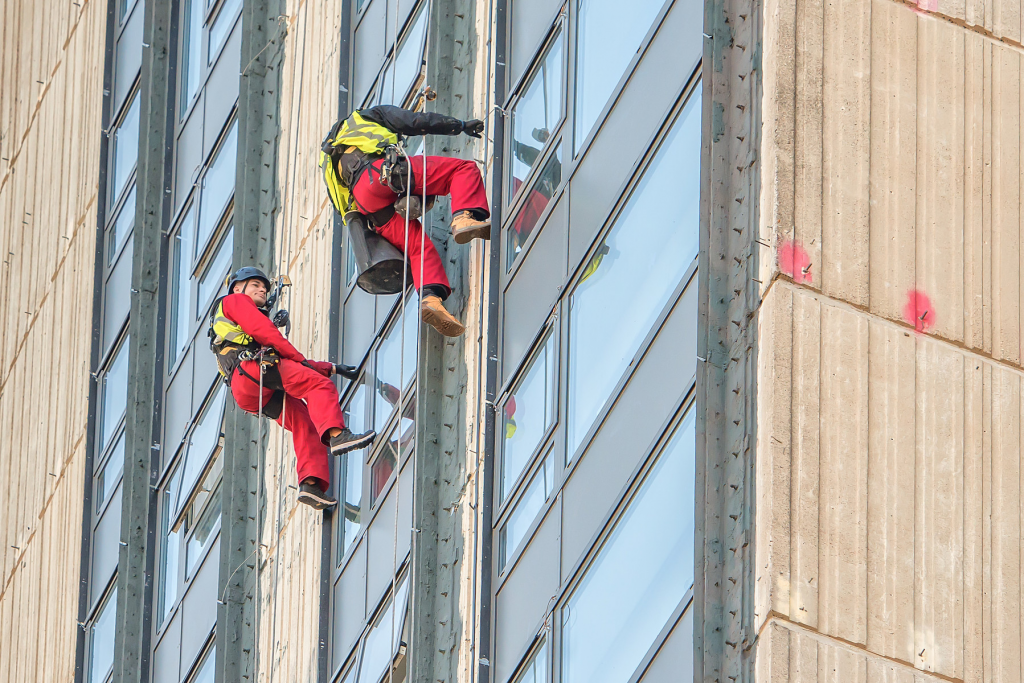
Rope Access: Rope access is minimally disruptive. Technicians work quietly from the exterior, and most residents barely notice their presence. Windows don’t need to remain closed, natural light isn’t blocked, and there’s no prolonged noise or visual intrusion.
Advantage: Rope Access — Reduced disruption improves tenant satisfaction and wellbeing, particularly for vulnerable individuals.
Flexibility and Versatility
Scaffolding: Scaffolding has significant limitations. It requires stable, level ground for base plates; adequate space for standards, ledgers, and working platforms; clear access routes for delivery vehicles; and sufficient clearance from obstacles like balconies, overhangs, or neighbouring buildings. In densely built urban areas, these requirements often cannot be met.
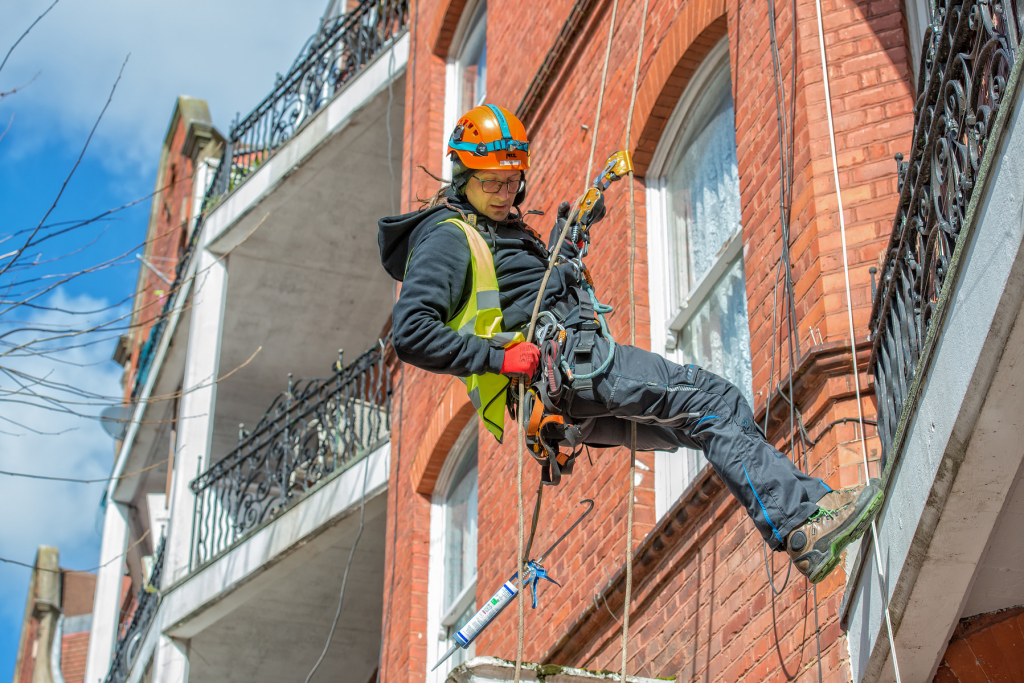
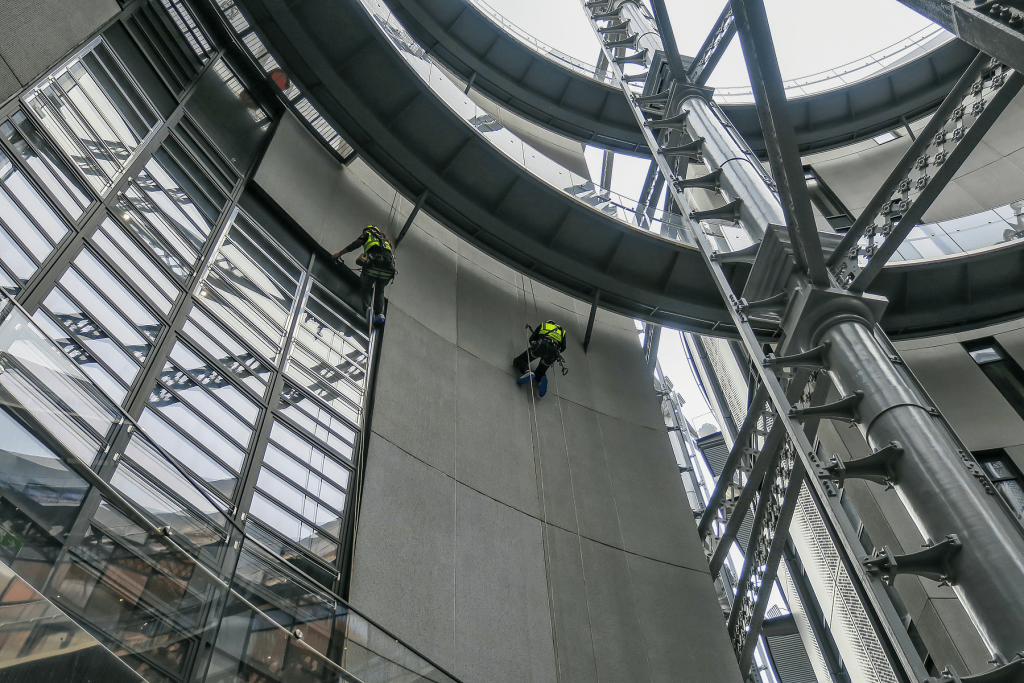
Rope Access: Rope access can be deployed almost anywhere. It doesn’t require ground space, vehicle access, or clearance zones. Technicians can work around obstacles, access overhangs and recesses, and operate in confined spaces or constrained environments.
Advantage: Rope Access — Unmatched versatility enables access to any building, regardless of location or complexity.
Explore our work on complex building projectsSafety and Compliance
Scaffolding: Scaffolding is safe when properly designed, erected, and maintained, but it introduces risks: falls during erection and dismantling, structural failures if not adequately secured or inspected, and public safety concerns (particularly falling objects).
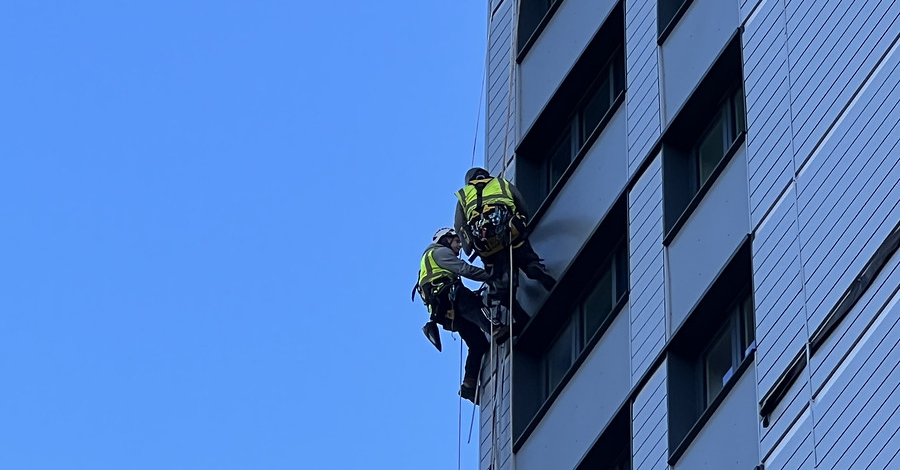
Rope Access: Rope access has an excellent safety record when performed by certified professionals. All RAIL technicians are IRATA-certified, meaning they’ve undergone rigorous training, assessment, and ongoing competence verification. Rope systems incorporate multiple redundancies (dual anchor points, backup safety lines), and work is planned meticulously to minimise risks.
Advantage: Rope Access — Proven safety record and stringent certification requirements ensure responsible, compliant operations.
Documentation and Reporting
Scaffolding: Scaffolding projects often involve multiple contractors, making it challenging to maintain clear documentation of inspections, findings, and works completed. Reports may be fragmented or delayed.
Rope Access: RAIL provides comprehensive documentation with every rope access project. Our reports include detailed descriptions of defects identified, works carried out, photographic evidence, and recommendations for further action.
Advantage: Rope Access — Superior documentation supports compliance and legal protection.
Conclusion: Rope Access Is the Smarter Choice
For landlords seeking to meet Awaab’s Law obligations confidently, rope access offers clear, measurable advantages over traditional scaffolding: faster deployment, lower costs, reduced disruption, greater versatility, and superior compliance capabilities.
In an era where statutory timeframes are tight and tenant expectations are high, rope access is often the only practical solution.