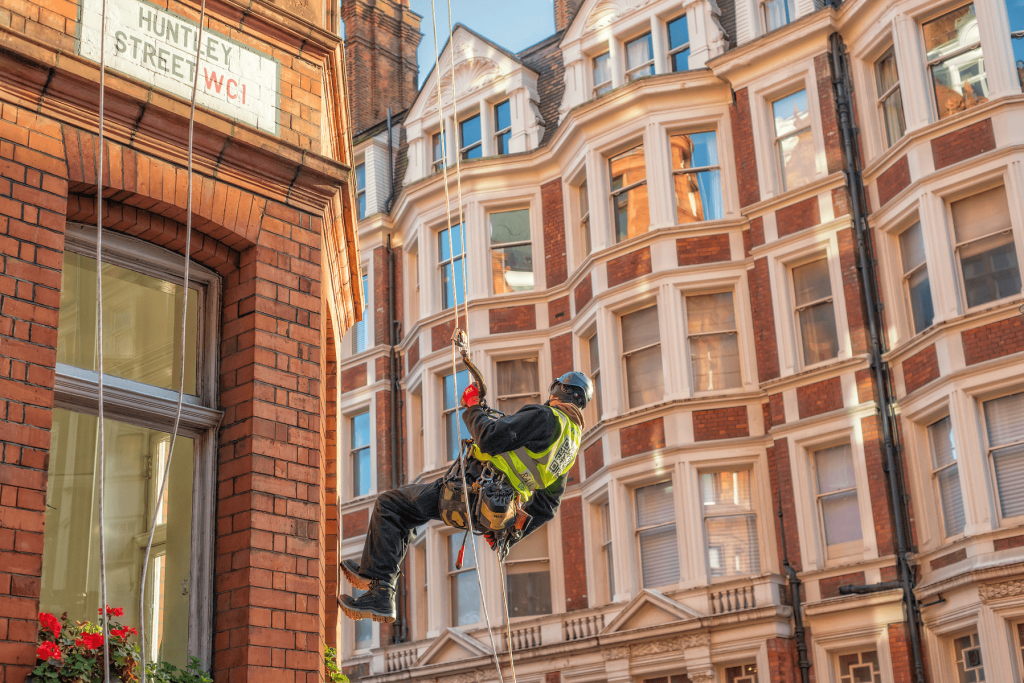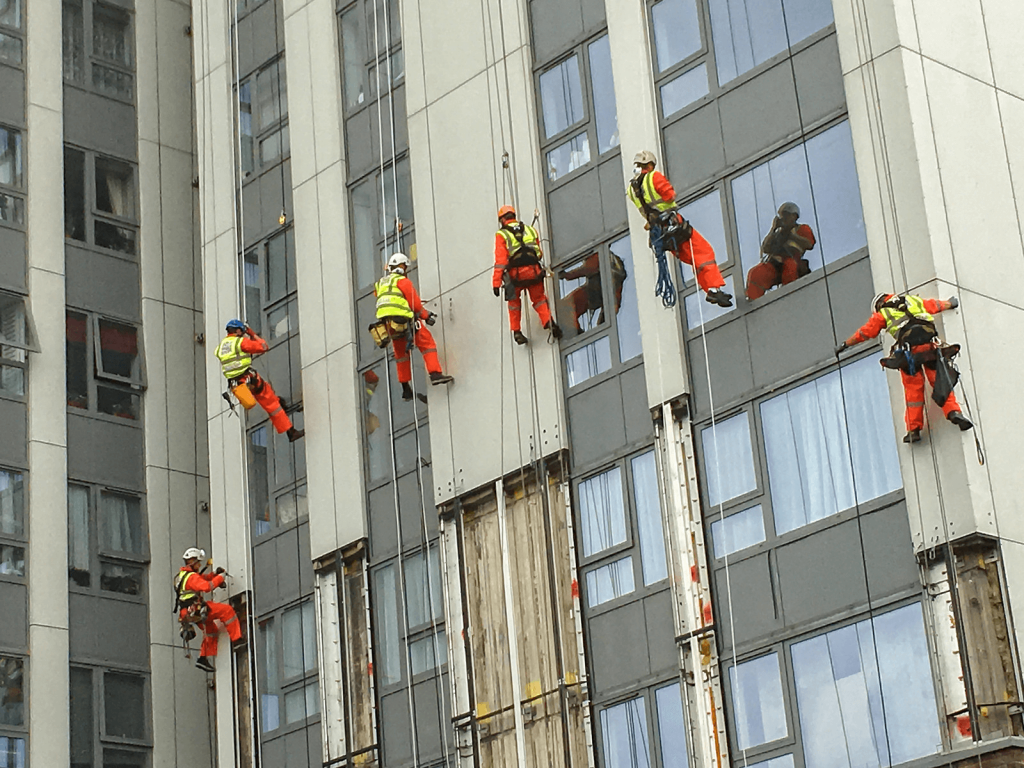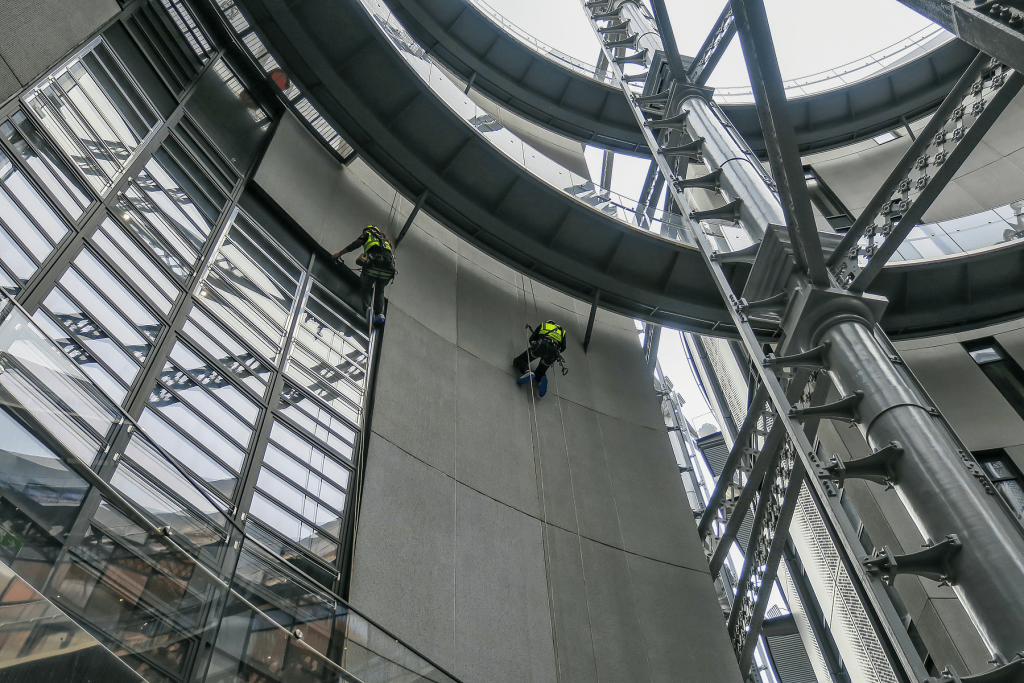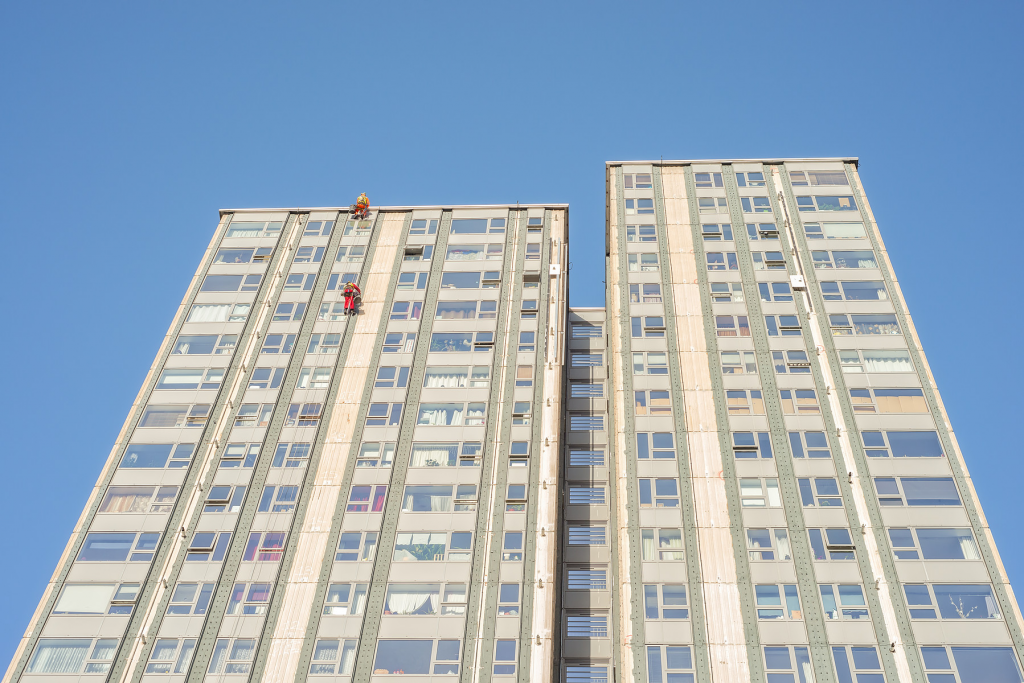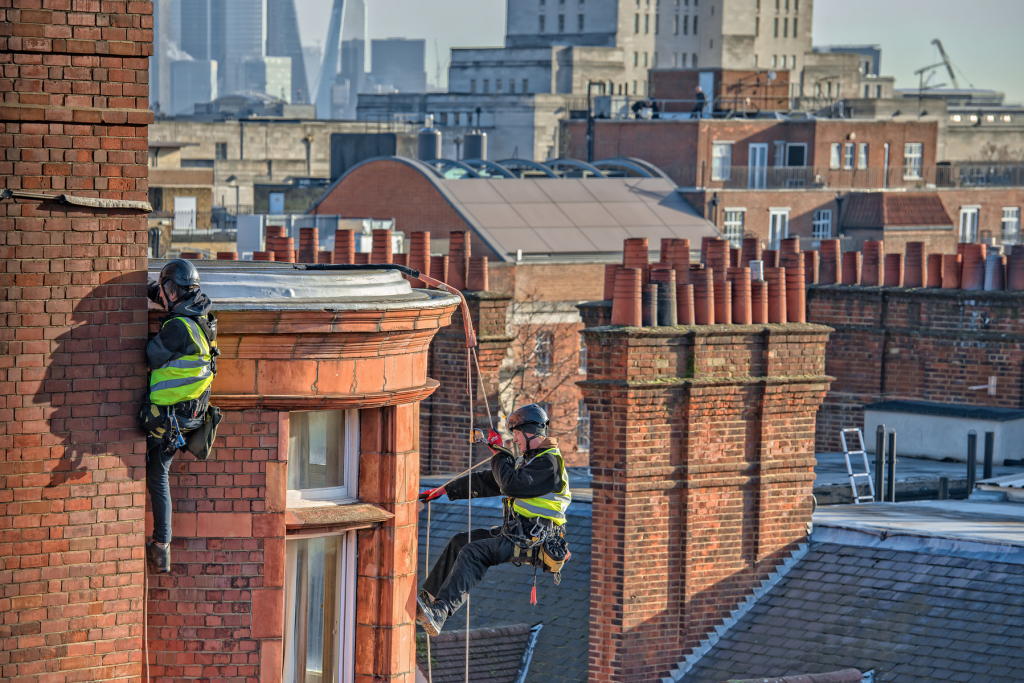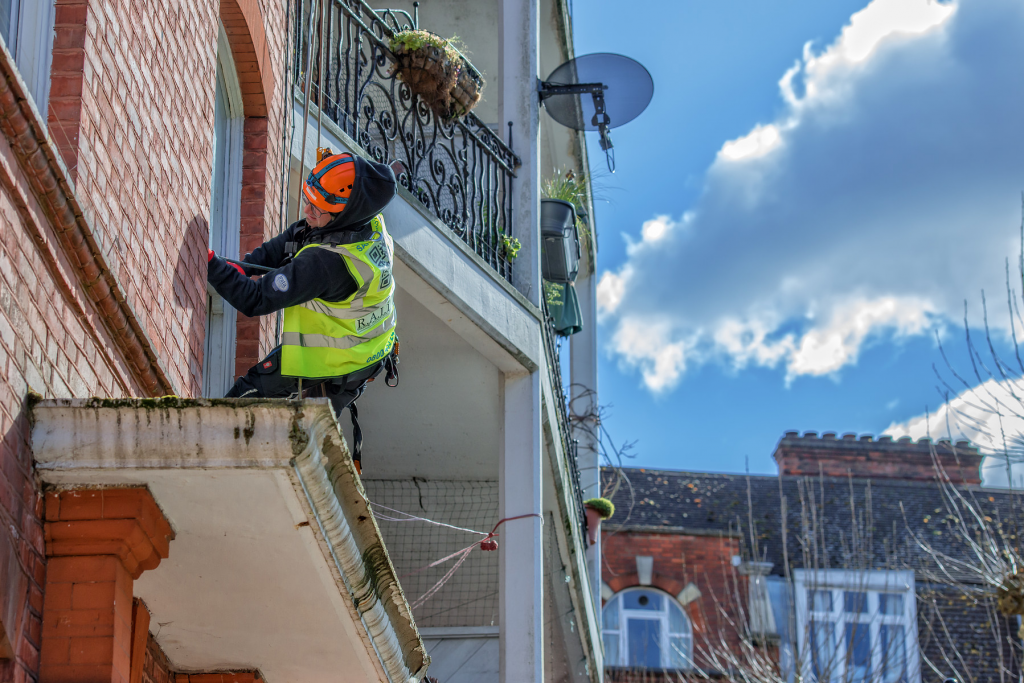


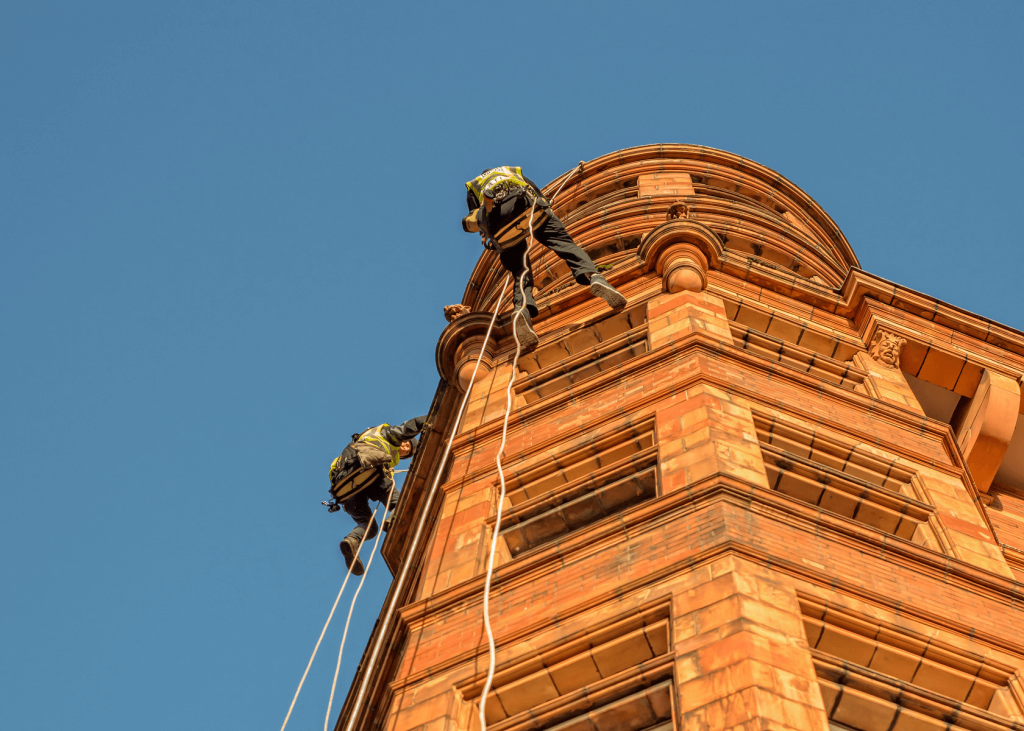
Listed buildings are extraordinary assets — architectural treasures that connect us to our history and define the character of our cities and towns. But they’re also maintenance challenges that require specialist knowledge, careful handling, and approaches that respect their heritage value whilst ensuring they remain safe, weathertight, and fit for purpose.
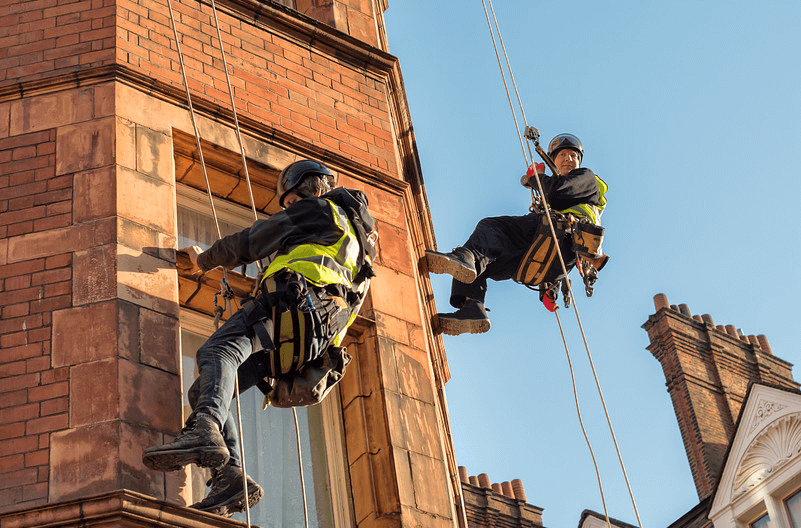
At Rope Access in London (RAIL), we’ve developed particular expertise in maintaining listed buildings across London and the Southeast. We understand that heritage buildings demand a fundamentally different approach to maintenance than modern construction.
Let’s take a closer look at the key maintenance services that listed buildings require and how our rope access techniques enable conservation-compliant maintenance.
Why Do Listed Buildings Require Specialist Maintenance Approaches?
The fundamental difference between listed building maintenance and standard building maintenance lies in the priority hierarchy.
For modern buildings, efficiency and cost-effectiveness typically drive decisions. For listed buildings, heritage conservation comes first, with practical and economic considerations accommodated within that constraint.
Conservation Officers Aren’t Being Difficult—They’re Protecting History
Many building owners approach listed building maintenance with frustration, viewing conservation requirements as bureaucratic obstacles.
We’ve learned to see it differently: conservation officers are protecting buildings that have survived centuries and deserve to survive centuries more. Their requirements are based on decades of conservation science demonstrating what protects historic fabric and what causes irreversible damage.
Materials Matter More Than You’d Think
Modern building materials are engineered for performance, durability, and cost-effectiveness. Historic building materials were chosen for different reasons — availability, workability, compatibility with existing construction, and aesthetic considerations.
Mixing modern and historic materials often creates problems that aren’t immediately apparent but which manifest over time as accelerated deterioration.
Discover RAIL’s minimal-intervention approach!What Are the Critical Maintenance Services Every Listed Building Needs?
Listed buildings require the same fundamental building maintenance as any structure — keeping them weathertight, structurally sound, and safe for occupants. The difference lies in how these services are delivered, what materials are used, and the level of care and documentation required.
1. Regular Condition Surveys
The first principle of heritage building maintenance is “prevent deterioration rather than remedy damage.” This requires regular, detailed condition surveys that identify minor defects before they escalate into major problems.
For listed buildings, these surveys need particular rigour because many defects that might be tolerable in modern buildings (minor water ingress, small cracks, surface deterioration) can cause disproportionate damage to historic materials.
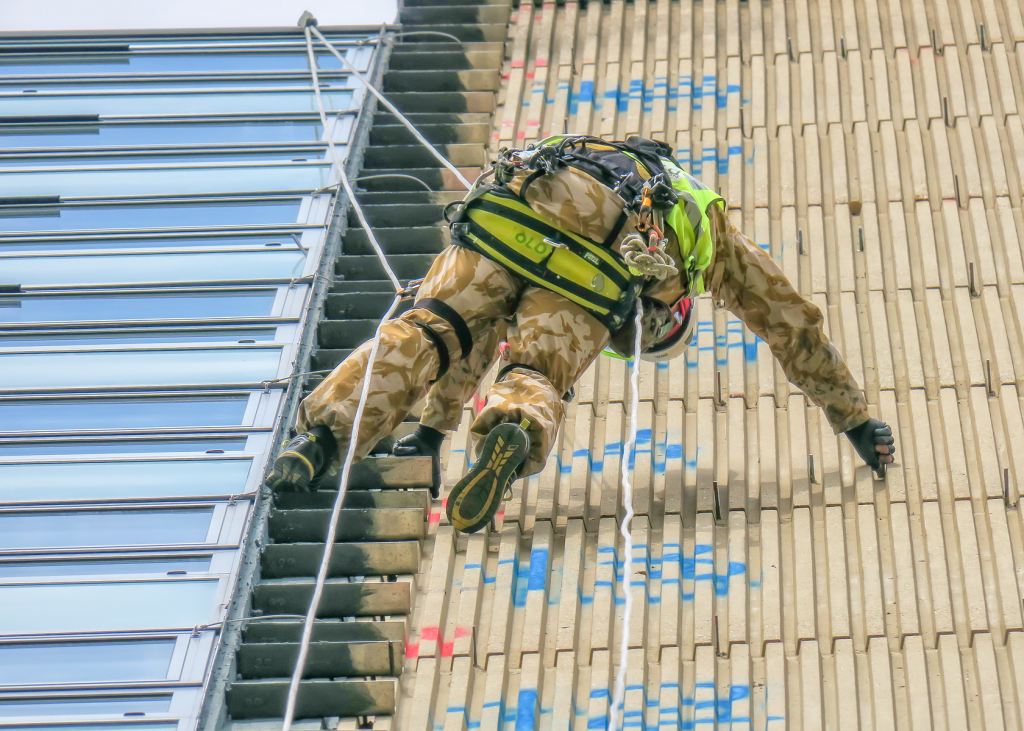
Our rope access building surveying provides the close-quarters examination that listed buildings demand.
2. Specialist Cleaning
Listed building façades accumulate decades or centuries of soiling — atmospheric pollution, biological growth, bird droppings, salt efflorescence, and general environmental degradation.
Cleaning is often essential for both aesthetic reasons and building conservation, but inappropriate cleaning techniques can cause catastrophic damage to historic materials.
Our cleaning services for heritage buildings use techniques specifically suited to historic materials. The choice of cleaning method depends on the substrate material, the type of soiling, the building’s sensitivity, and conservation officer requirements.
Protect your listed building with conservation-compliant maintenance.Contact RAIL for specialist heritage building services!
3. Repointing and Masonry Repairs
Mortar joints deteriorate over time through weathering, frost action, and material breakdown.
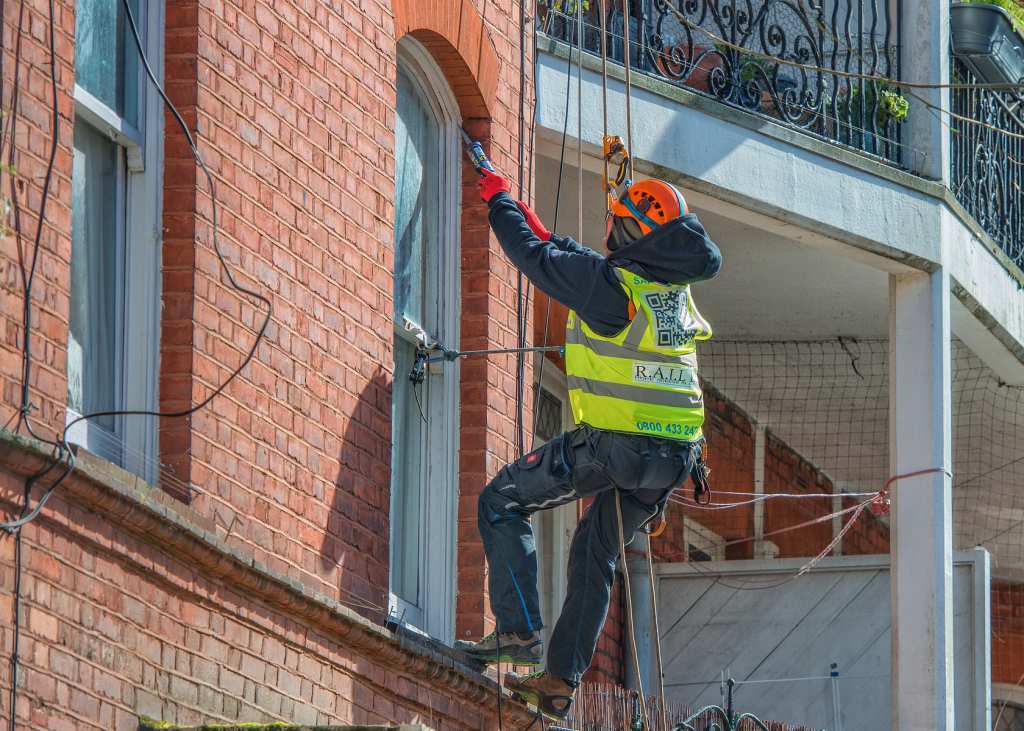
For listed buildings, repointing isn’t simply filling gaps — it’s a conservation intervention requiring appropriate materials, traditional techniques, and often specific approval from conservation authorities.
4. Window Maintenance and Glazing
Historic windows present particular maintenance challenges. Original timber sash windows, leaded lights, cast iron casements — these aren’t just functional elements but character-defining features of listed buildings. Yet they often perform poorly by modern standards, creating pressure to replace them with contemporary alternatives that conservation policies typically prohibit.
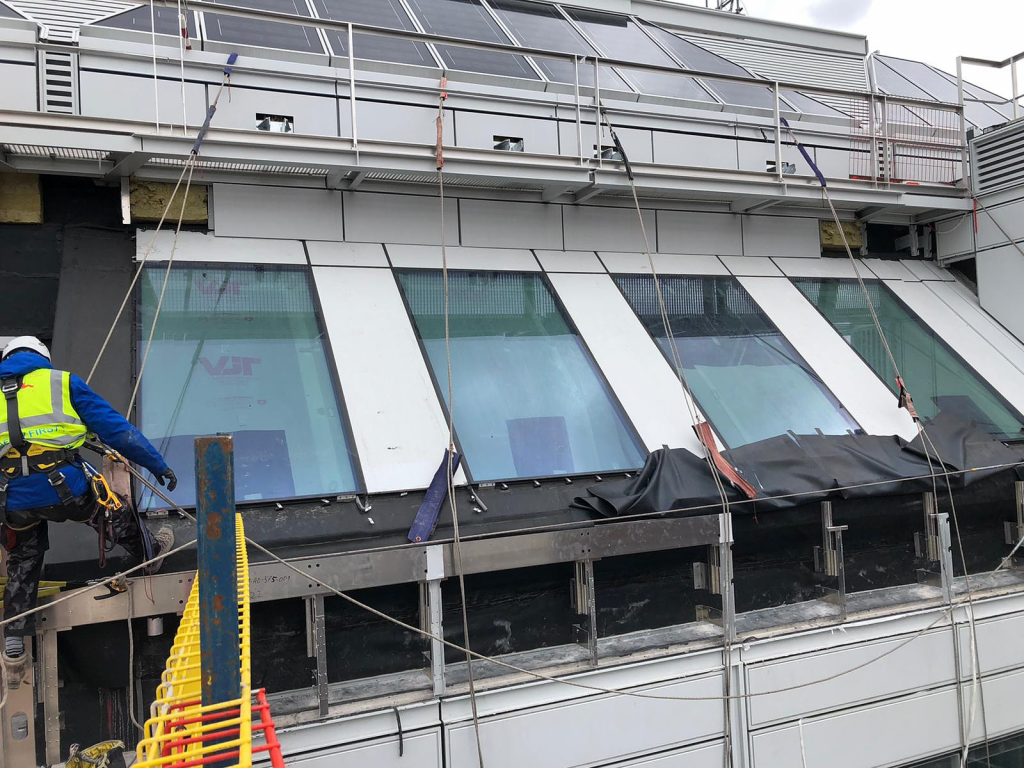
The solution is specialist maintenance that preserves historic windows whilst improving their performance. Our glazing services for listed buildings include, among others,:
- draught-proofing historic windows without altering their appearance
- repairing rather than replacing damaged timber frames
- restoring deteriorated metalwork
The Future of Listed Building Maintenance: Balancing Heritage and Performance
The tension between preserving historic character and meeting modern building performance standards isn’t going away. Climate change adaptation, energy efficiency improvements, accessibility requirements — these contemporary priorities must somehow be accommodated within heritage conservation frameworks.
We’re increasingly involved in projects that seek this balance.
Listed buildings will always require more care, more specialist knowledge, and often more investment than modern construction. But they’re also irreplaceable assets that define our built heritage.
The maintenance services we provide are about ensuring that future generations inherit the same architectural richness that we enjoy today.
Frequently Asked Questions
How often should listed buildings receive professional condition surveys?
Conservation best practice recommends quinquennial (five-yearly) detailed surveys for listed buildings, though higher-grade listings (Grade I and II*) or buildings with known issues may benefit from more frequent inspection.
However, we generally advise annual visual inspections focusing on known problem areas, vulnerable features, and monitoring previously identified defects. This approach catches developing issues early when interventions are minimally invasive.
What are the most common maintenance failures that damage listed buildings?
The most damaging failures typically involve inappropriate materials rather than neglect. Using cement-based mortars for repointing, applying impermeable coatings to breathable historic renders, installing uPVC windows that don’t breathe like original timber frames, and conducting overly aggressive cleaning that erodes historic surfaces.
The second major issue is deferred maintenance, where minor defects (blocked gutters, small roof leaks, failing flashings) are ignored until they cause significant deterioration.
What happens if unauthorised maintenance work is discovered on a listed building?
Local planning authorities have enforcement powers to require removal or amendment of unauthorised works on listed buildings, and in serious cases, they can prosecute for listed building offences (maximum penalties include unlimited fines and up to two years imprisonment for deliberate damage).
More commonly, enforcement involves serving a Listed Building Enforcement Notice requiring remediation — removing inappropriate materials, reversing harmful interventions, or conducting additional work to mitigate damage.