

Brickwork has been the backbone of British architecture for centuries. From Victorian terrace houses to modern high-rise developments, brick remains one of our most trusted and aesthetically pleasing building materials.
However, bricks don’t last forever. And, more importantly, the mortar holding them together has a considerably shorter lifespan than most people assume.
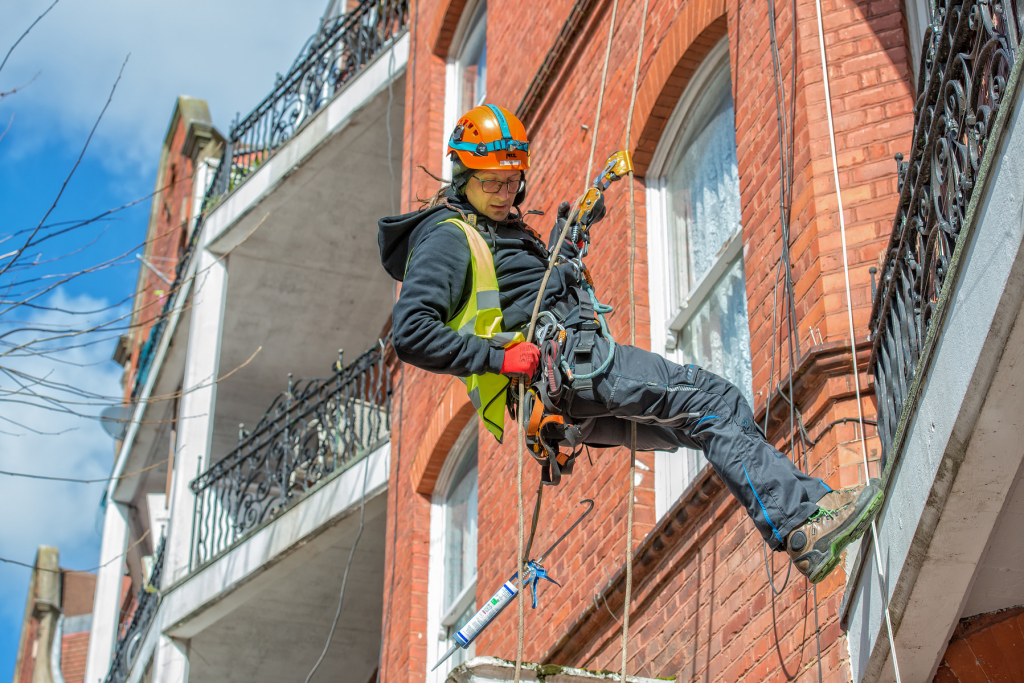
At Rope Access in London (RAIL), we’ve conducted hundreds of brickwork inspections across the capital. Through our building surveying services, we’ve seen it all.
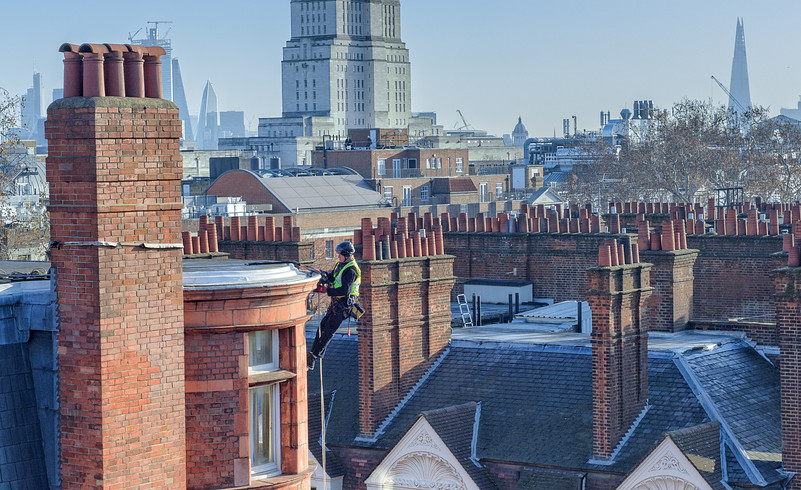
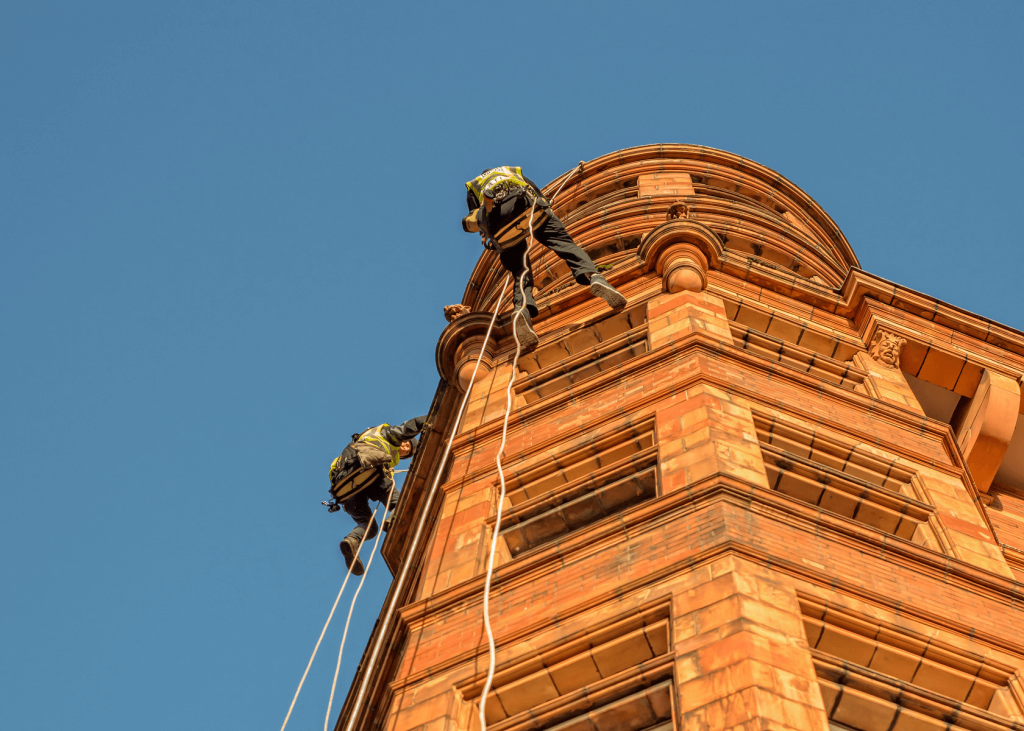
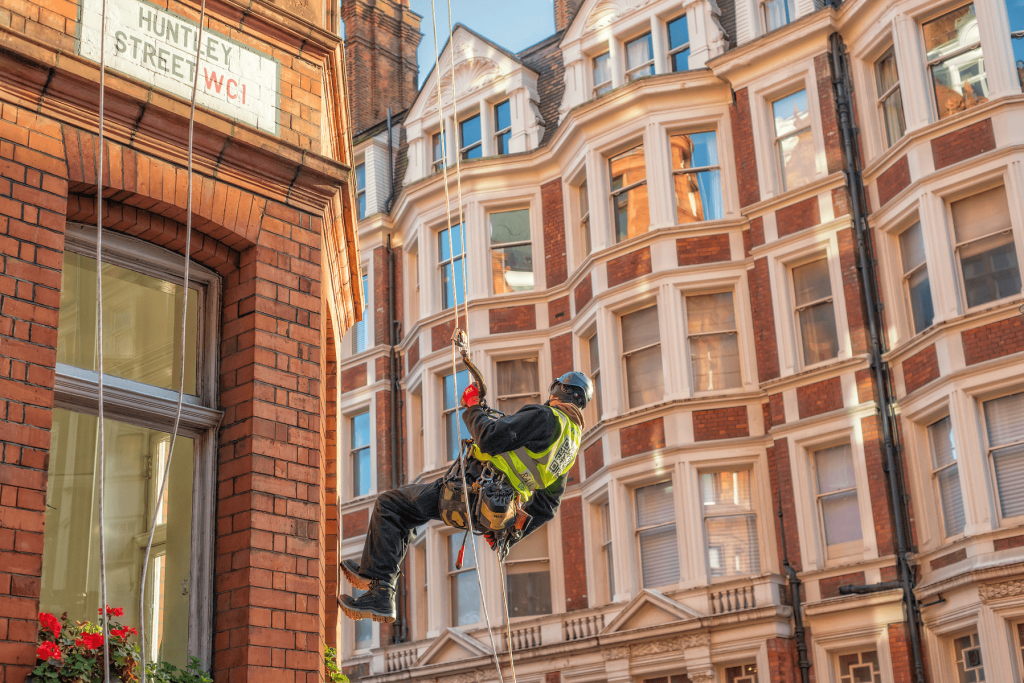
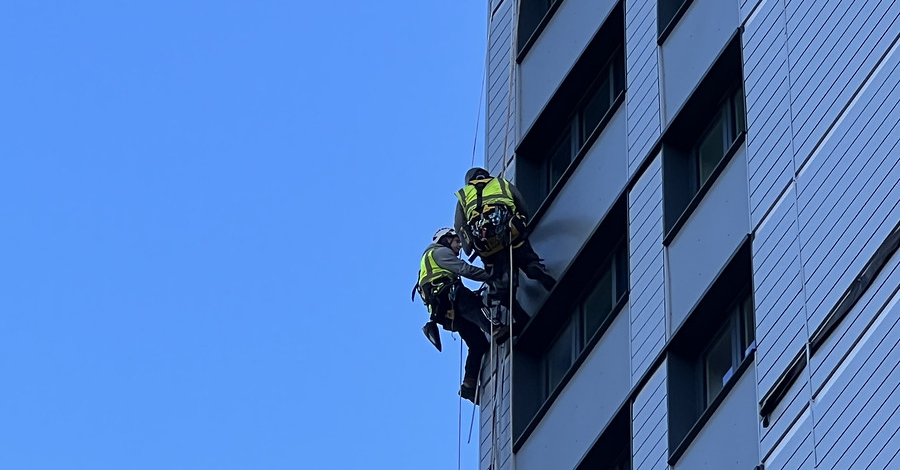
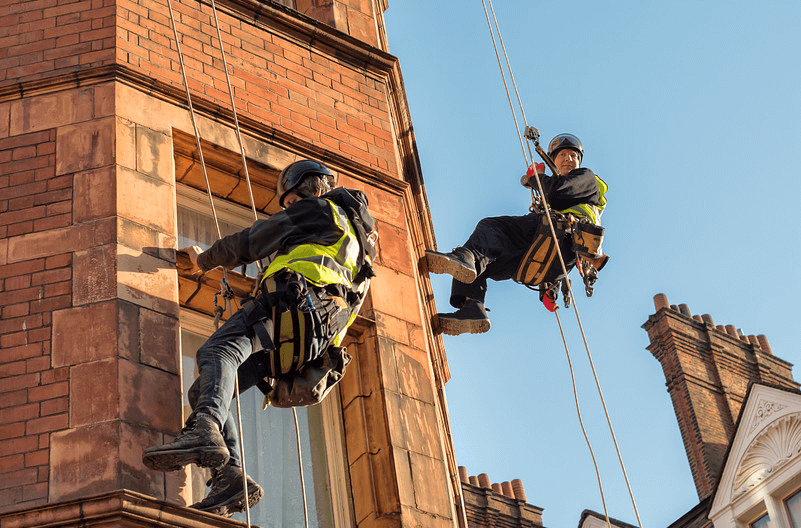
So, what exactly are we looking for when we abseil down your building? Let’s explore the comprehensive checklist that guides every RAIL brickwork inspection.
How Do We Assess Mortar Condition and Joint Integrity?
The mortar between bricks is rather like the glue holding a mosaic together. It’s not the star of the show, but without it, everything falls apart.
Mortar deterioration is one of the most common issues we encounter during inspections, and it’s often the first indicator of broader problems.
Pointing and Repointing Needs
When examining mortar joints, we’re looking at several key factors.
First, there’s the depth of erosion. Healthy mortar should sit flush or slightly recessed from the brick face. When we find joints eroded more than 10-15mm deep, alarm bells start ringing. This level of deterioration compromises weather protection and can allow water penetration.
We also assess the consistency of deterioration across the facade. Uniform erosion across large areas typically indicates age-related weathering, whilst isolated patches of damage might suggest localised issues like leaking gutters, poor drainage, or previous substandard repair work.
The colour and texture of existing mortar tells us volumes about its composition and age. Historic buildings often feature lime-based mortars that have different properties and repair requirements compared to modern cement-based alternatives.
Cracking Patterns and What They Reveal
Cracks in mortar joints aren’t created equal. Hairline cracks might be merely cosmetic, whilst wider gaps or stepped cracks following the mortar joints can indicate structural movement.
We pay particular attention to crack patterns because they’re often the building’s way of communicating underlying problems.
- Horizontal cracks near the top of walls might suggest roof spreading or lintel failure.
- Vertical cracks could indicate foundation settlement or thermal movement.
- Diagonal stepped cracks — those that zigzag up through the mortar joints — often point to more serious structural issues that require immediate attention and possibly structural engineer involvement.
Biological Growth and Chemical Attack
Britain’s damp climate creates perfect conditions for biological growth on masonry. Whilst a bit of moss might look charmingly rustic on a country cottage, on most buildings it’s a sign of persistent moisture — and where there’s moisture, there’s trouble brewing.
We look for various types of biological colonisation: algae, moss, lichen, and ivy intrusion. Each type tells us something about the moisture levels and maintenance history.
Heavy biological growth on one section compared to others might indicate blocked gutters above, condensation issues, or areas where water pools due to poor drainage.
Chemical attack presents differently. Efflorescence — those white, powdery salt deposits — indicates water movement through the masonry, carrying dissolved salts to the surface.
More concerning is sulphate attack, where chemical reactions between certain brick types and mortar cause expansion and deterioration. We’re trained to spot the early signs before significant damage occurs.
Need a professional assessment of your brickwork?Contact us!
What Structural Issues Can Compromise Brickwork Safety?
Beyond mortar and joint concerns, we’re constantly vigilant for structural issues that could compromise building safety. Some of these are immediately obvious, whilst others require a trained eye and experience to identify.
Bulging, Bowing, and Leaning Walls
One of the more dramatic findings during brickwork inspections is wall movement.
Bulging occurs when a wall pushes outward, often due to inadequate lateral restraint, rust-jacking from embedded steelwork, or pressure from behind (such as expanding soil or internal structural issues).
Even slight bowing — perhaps just 20-30mm over several metres — can be significant. British Standards provide guidance on acceptable tolerances, but context matters enormously.
A slight bulge in a 200-year-old garden wall might be perfectly acceptable and stable, whilst the same movement in a modern cavity wall could indicate cavity tie failure or serious structural problems.
We’re particularly cautious about leaning walls, where the entire structure has moved from vertical. This often indicates foundation issues, ground movement, or inadequate restraint at floor and roof levels.
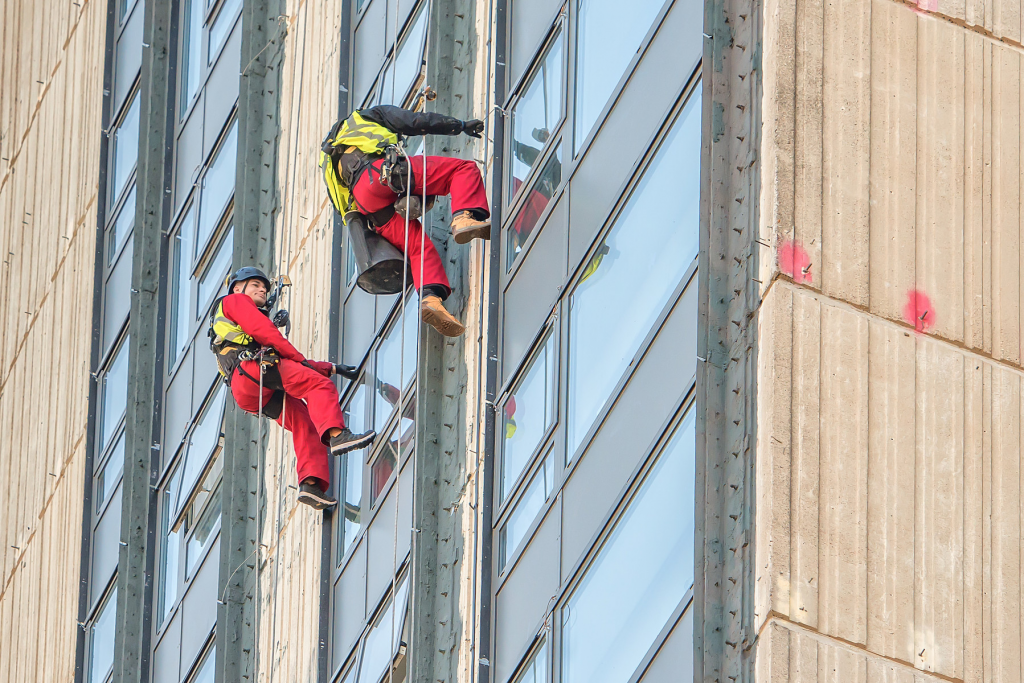
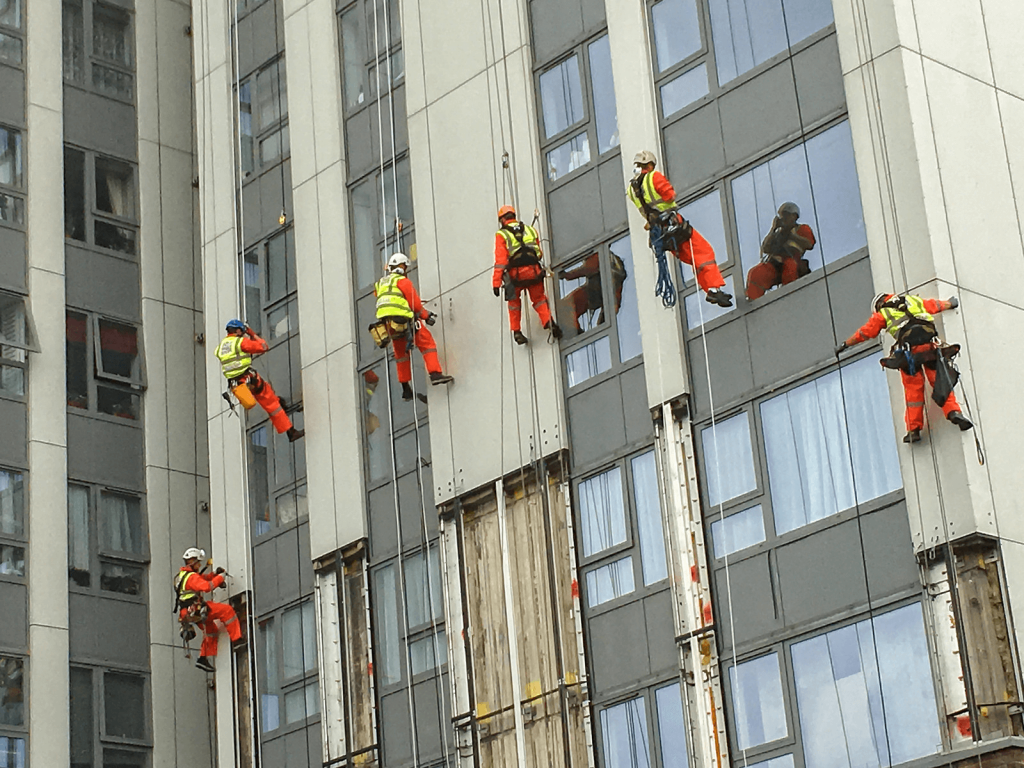
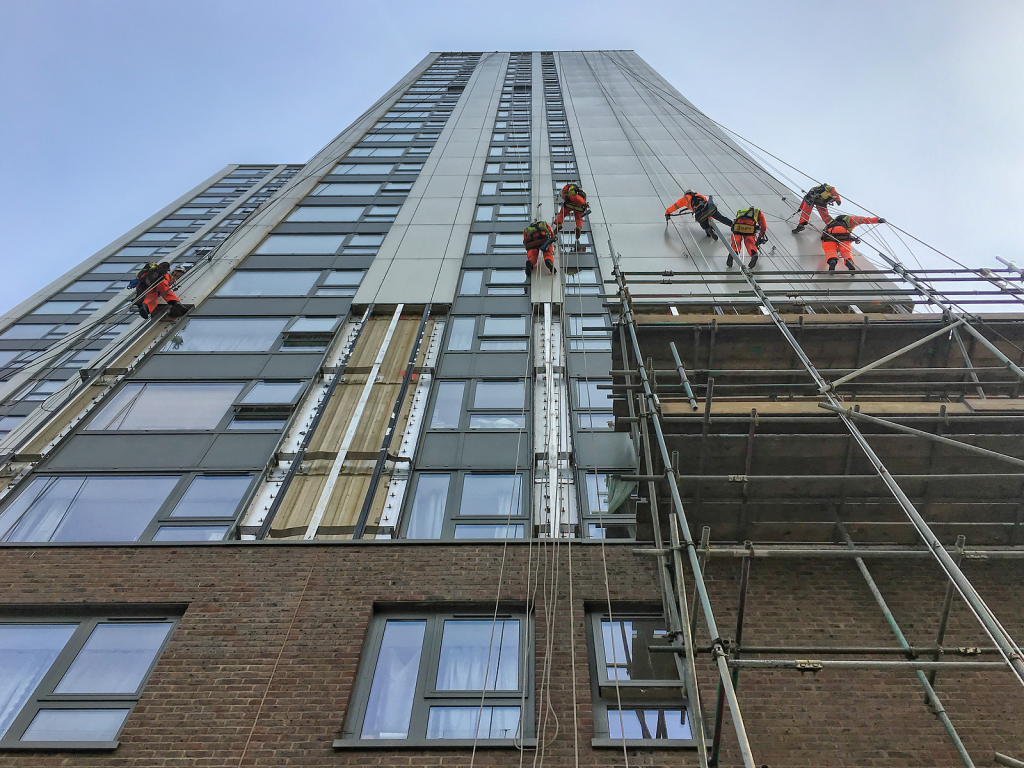
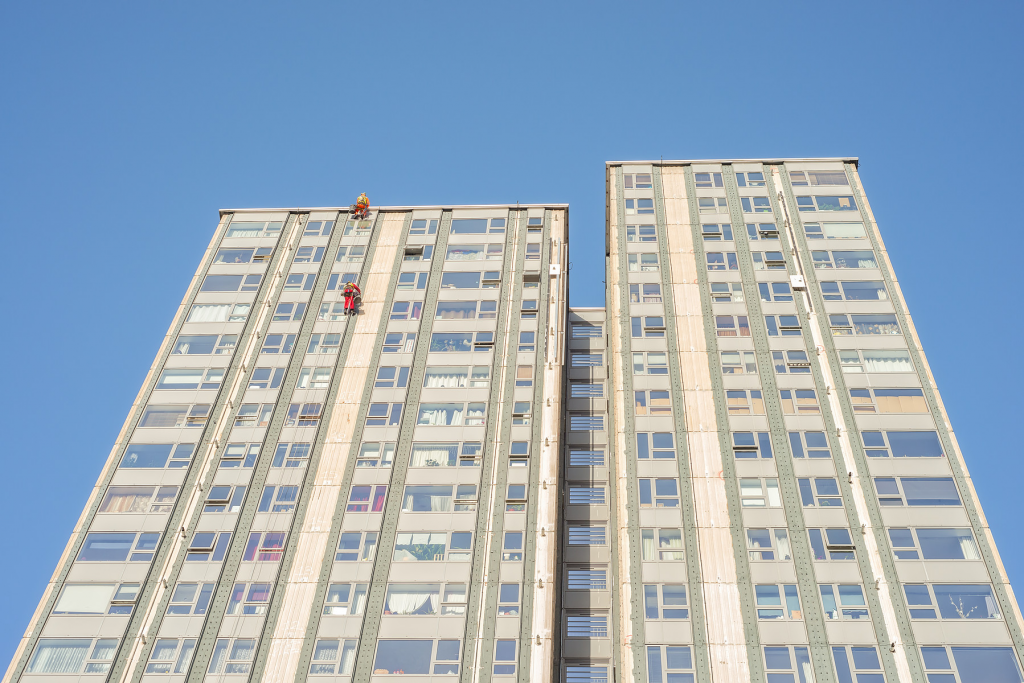
In high-rise buildings accessed via our rope access methods, we can inspect upper levels that might show different movement patterns than lower sections.
Lintel and Arch Failures
Lintels and arches carry significant loads above windows and doors. When they fail, consequences can be severe. During inspections, we examine these features closely for cracks, dropped stones or bricks, and signs of movement.
Rusting steel lintels are particularly problematic. As the steel corrodes, it expands, cracking the surrounding masonry in characteristic patterns that experienced inspectors recognise immediately.
Historic buildings often feature brick or stone arches that have performed admirably for centuries. However, alterations like removing internal walls that previously provided lateral support, or ground movement affecting foundations, can cause arch failure.
We assess whether arches remain properly seated, check keystone condition, and look for tell-tale signs of movement that suggest remedial work is needed.
Cavity Wall Tie Corrosion
This is the hidden enemy of cavity wall construction. Wall ties connect the inner and outer leaves of cavity walls, and when they corrode, several problems arise. Corroded ties expand, causing horizontal cracking in bed joints — typically appearing in regular patterns every 450mm or 900mm vertically (the standard tie spacing).
Whilst we can identify suspect cracking patterns from external inspection, confirming cavity tie corrosion often requires additional investigation like endoscopy or borescope examination. However, our detailed external surveys provide crucial evidence that guides these further investigations.

Which Weather-Related Damages Demand Immediate Attention?
British weather is famously unpredictable. Some weather-related damage develops slowly over decades, whilst other issues can escalate rapidly from minor concerns to major problems.
Frost Damage and Spalling
When water enters brick, freezes, expands, and then thaws, the cycle causes progressive damage called frost spalling.
We see this frequently on older buildings with porous bricks or where waterproofing has failed. The characteristic appearance is brick faces flaking or breaking away, often starting at edges and progressing across the face.
Frost damage assessment involves identifying affected areas, determining the extent of deterioration, and crucially, identifying why water is accumulating in those locations.
Is it due to failed pointing allowing water ingress? Blocked gutters causing overflow? Missing copings allowing rain penetration from above?
We provide recommendations that address both the damage and its cause. There’s little point replacing frost-damaged bricks if the underlying water ingress issue isn’t resolved.
Rain Penetration and Water Staining
Water staining might seem purely cosmetic, but it’s often symptomatic of more serious issues. We map water staining patterns carefully because they tell us about water movement through the building envelope.
Staining directly below copings, window sills, or other features indicates water runoff issues. More concerning is rising damp or penetrating damp through the wall itself.
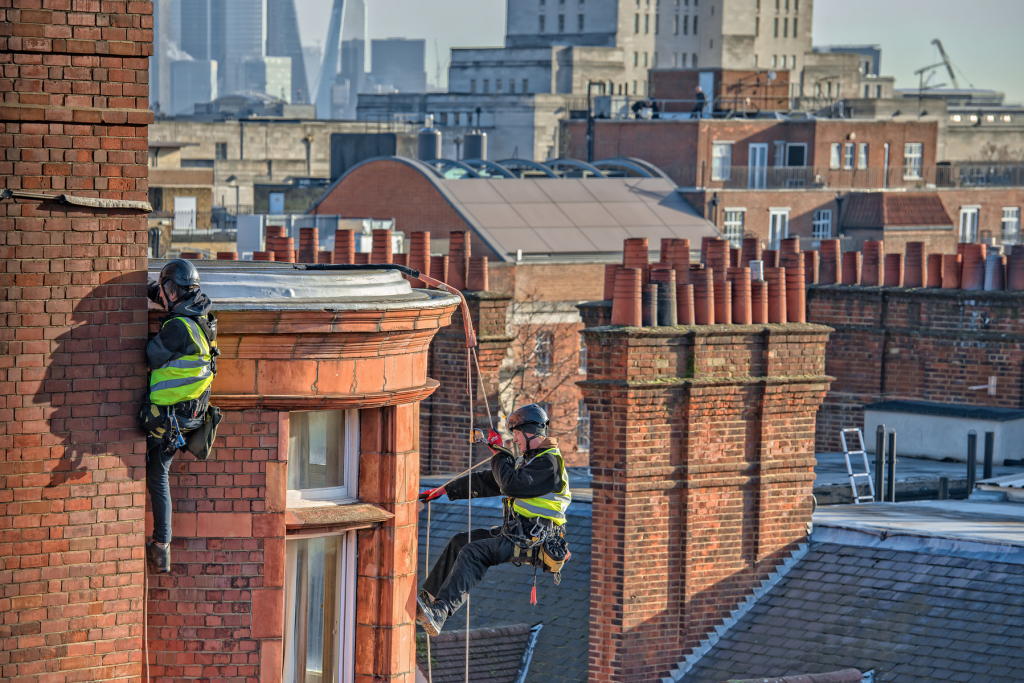
Our rope access capabilities allow us to inspect high-level features that often escape ground-level surveys. We can examine coping stones, chimney stacks, and parapet details up close — all common sources of water ingress.
Wind Damage and Loose Brickwork
High winds can exploit any weakness in masonry. Loose bricks, failed pointing, or damaged features become immediate hazards when exposed to gale-force winds.
During inspections, we physically test suspect areas where safe to do so, checking for movement or looseness that could pose falling hazard risks.
Tall buildings face particular wind challenges, with increased wind speeds at height creating more severe loading on facades. We pay special attention to parapets, corner details, and any projecting features that experience amplified wind forces.
Concerned about potential safety hazards on your building?Get in touch.
Conclusion
Brickwork inspections aren’t glamorous, but they’re essential. The difference between a building that stands proudly for another century and one that suffers catastrophic failure often comes down to whether problems were identified and addressed in time.
At RAIL, we bring professional expertise, comprehensive capabilities, and genuine care to every brickwork inspection. Our detailed inspections provide the information needed to make confident decisions about building maintenance and repairs.
Frequently Asked Questions
How often should brickwork inspections be conducted?
The frequency depends on several factors, including building age, condition, location, and usage. As a general guideline, we recommend comprehensive inspections every 3-5 years for modern buildings in good condition, every 2-3 years for older structures or those in exposed locations, and annual inspections for heritage buildings or properties with known issues.
Can brickwork inspections be conducted in winter?
Absolutely, though certain limitations apply. Visual inspections can proceed in most weather conditions, and often winter months are ideal for identifying water ingress issues because they’re more likely to be actively occurring. However, we avoid inspections during heavy rain, high winds, ice, or snow for safety reasons.
We’ll always advise on optimal timing based on your specific building and the inspection scope required.
What happens if your inspection reveals urgent safety issues?
Safety always takes precedence. If we identify immediate hazards — such as loose masonry at height, severely compromised structural elements, or anything posing imminent risk to public safety — we notify you immediately. We’ll provide photographic evidence, clearly explain the risk, and recommend immediate action.
{ “@context”: “https://schema.org”, “@type”: “FAQPage”, “mainEntity”: [{ “@type”: “Question”, “name”: “How often should brickwork inspections be conducted?”, “acceptedAnswer”: { “@type”: “Answer”, “text”: “The frequency depends on several factors, including building age, condition, location, and usage. As a general guideline, we recommend comprehensive inspections every 3-5 years for modern buildings in good condition, every 2-3 years for older structures or those in exposed locations, and annual inspections for heritage buildings or properties with known issues.” } },{ “@type”: “Question”, “name”: “Can brickwork inspections be conducted in winter?”, “acceptedAnswer”: { “@type”: “Answer”, “text”: “Absolutely, though certain limitations apply. Visual inspections can proceed in most weather conditions, and often winter months are ideal for identifying water ingress issues because they’re more likely to be actively occurring. However, we avoid inspections during heavy rain, high winds, ice, or snow for safety reasons. We’ll always advise on optimal timing based on your specific building and the inspection scope required.” } },{ “@type”: “Question”, “name”: “What happens if your inspection reveals urgent safety issues?”, “acceptedAnswer”: { “@type”: “Answer”, “text”: “Safety always takes precedence. If we identify immediate hazards — such as loose masonry at height, severely compromised structural elements, or anything posing imminent risk to public safety — we notify you immediately. We’ll provide photographic evidence, clearly explain the risk, and recommend immediate action.” } }] }