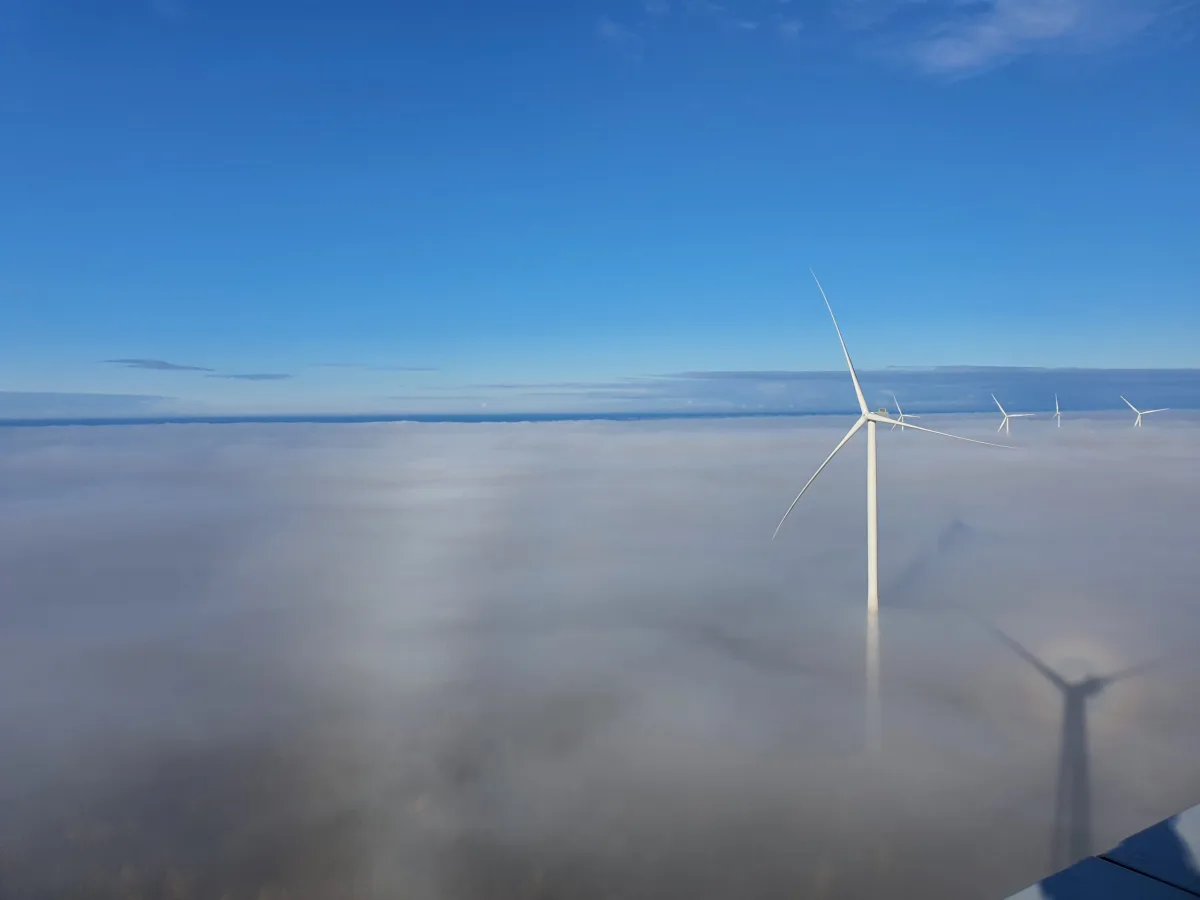
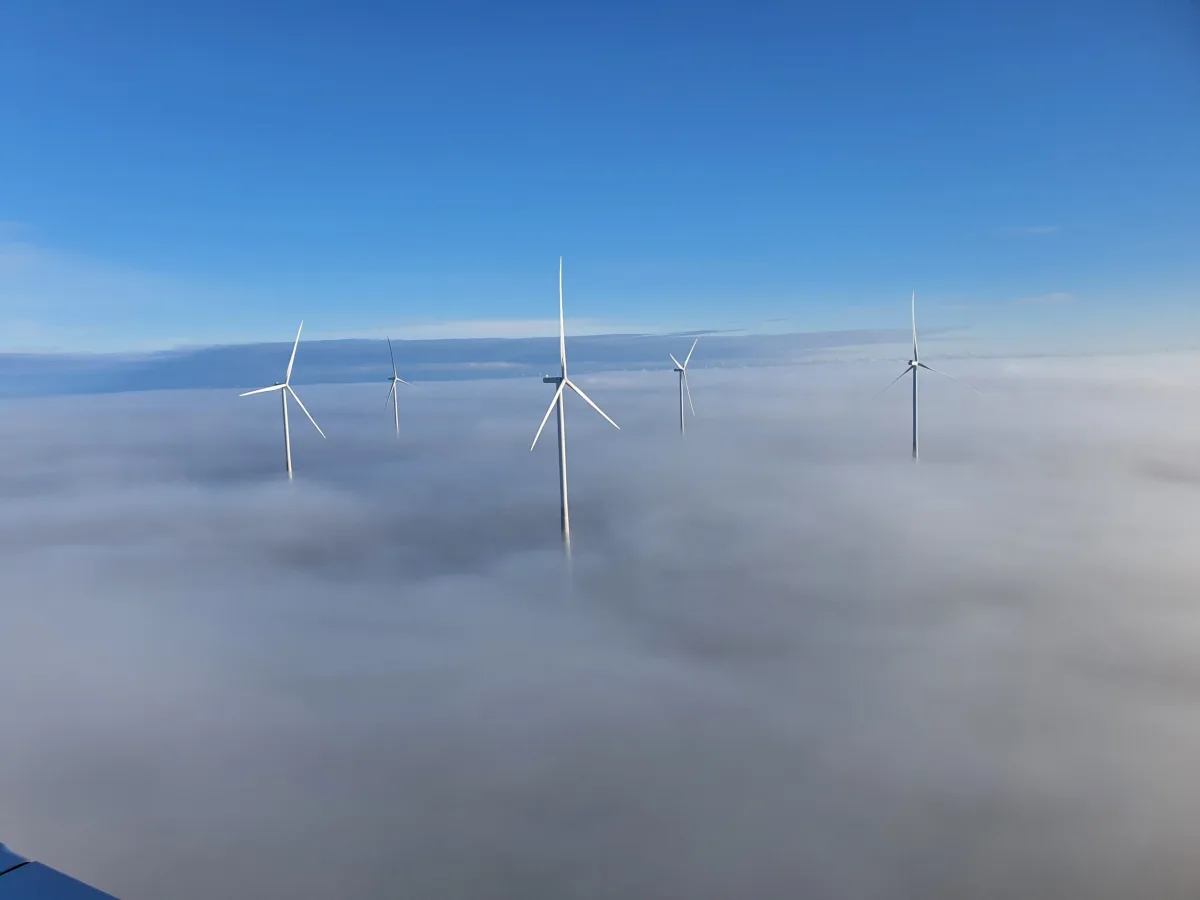
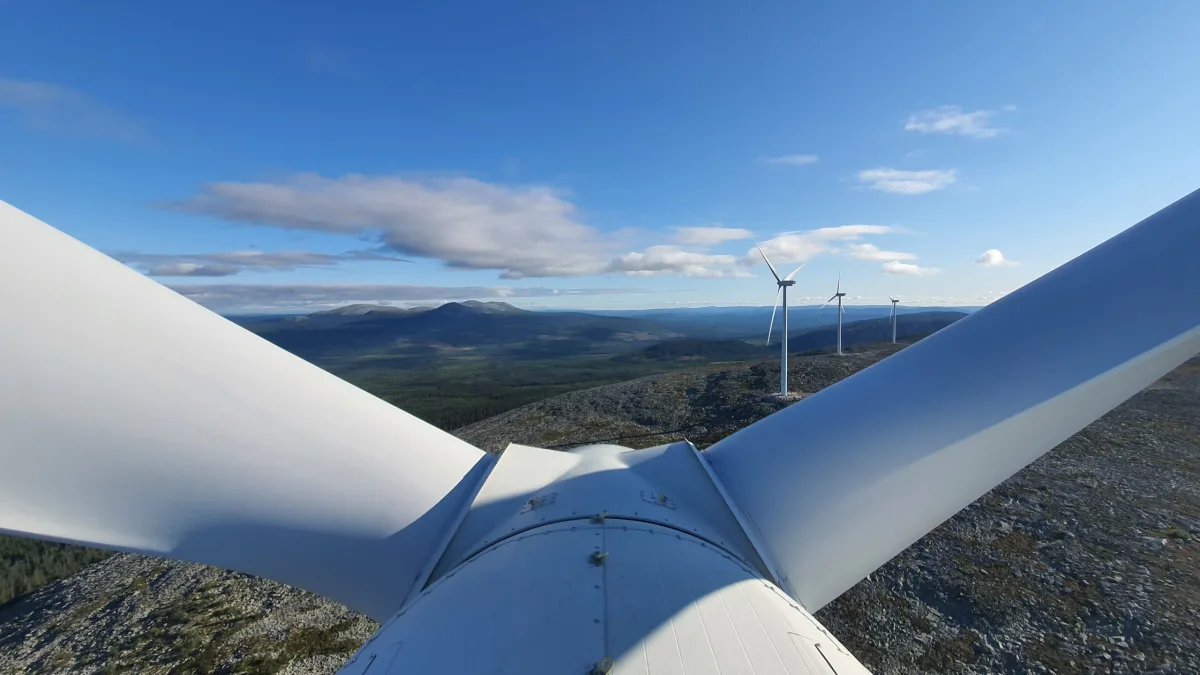
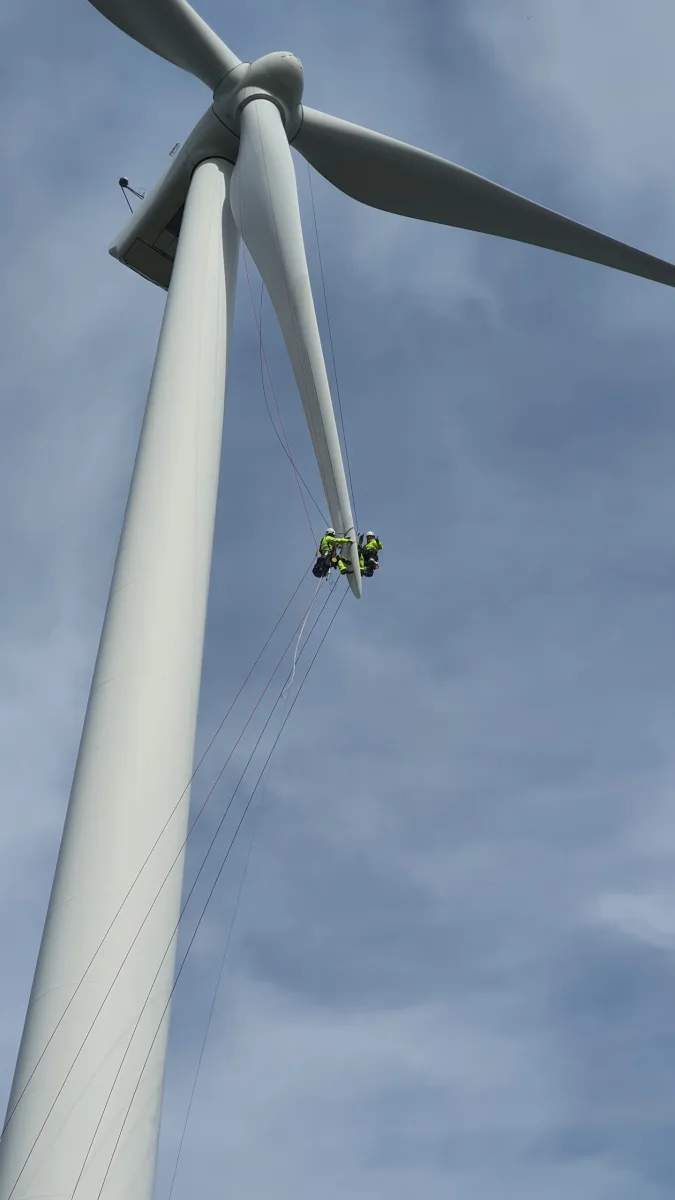
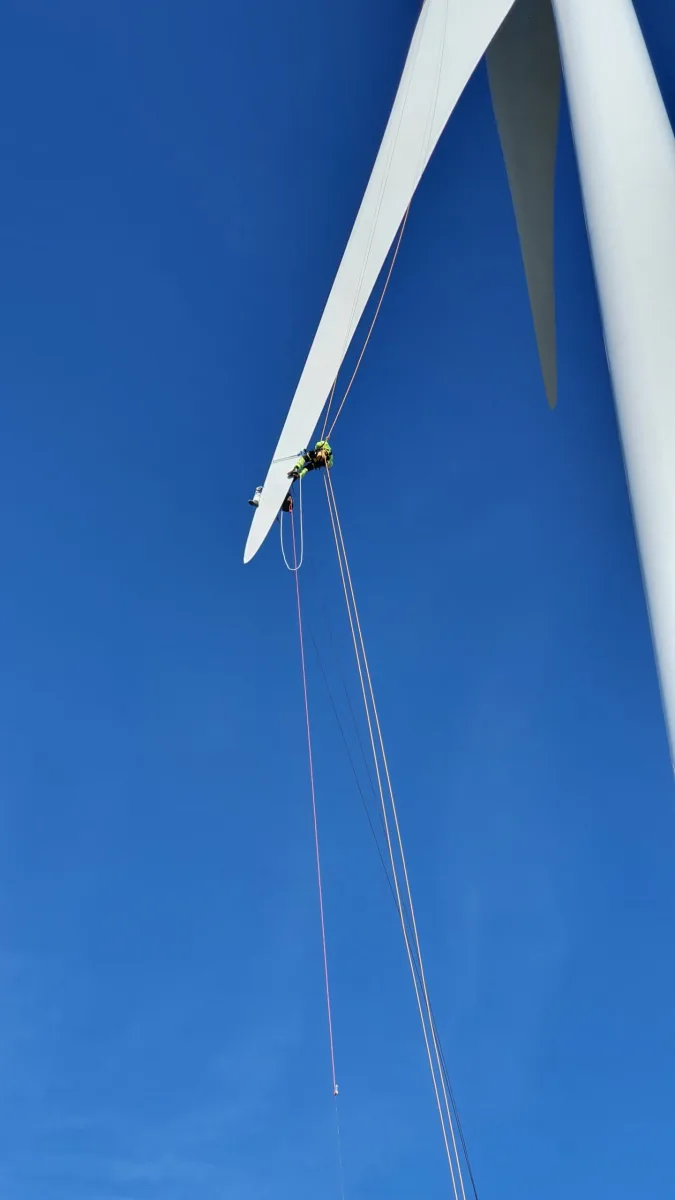
A wind turbine blade works hard every minute it turns. Rain, dust, salt, insects, ice and UV light all wear away at its surface. That means less power from the same wind.
Planned blade maintenance stops this slow loss. Instead of waiting for a fault, you look after the blade on a set schedule. Small issues get fixed while they are still quick and cheap to deal with. Upgrades then help the blade work better than before.
At RAIL, we combine both. Our IRATA-certified technicians carry out routine care and fit performance upgrades in the same visit where possible. This keeps your turbines turning and cuts the number of times you need to stop them.
Why Rope Access Suits Blade Maintenance
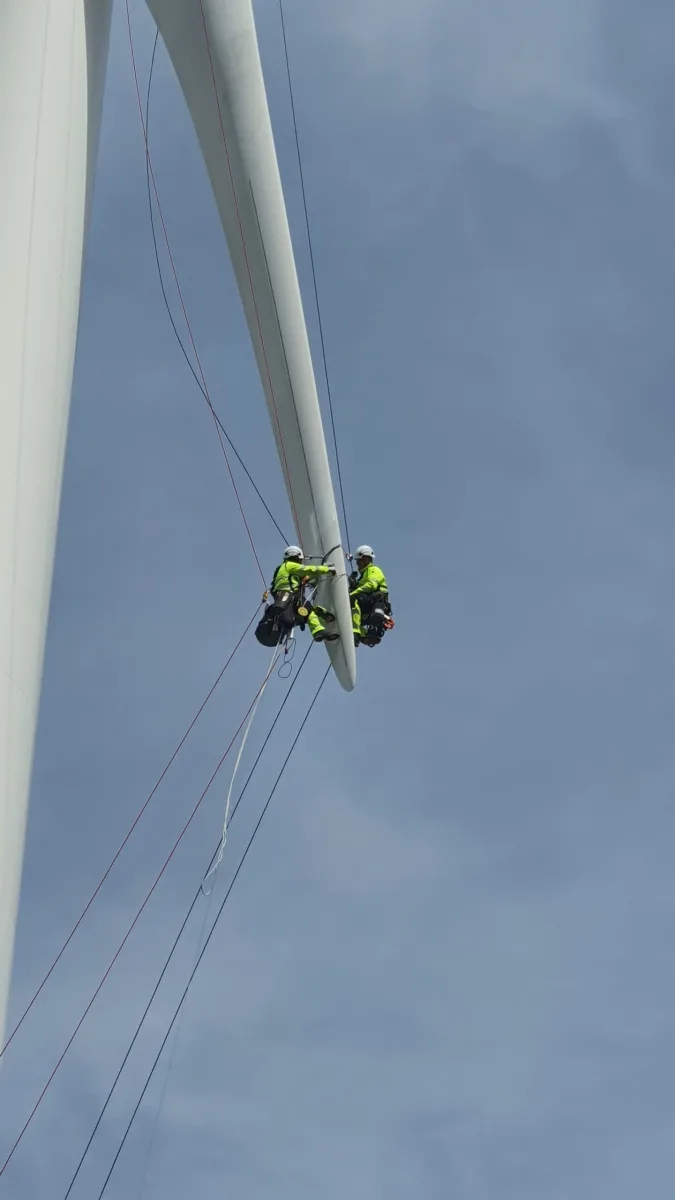
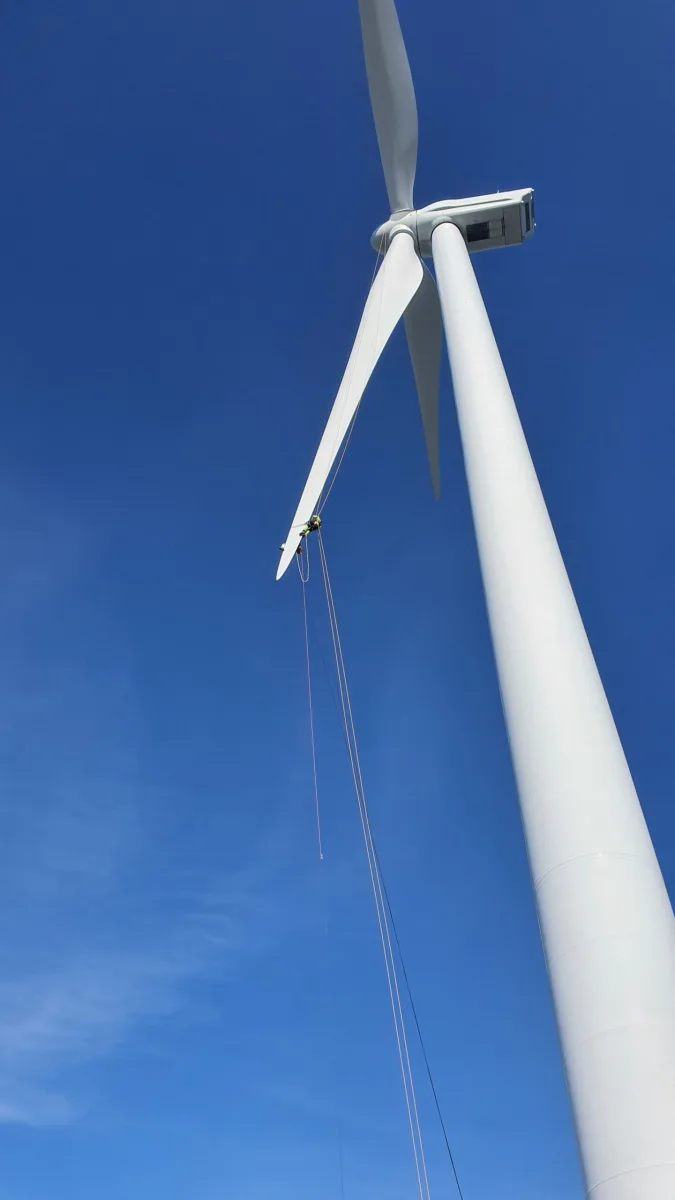
Blades are long, curved and high above the ground or sea. Reaching them safely is often the hardest part of any job. Rope access gives our technicians direct, hands-on contact with the blade surface without the need for large cranes or fixed platforms.
This brings clear benefits for you:
- Safe access at height. Every job follows IRATA methods, with two independent ropes, rescue plans and trained supervisors on site.
- Faster set-up. A rope team can rig a turbine in a short time, so work starts sooner.
- Lower cost. Small crews and light kits are a cost-effective alternative to scaffolding, cranes or blade platforms.
- Less downtime. Turbines are stopped only for as long as the work needs.
- Close inspection. Technicians see and touch the surface, so they spot defects that cameras and drones can miss.
Rope access works on onshore and offshore turbines. On offshore sites, we plan around weather windows and vessel schedules to make the best use of every working day.
What Our Blade Maintenance Covers
Every turbine is different, so we build a tailored plan for your site. A typical programme may include the tasks below.
1. Cleaning and surface care
Dirt, oil, insects and salt build up on the blade over time. This rough layer slows the air near the surface and lowers output. We clean blades with methods that suit the coating, so the finish is not harmed.
2. Leading edge care
The leading edge is the front of the blade. It meets rain and dust at high speed and wears first. We check it on each visit, fill small pits and restore the profile before erosion reaches the laminate below.
3. Coating checks and touch-ups
Protective coatings shield the blade from water and UV light. We look for cracks, peeling and thin spots, then repair them to the manufacturer’s specification.
4. Drain holes and lightning protection
Blocked drain holes trap water inside the blade. In cold weather, this water can freeze and cause damage. We clear drains and check lightning receptors and down-conductors, so strikes pass safely to earth.
5. Seals, bolts and fixings
Our team checks root seals, add-on parts and visible fixings. Loose or worn parts are recorded and put right.