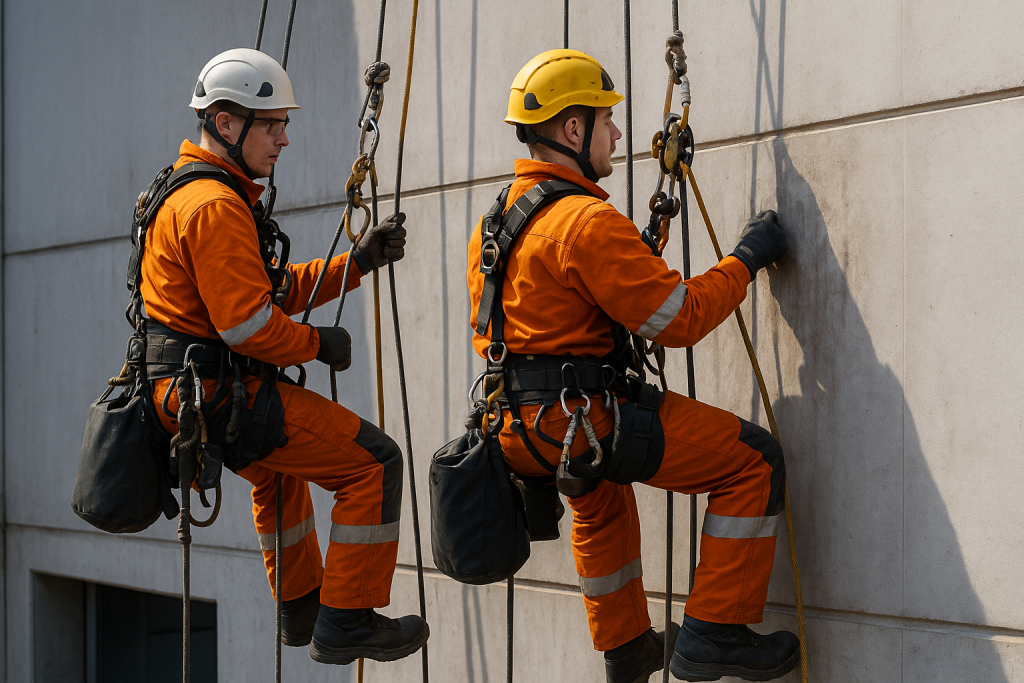
Rope Access Bird Spikes in London
Bird spikes are one of the simplest, most cost-effective bird deterrents on the market. However, when done badly, they look messy, miss key perches and fail within a season.
At Rope Access in London we install bird spike systems on parapets, ledges, signage, copings and pipework. Our crews reach every roost on the building, fix the spikes properly and leave the streetscape clear of scaffolding.
Why bird spikes work
Pigeons, gulls and starlings need a flat landing surface to perch and roost. Take that surface away and they go elsewhere.
Bird spikes do exactly that: a fine, evenly spaced array of stainless-steel points along the leading edge of a ledge makes landing impossible without harming the bird.
Spikes are humane, long-lasting and almost invisible from street level. They suit:
- Parapets and copings: the single most common high-rise roost.
- Window sills and lintels: where droppings stain glass and brickwork below.
- Ledges on signage and shopfronts: protecting retail frontage from fouling.
- Pipework, brackets and HVAC plant: keeping rooftop equipment clean and functional.
- Statuary, finials and ornamental masonry: on heritage façades where netting would be visually intrusive.
Where birds need a physical barrier rather than a deterrent — for example over a balcony void or atrium — we usually recommend bird netting or post-and-wire systems instead. Choosing the right product for the species and the surface matters as much as the install.
Why rope access is the right method for bird spike installation
Bird spikes need to go where birds actually land — typically the highest, most exposed parts of the building.
Scaffolding a whole elevation to fix a hundred metres of ledge spikes is wasteful and slow. Cherry pickers can’t reach behind the parapets.
Rope access lets a small team rig from the roof, descend the elevation, install spikes section by section and demobilise the same day.