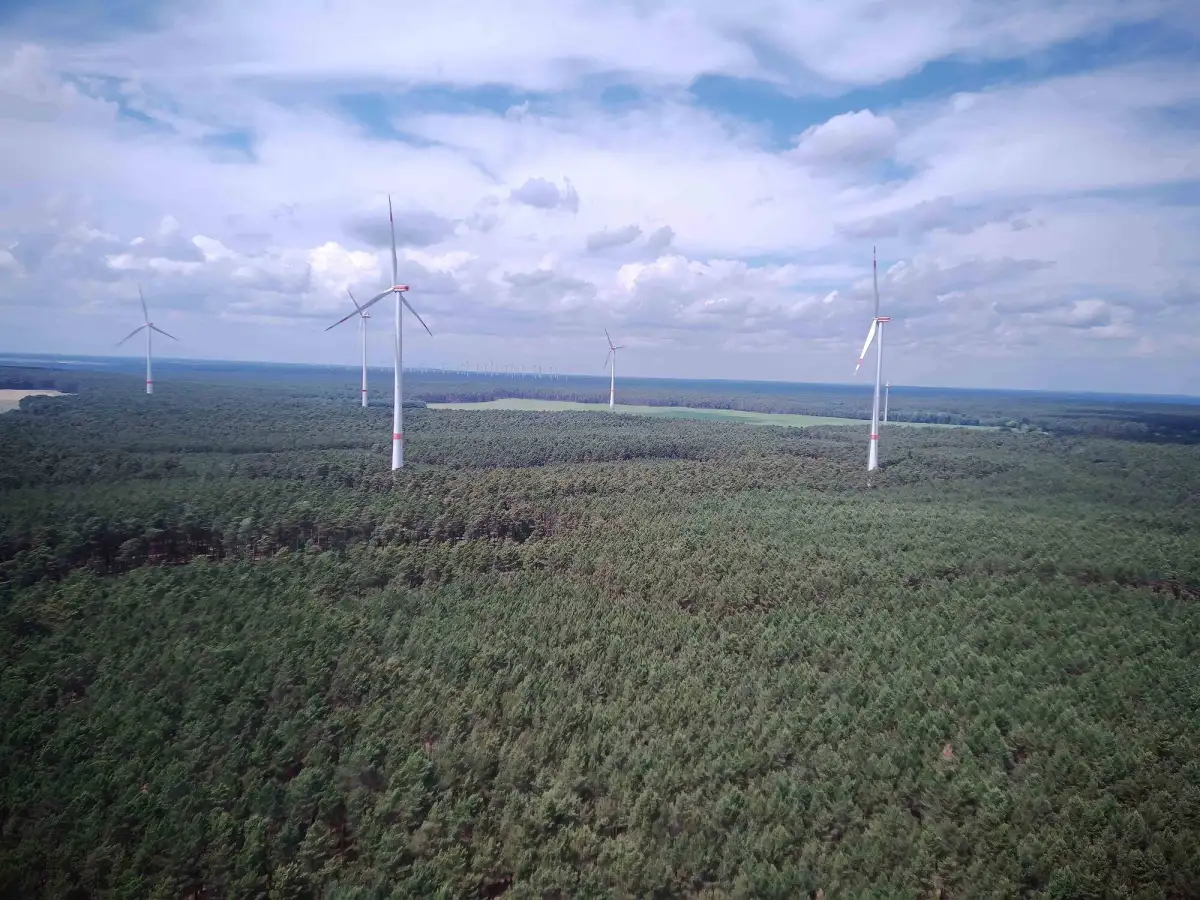
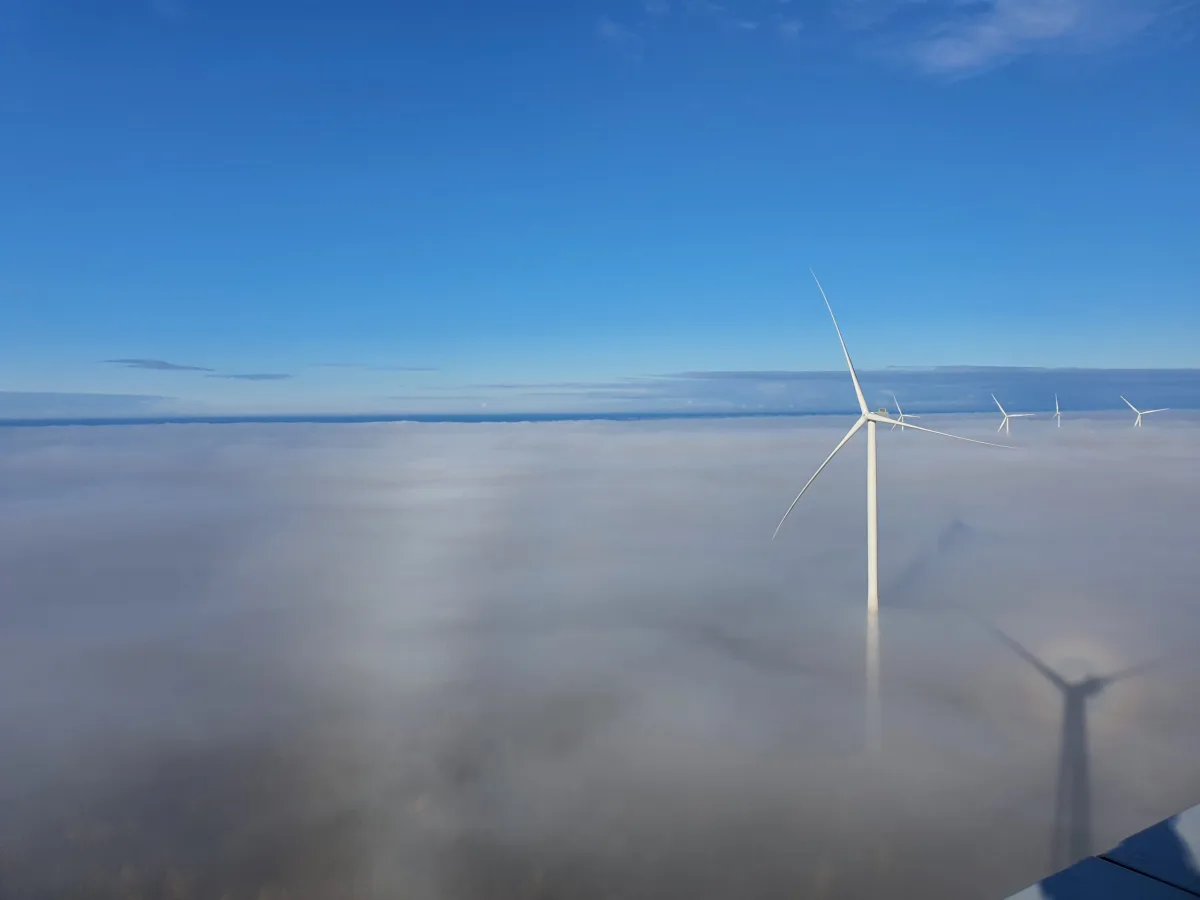
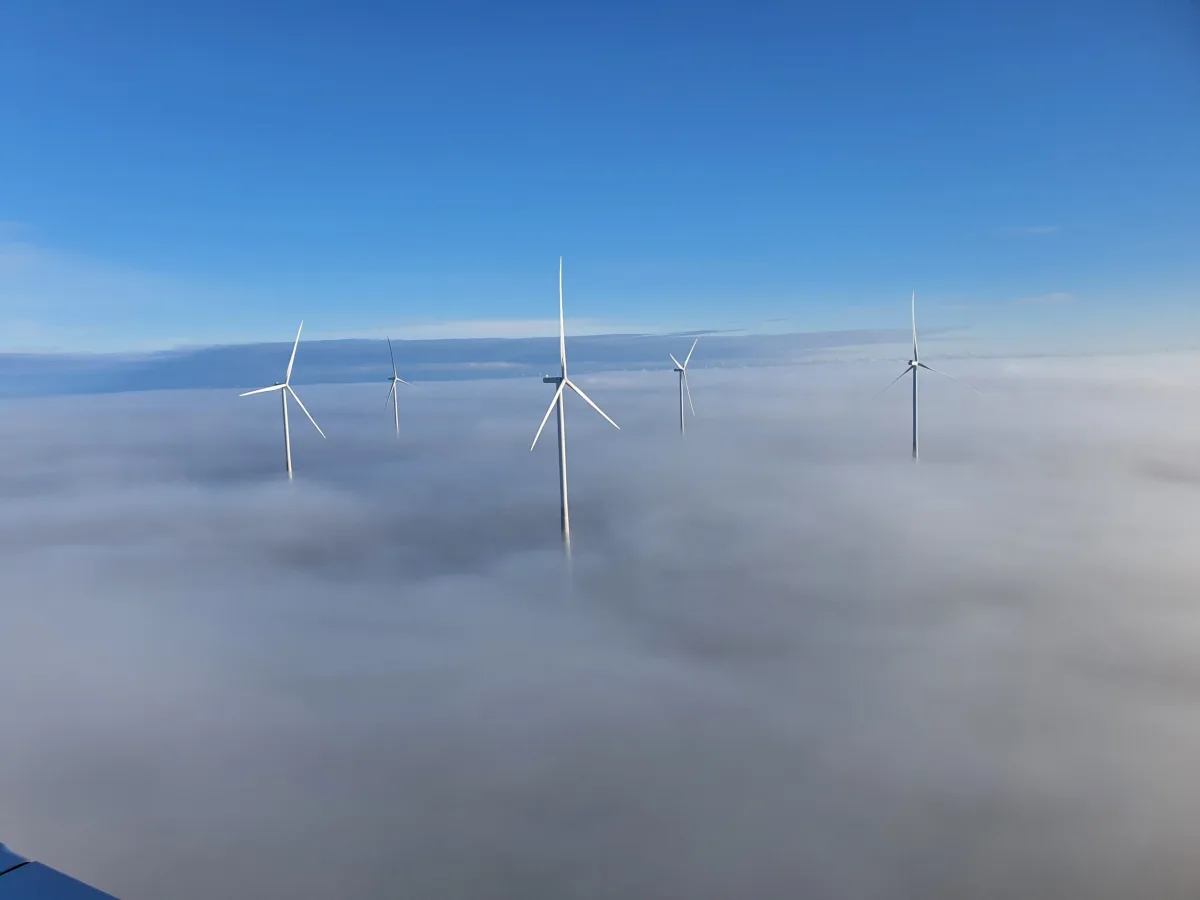
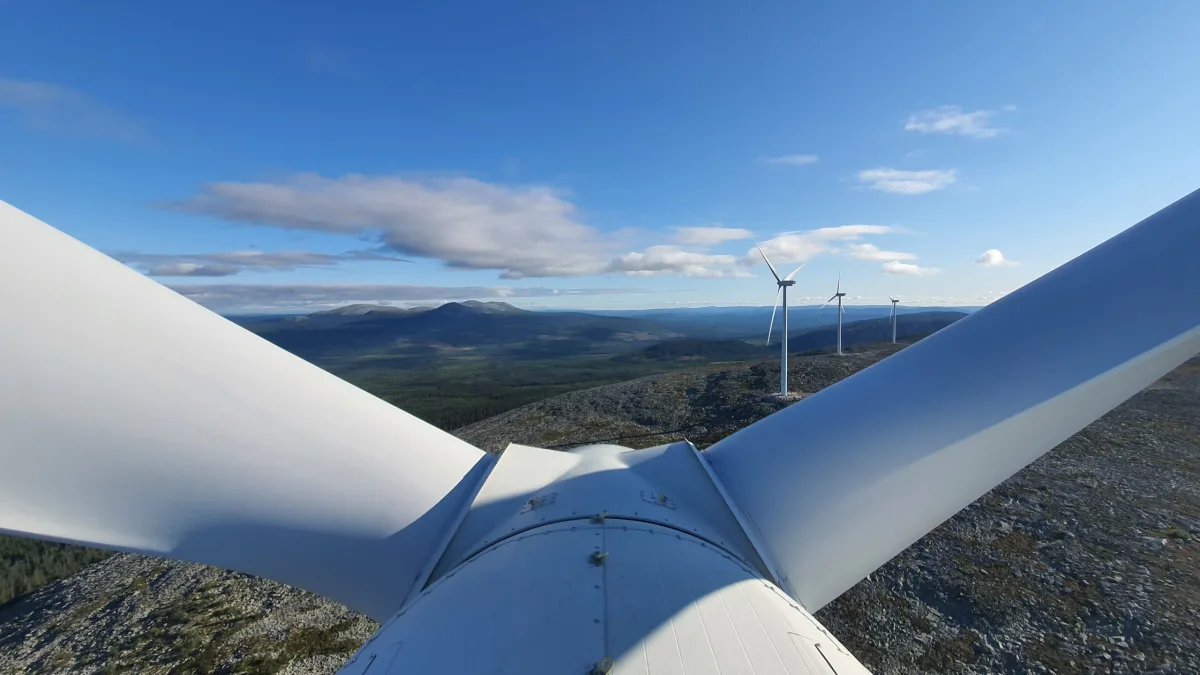
When a turbine blade is damaged, every day of delay can cost you. A minor fault can then turn into a major repair or even a full blade change.
Quick action keeps that from happening.
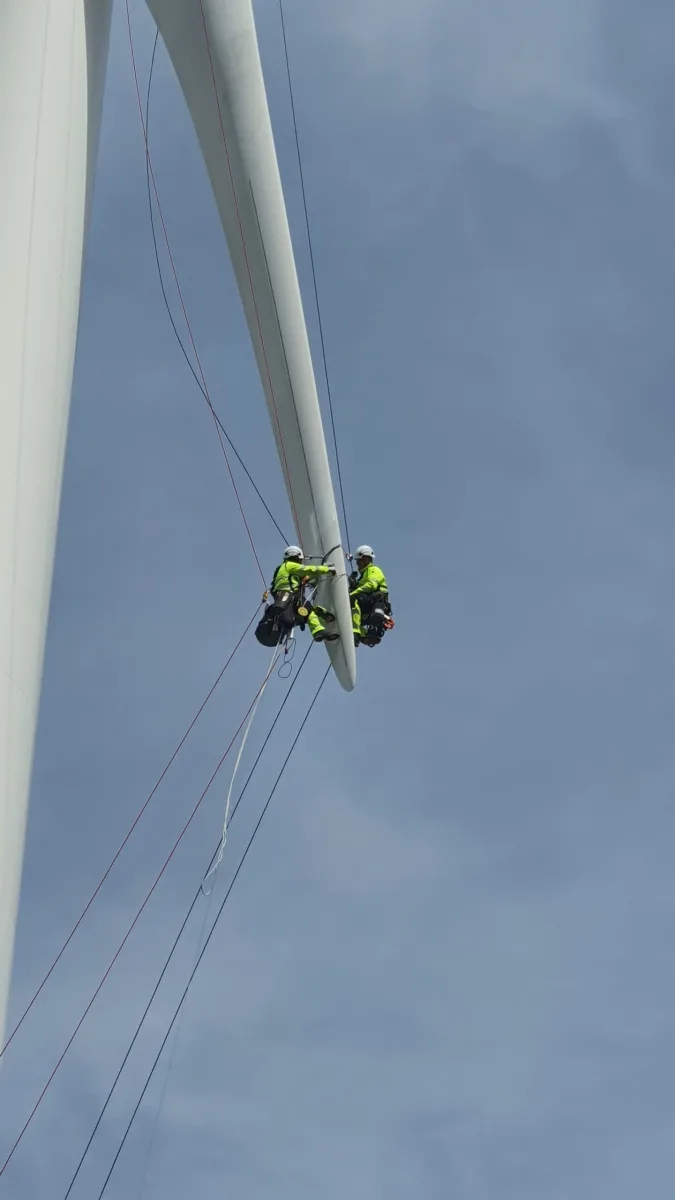
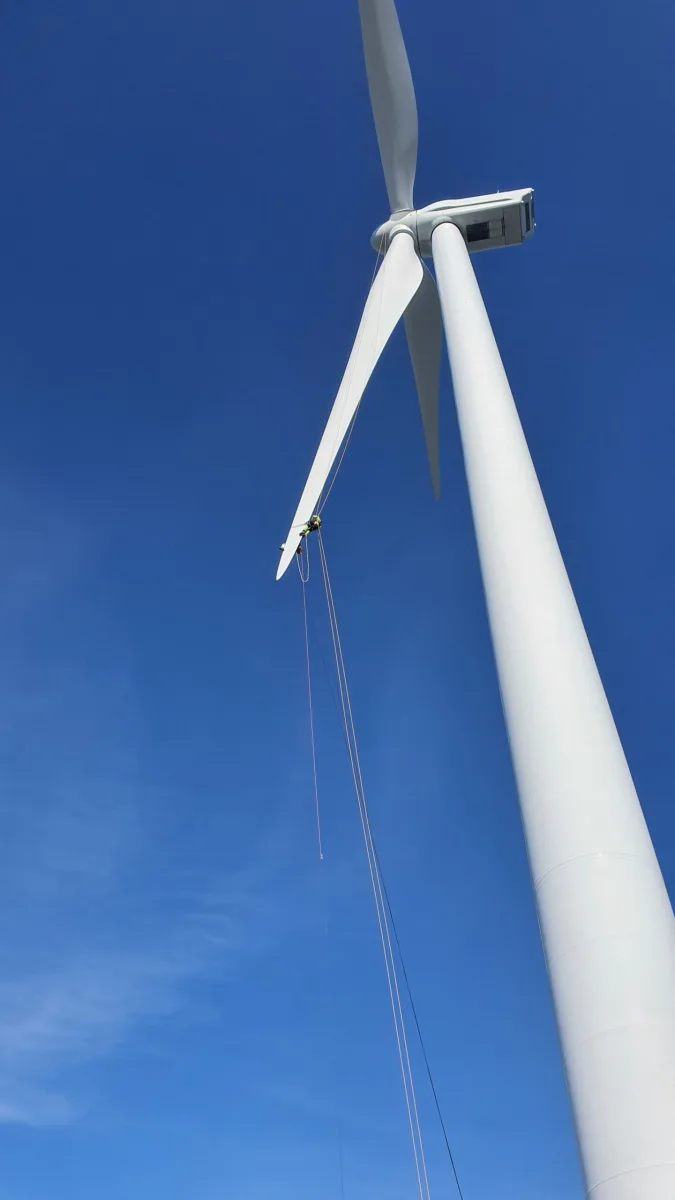
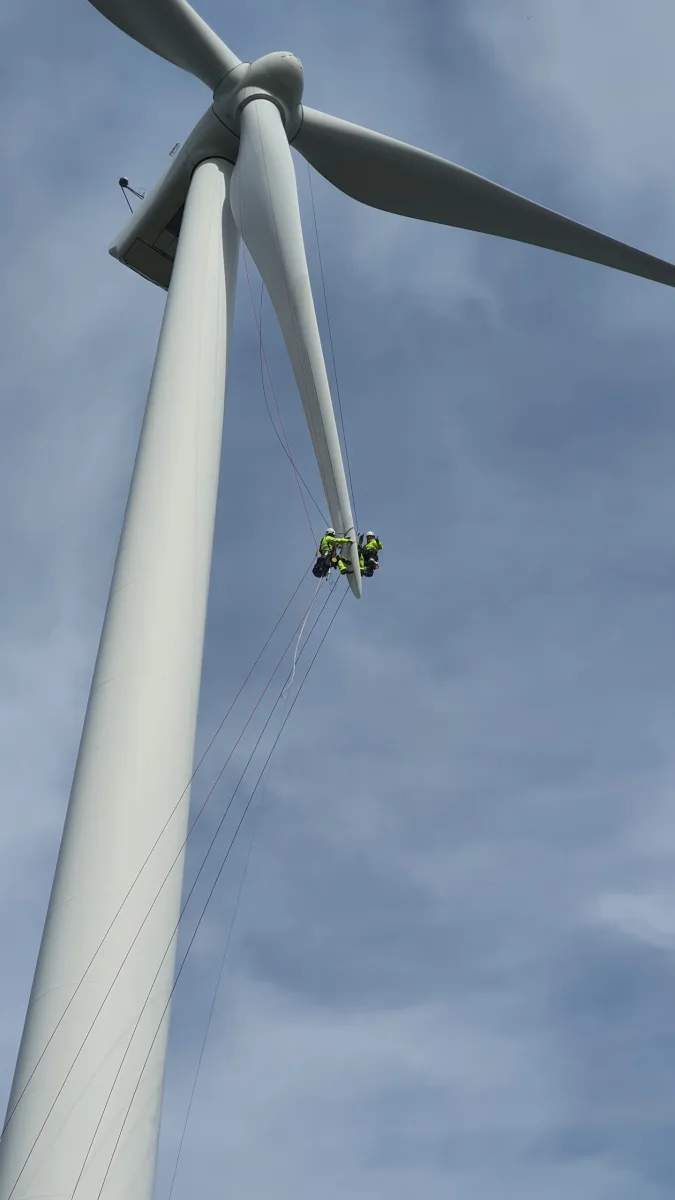
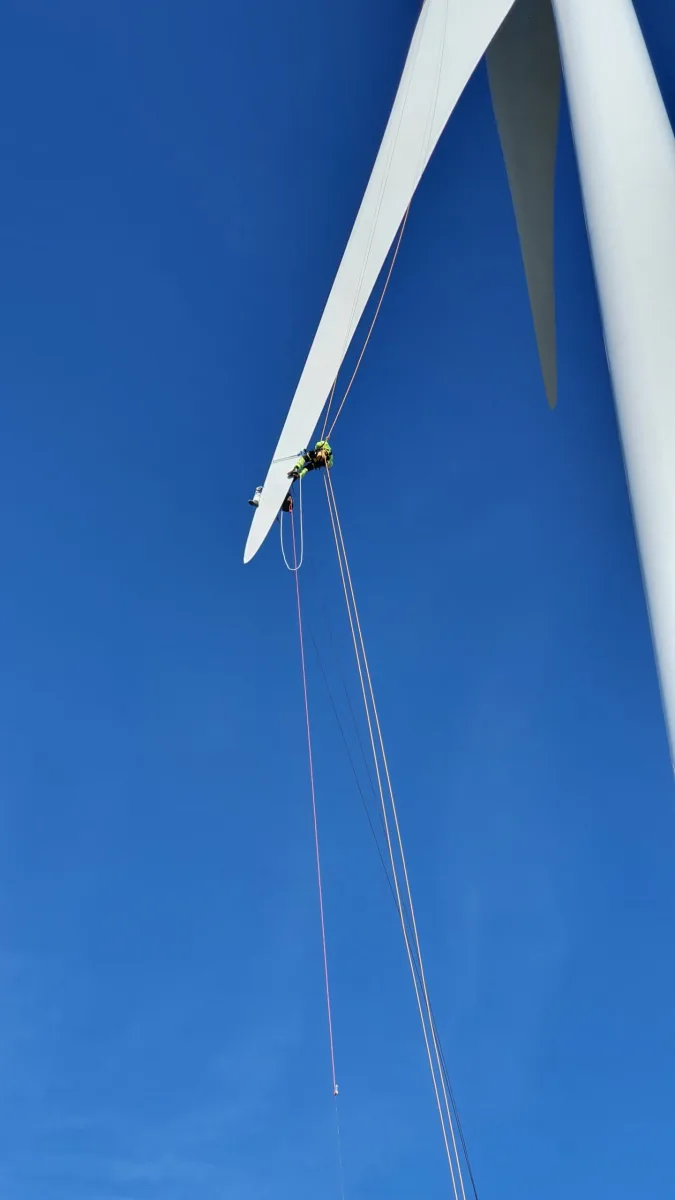
At RAIL, our IRATA-certified rope access technicians repair blades in place, while they stay on the turbine. There is no need to lower the blade to the ground or bring in a large crane for most repairs. This saves time, keeps costs down and gets your turbine back to work sooner.
Why Repair Blades Using Rope Access?
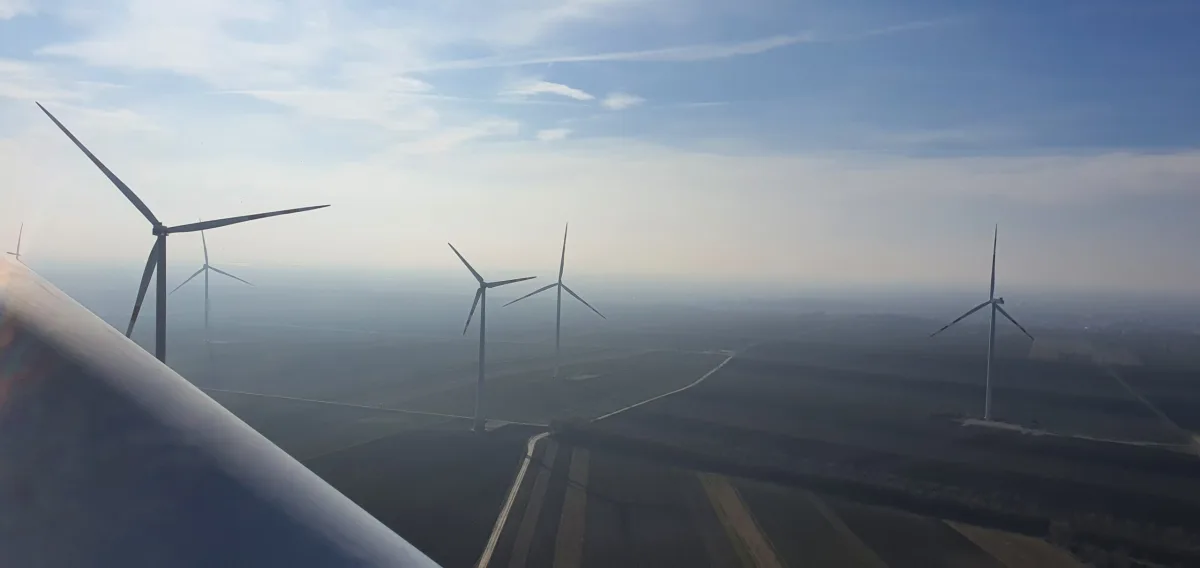
Rope access lets our technicians reach almost any point on a blade. They work at arm’s length from the damage, so they can prepare, repair and finish the surface with care.
Key benefits include:
- Shorter downtime. Small crews can rig and start work quickly, often within the same day.
- Cost-effective alternative to cranes and platforms. Light equipment means lower mobilisation costs, especially on remote or offshore sites.
- Minimal disruption. Only the turbine under repair needs to stop. The rest of the wind farm keeps running.
- Smaller footprint. No heavy machinery on the ground, which helps on soft land and sensitive sites.
- Close quality control. Technicians can check each layer of the repair by hand and eye.
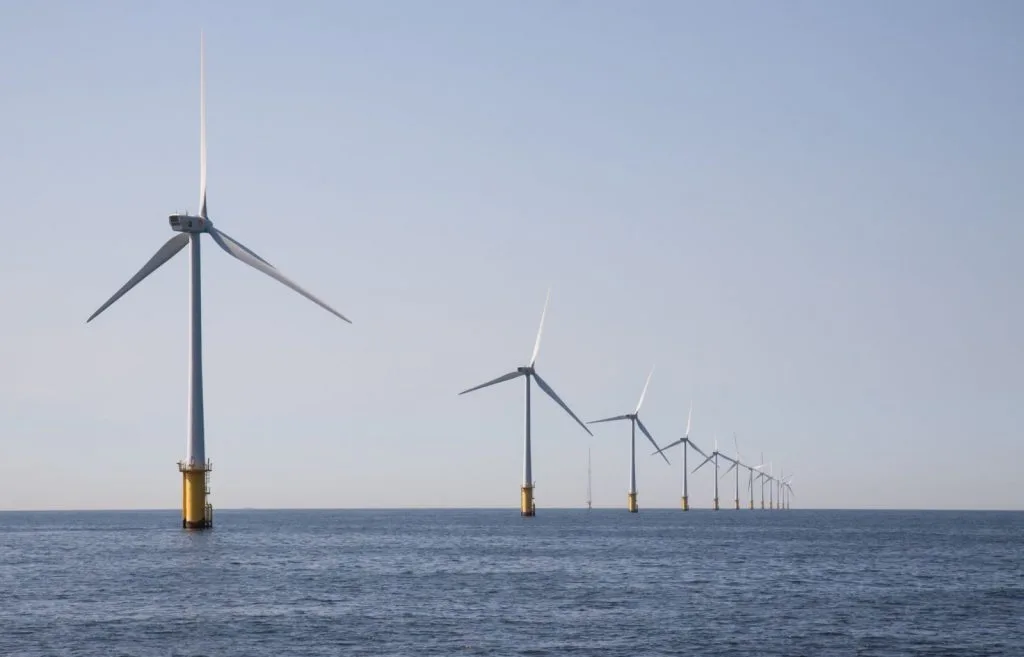
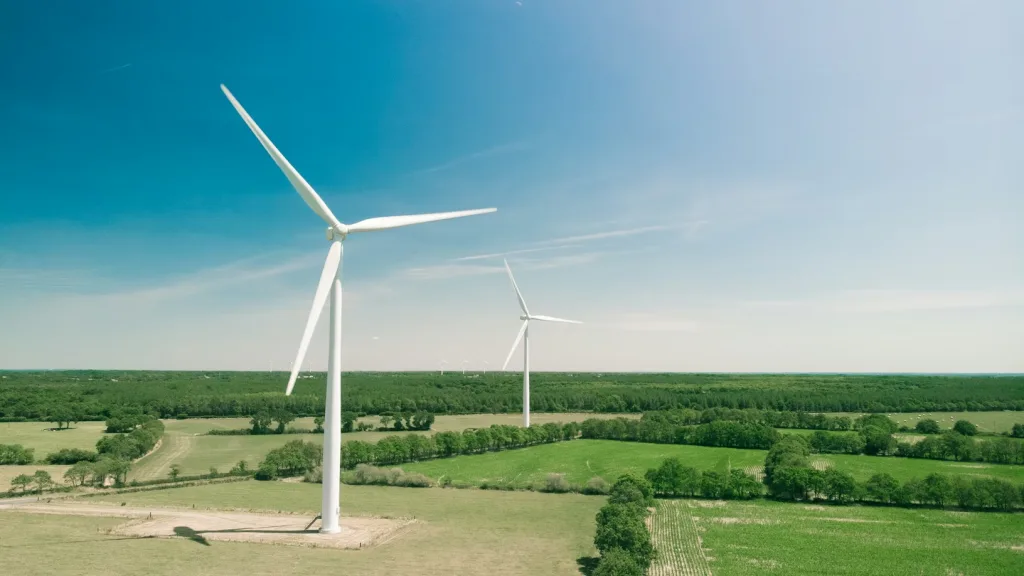
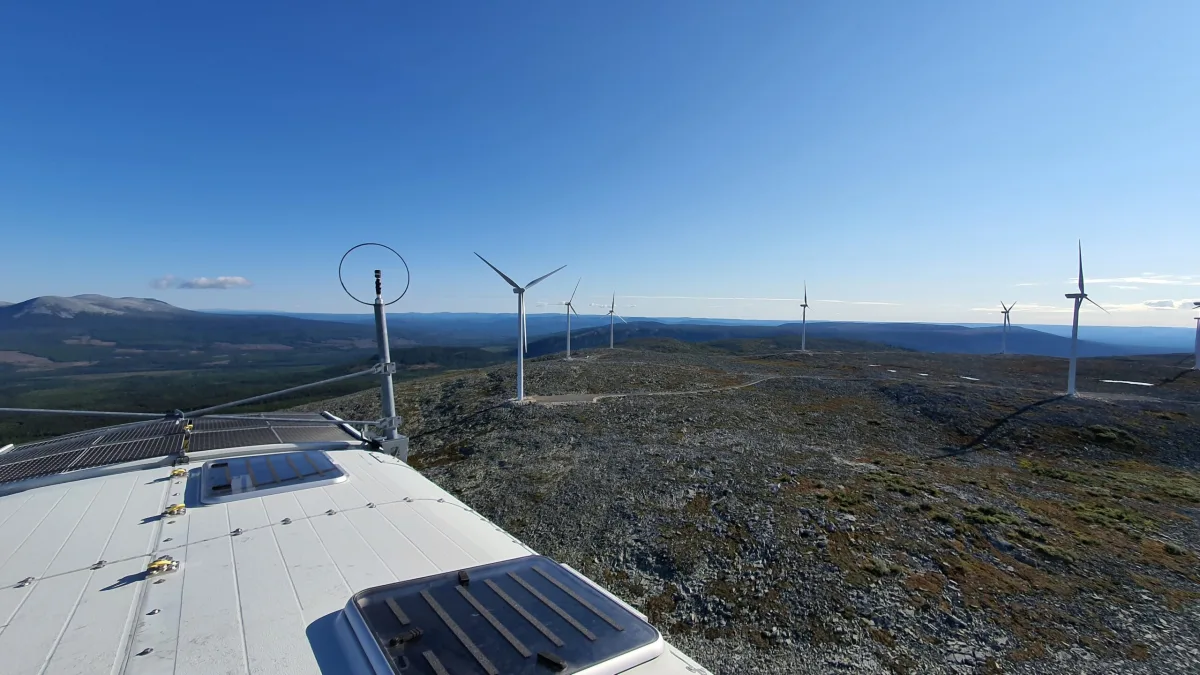
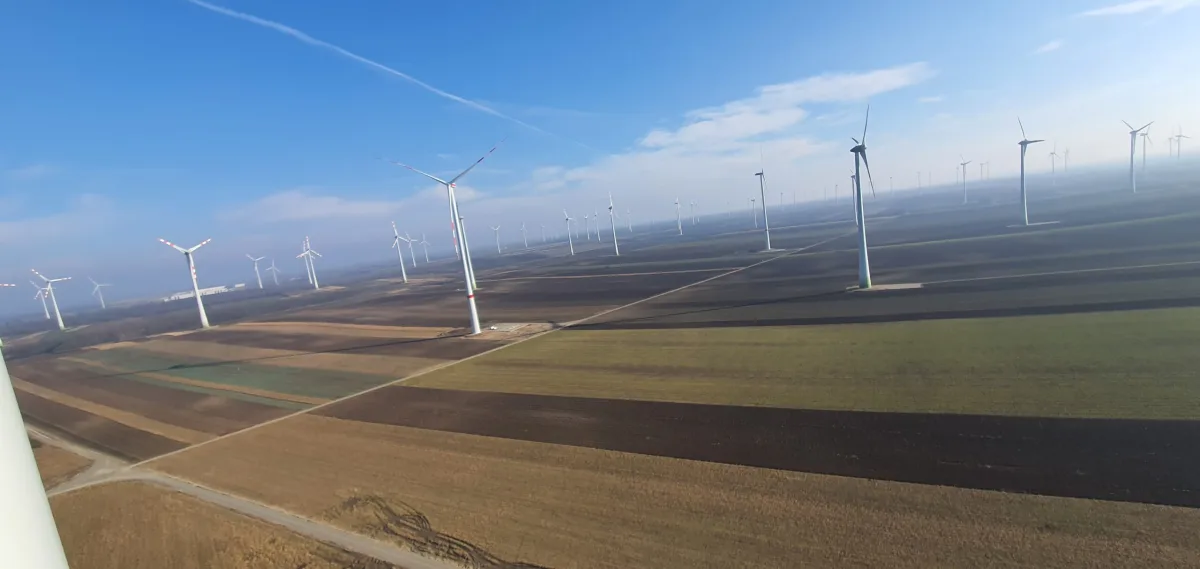
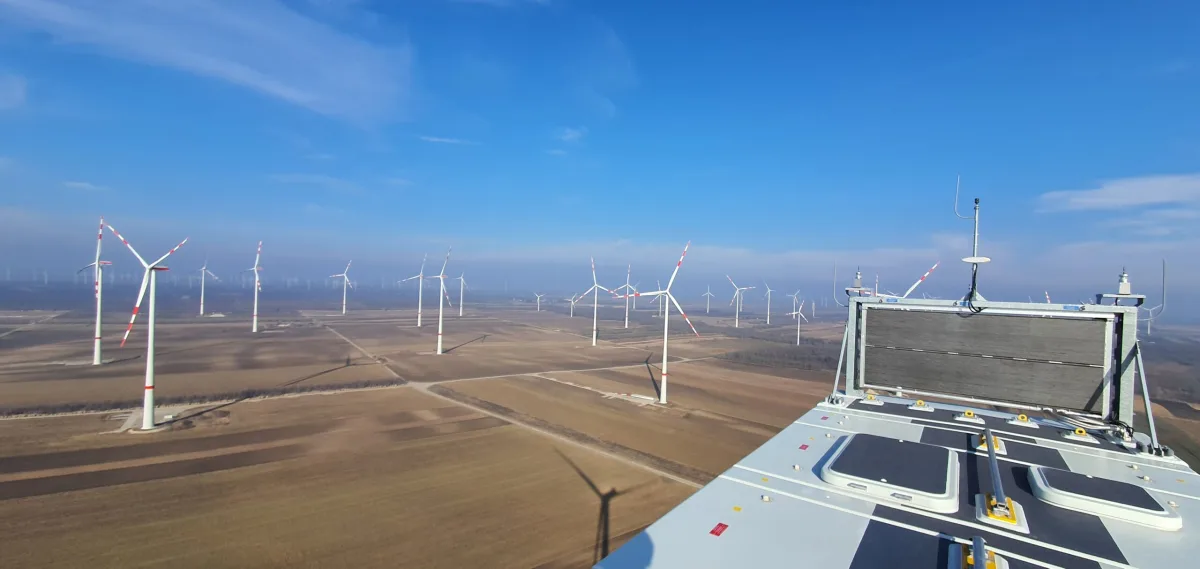
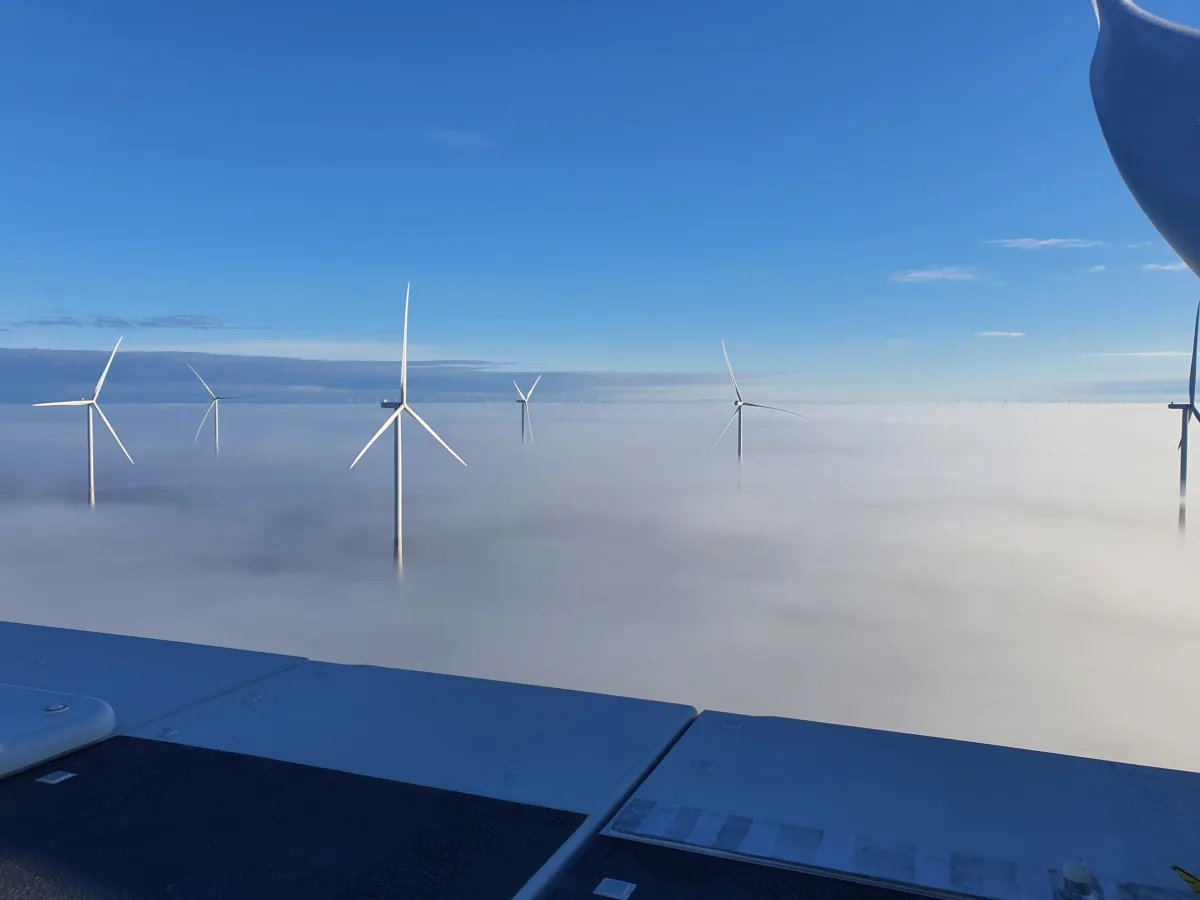
This approach suits onshore turbines in fields and hills, as well as offshore turbines out at sea.
Common Types of Blade Damage We Repair
Blades face many different stresses. Each type of damage needs its own repair method.
1. Leading edge erosion
Rain, hail and sand hit the front edge of the blade at high speed. Over time, this wears through the coating and into the laminate. We remove the damaged material, rebuild the profile with filler and laminate, then add new protection.
2. Lightning strike damage
Lightning can burn the surface, damage the tip or harm the lightning protection system. We assess the area, repair the composite, and check that receptors and conductors still work.
3. Cracks in the gel coat and laminate
Cracks can form from fatigue, impact or poor past repairs. We find out how deep they go, then repair them layer by layer.
4. Delamination
This is when layers of composite separate. It weakens the blade and can grow fast. We open, clean and re-bond the layers using approved resins and fabrics.
5. Trailing edge splits
The back edge of the blade can split along the bond line. We re-bond and reinforce the edge to restore its strength and shape.
6. Damaged add-ons
Vortex generators, edge protection shells and other add-ons can come loose. We remove, replace or refix them as needed.