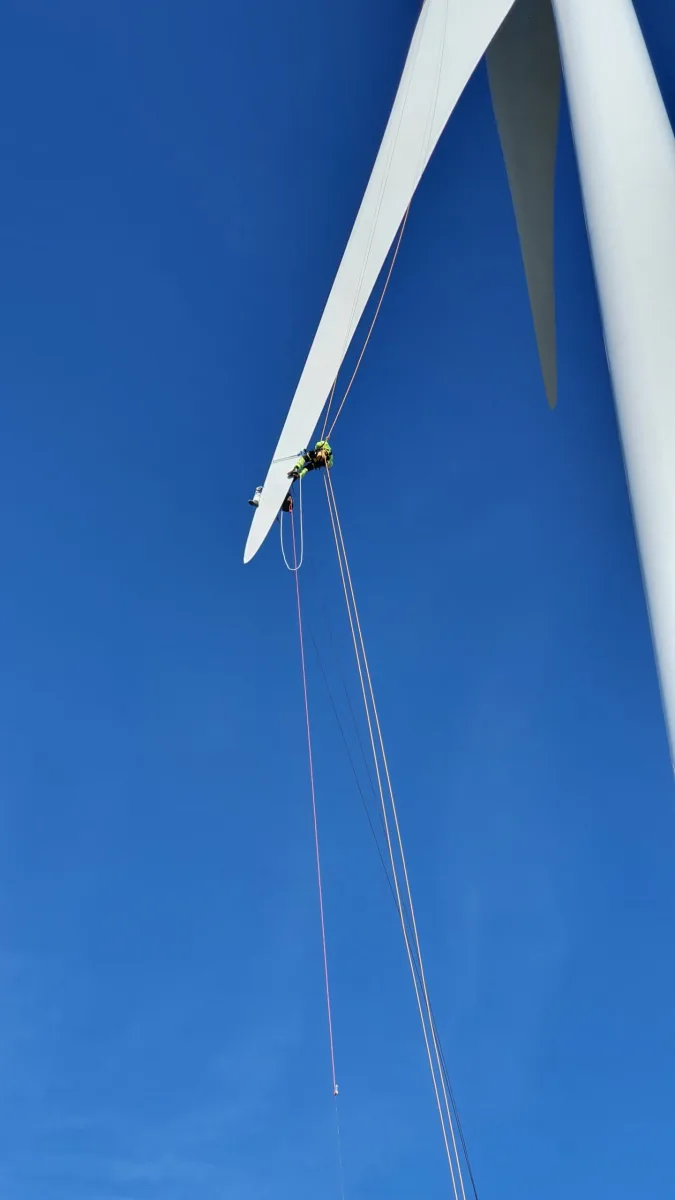
You cannot fix what you cannot see. Many blade defects start small and stay hidden. A hairline crack, a worn patch on the leading edge or a weak bond line may not show up in performance data until real damage has been done.
A blade inspection gives you facts instead of guesses. It tells you where each blade stands today, what needs attention and how urgent it is. With that knowledge, you can plan maintenance, control your budget and avoid sudden breakdowns.
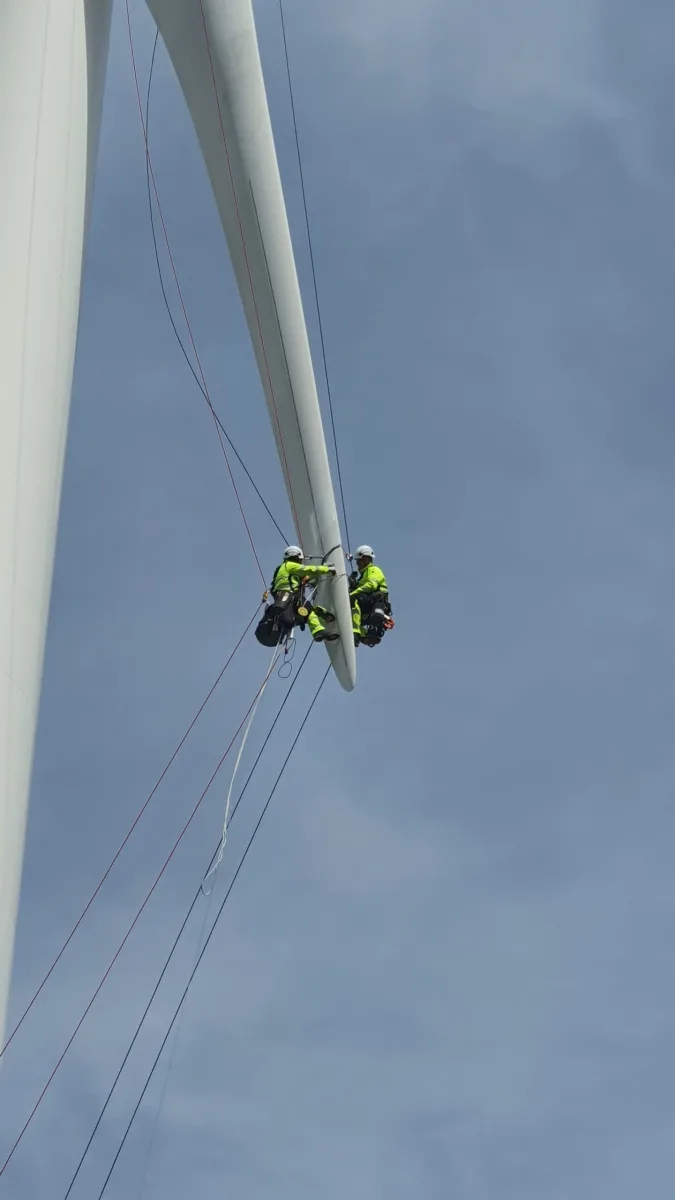
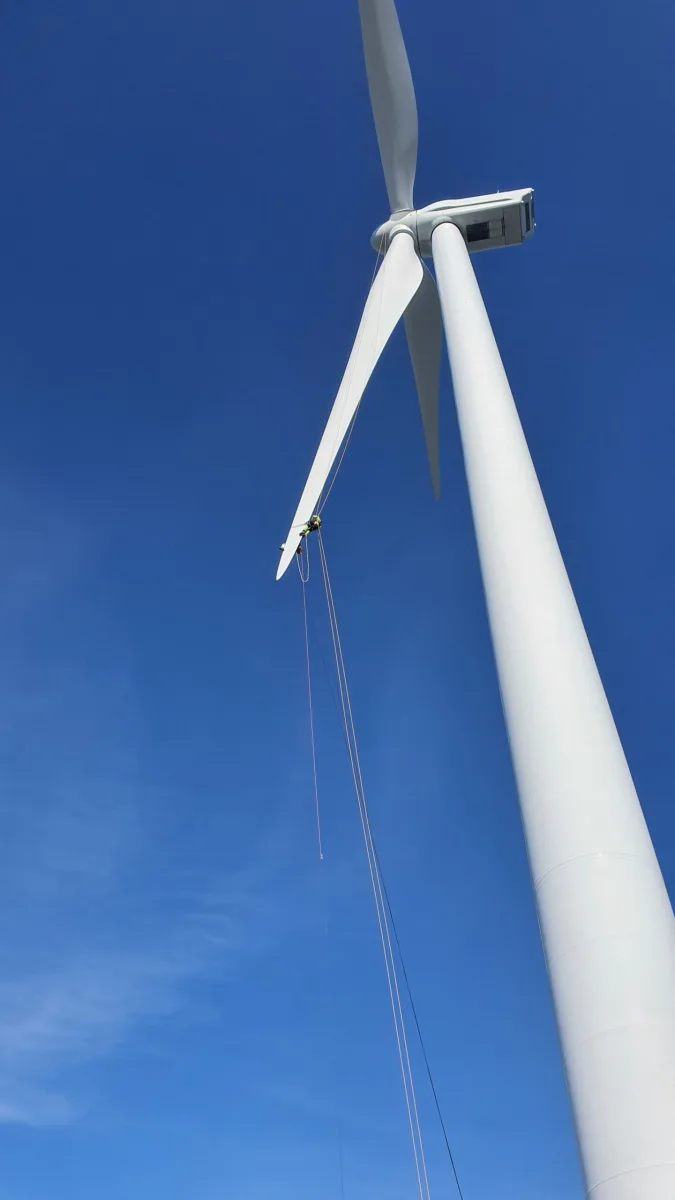
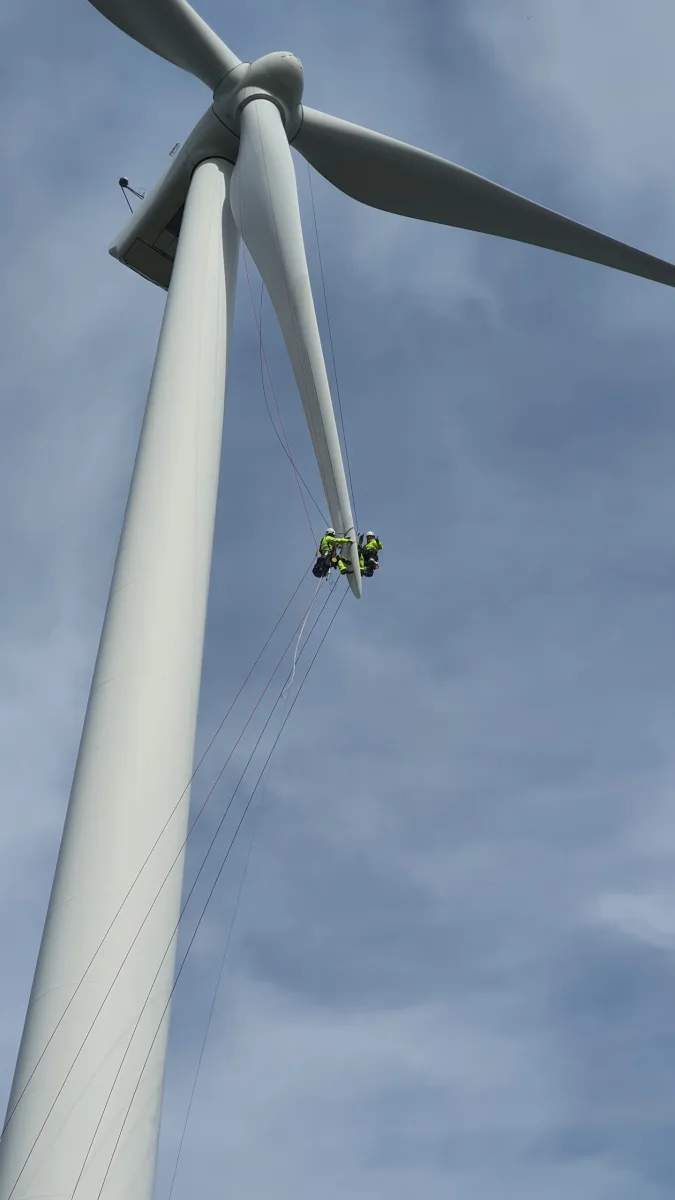
At RAIL, our IRATA-certified rope access technicians inspect blades up close, by hand and eye, with support from modern tools. The result is a clear, detailed record of blade health across your turbines.
Why Hands-On Inspection Matters
Drones and ground cameras are useful for a quick overview. They can cover many turbines in a short time. But they only see the surface from a distance.
Rope access inspection adds a closer level of detail:
- Touch and tap testing. Technicians can feel soft spots and listen for hollow areas that point to delamination.
- True measurement. Cracks, erosion depth and damage size can be measured directly.
- Every angle. Our team can view the edges, tip and root from positions that cameras struggle to reach.
- Instant small fixes. Where agreed in advance, minor issues can be dealt with on the same visit.
Many operators use both methods. A drone survey flags areas of concern, and a rope access team then checks those areas in detail. This mix gives you a full picture at a sensible cost.
What We Check During a Blade Inspection
Each inspection follows a set checklist, adapted to your turbine model and site. Typical checks include:
1. Leading edge
We look for pitting, coating loss and erosion into the laminate. The leading edge is often the first area to wear, so we record its condition in detail.
2. Trailing edge and bond lines
We check for splits, cracks and gaps along the glued joints. These faults can grow quickly if left alone.
3. Blade surface and coatings
Our team records cracks in the gel coat, blisters, peeling and impact marks. We also note dirt and contamination that may reduce output.
4. Tip and lightning protection
We inspect receptors, tip areas and visible conductors for burn marks or damage. Where required, we can carry out continuity checks on the lightning protection system.
5. Root area and add-ons
We check root seals, vortex generators, edge protection and other add-on parts for wear or loose fixings.
6. Drain holes
Blocked drains trap water inside the blade. We check they are clear and working.