Rope Access Bird Protection Services in London
Pigeons, gulls and sparrows look harmless, but their droppings are acidic, their nests block gutters and their feathers can carry disease. Left alone, a small colony quickly turns into a structural and reputational problem for the building below.
At Rope Access in London, we install humane, long-lasting bird protection systems on the parts of your building birds actually use: parapets, ledges, signage, plant decks and balcony soffits.
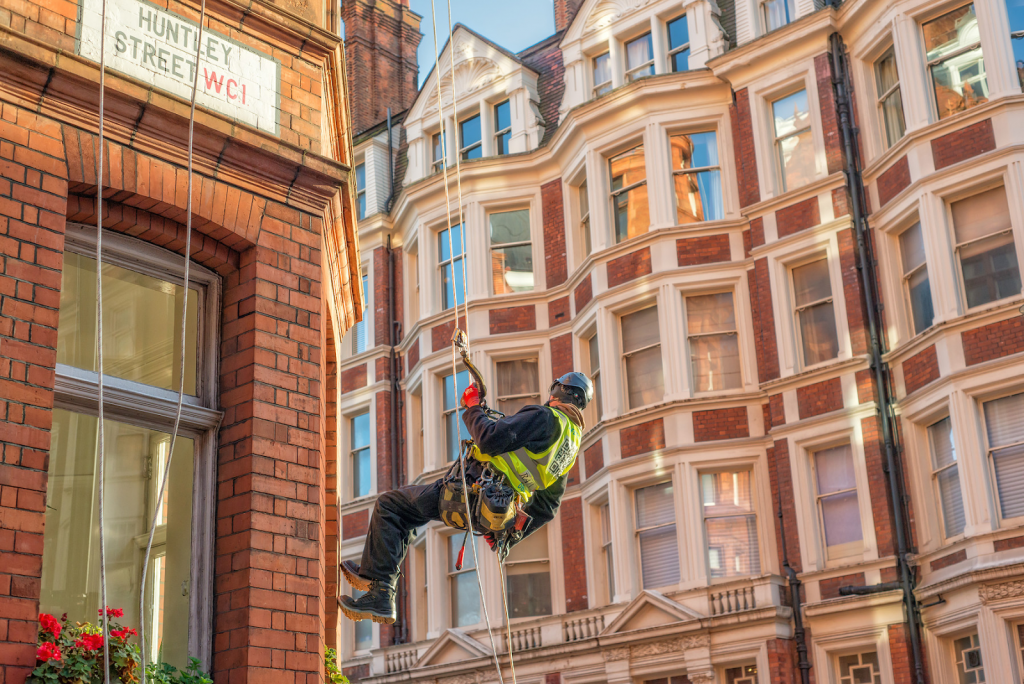
Because our IRATA-certified technicians work on rope, we reach every roost and perch without weeks of disruption to occupants.
Why rope access is the right method for bird proofing
Bird damage almost always concentrates at high level, on the surfaces conventional contractors can’t easily reach. That’s exactly where rope access excels.
Our abseil teams can position themselves at any height, work hands-free with both anchor and back-up lines, and treat each ledge individually rather than wrapping the whole elevation in scaffold. The result is a faster install, a lower invoice and far less impact on the building’s day-to-day operation.
For listed and heritage properties, rope access is often the only practical option. It leaves the façade untouched and the streetscape clear.
A full range of humane bird control solutions
We choose the right deterrent for the species, the surface and the visual impact you can tolerate:
- Bird netting: UV-stabilised mesh tensioned across balconies, light wells, signage voids and atriums. Discreet, durable and effective against pigeons, gulls and starlings.
- Bird spikes: stainless-steel point systems for ledges, parapets, copings and pipework. Almost invisible from street level and easy to clean around.
- Post-and-wire systems: low-profile tensioned wires that gently deter perching without changing the look of a heritage façade.
- Optical and gel deterrents: used where netting and spikes are not appropriate, for example on glazed parapets or polished stone.
Where birds have already nested, we’ll decontaminate the area, remove debris and old fouling, and only then install the new system — so you don’t trap droppings or pathogens behind the mesh.